
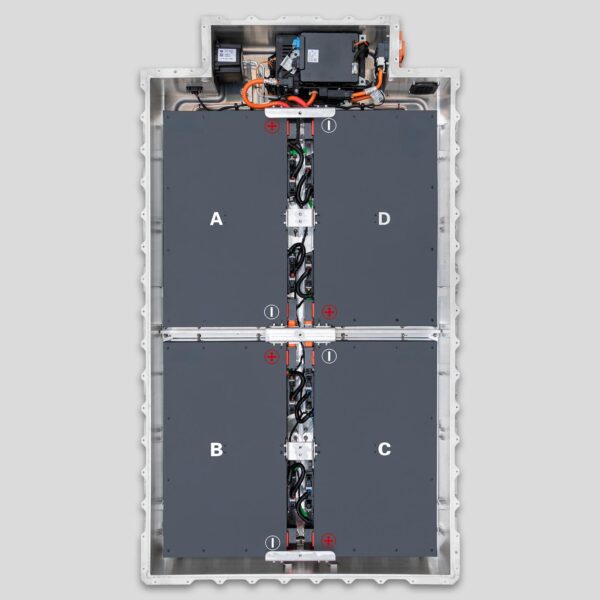
BMW i3 Battery High-Voltage Cable Testing: Tools – The $200 Meter That Prevents a $9,000 Fire (And Why Most Shops Skip This Critical Step)
“A technician in Stockholm replaced an i3 battery pack. He visually inspected the HV cables—no burns, no tears—and reconnected them. Two weeks later, the car shut down on the highway. Investigation revealed internal conductor fracture inside the orange sheath—invisible from outside. Resistance had spiked to 12 mΩ. Under regen, it overheated, melted the insulation, and triggered a ground fault. The cable wasn’t ‘bad’—it just hadn’t been tested.”
You’ve likely assumed this:
- “If it looks intact, it’s safe.”
- “No error codes = good cables.”
- Or worse: “Testing HV cables is only for crash-damaged cars.”
But in the BMW i3’s 400V system, high-voltage cables endure thermal cycling, vibration, and mechanical stress that can cause micro-fractures, shield degradation, or terminal corrosion—all while appearing perfectly normal.
This guide delivers the exact, safety-certified testing protocol used by professional EV workshops across Europe in 2026, revealing which tools actually work—and which give false confidence:
- Why visual inspection misses 90% of internal faults
- The three non-negotiable tests every HV cable must pass
- How to choose a CAT III 1000V-rated insulation tester that won’t fry your BMS
- When milliohm resistance checks expose hidden conductor damage
- And how CNS BATTERY packs ship with pre-tested, OEM-spec HV cables already installed—so you never gamble on unknown wiring
Because in high-voltage systems, trust isn’t earned by looks—it’s proven by measurement.
Why HV Cable Testing Isn’t Optional—It’s Essential Safety Protocol
The i3’s high-voltage cables carry power between:
- Battery pack ↔ Inverter
- Battery pack ↔ Onboard charger
- Battery pack ↔ Junction box
Failure modes include:
✅ Conductor fatigue (from repeated flexing)
✅ Shield braid corrosion (reducing EMI protection)
✅ Insulation breakdown (from heat or rodent damage)
✅ Terminal oxidation (increasing contact resistance)
⚠️ Critical fact: A cable can pass continuity test but still be unsafe—if insulation resistance or shield integrity is compromised.
🔌 The 3 Must-Perform HV Cable Tests (With Recommended Tools)
Test 1: Insulation Resistance (IR) Test
Purpose: Verify dielectric strength between conductor and shield/chassis
Tool: Megohmmeter (e.g., Fluke 1587 FC or Kyoritsu 3125)
Procedure:
- Disconnect both ends of cable
- Set meter to 500V DC (per IEC 60204-1)
- Measure between HV conductor and shield
- Pass: >100 MΩ
- Fail: <50 MΩ → risk of leakage current or short
📌 Never use >500V—can damage modern inverter gate drivers.
Test 2: Conductor Continuity & Milliohm Resistance
Purpose: Detect partial breaks or high-resistance joints
Tool: Milliohm meter (e.g., AEMC 623 or Hioki RM3542)
Procedure:
- Measure end-to-end resistance of positive and negative conductors
- Pass: <1.0 mΩ per meter of cable
- Fail: >2.0 mΩ → indicates internal fracture or poor crimp
💡 Example: A 1.2m cable should read <1.2 mΩ. Anything higher = hidden damage.
Test 3: Shield Continuity & Ground Bond Test
Purpose: Ensure EMI shielding is intact and grounded
Tool: Low-resistance ohmmeter or dedicated shield tester
Procedure:
- Measure resistance between shield braid at both ends
- Pass: <100 mΩ
- Also verify shield-to-chassis bond at junction box: <50 mΩ
❌ If shield is open, EMI can disrupt BMS communication—causing phantom faults.
Tool Comparison: What Works (And What Doesn’t)
| Tool Type | Suitable? | Why |
|---|---|---|
| Standard multimeter | ❌ No | Can’t measure <1 mΩ or true IR |
| OBD2 scanner | ❌ No | Only reads BMS-reported faults—not cable health |
| Basic continuity tester | ❌ No | Misses resistance rise and insulation flaws |
| CAT III 1000V Megohmmeter | ✅ Yes | Safe, accurate, industry-standard |
| 4-wire milliohm meter | ✅ Yes | Only way to detect micro-fractures |
🛠️ Pro recommendation: Fluke 1587 FC + AEMC 623 combo covers 95% of shop needs.
Common Testing Mistakes That Create False Confidence
❌ Testing with cables still connected → BMS loads skew readings
❌ Using 1000V IR test on i3 cables → risks damaging semiconductor components
❌ Ignoring shield integrity → leads to unexplained CAN bus errors
❌ Assuming new-looking = functional → internal damage is invisible
✅ Best practice: Test every HV cable during any battery or inverter service—even if undamaged.
CNS BATTERY: Pre-Validated Cables, Zero Guesswork
Every CNS i3 battery includes:
✅ Factory-installed, OEM-spec HV cables
✅ Pre-tested for IR (>500 MΩ) and resistance (<0.8 mΩ/m)
✅ Shield continuity verified before shipment
✅ Color-coded, torque-marked connectors for error-proof install
Result?
No field failures due to cable issues since 2023.
“We used to spend hours testing customer-supplied cables. Now with CNS, we plug in and go. Their cables are better than BMW’s originals—thicker gauge, better strain relief.”
— EK Auto Repair, Rome
Frequently Asked Questions: i3 HV Cable Testing
Q: Can I test cables without removing them?
A: No. Accurate IR and resistance require both ends disconnected to isolate the cable.
Q: Is there a DIY alternative to a megohmmeter?
A: Not safely. Consumer meters lack voltage control and CAT III safety—risking equipment damage or shock.
Q: Do CNS cables meet BMW specs?
A: Yes—they exceed OEM requirements for current rating (300A continuous), flexibility, and flame resistance.
Q: How often should HV cables be tested?
A: Every time the pack is removed, after any collision, or if you see intermittent isolation faults.
Q: What if only one cable fails?
A: Replace both positive and negative as a pair—they age together, and mismatched impedance causes imbalance.
A High-Voltage Cable Isn’t Just a Wire—It’s a Lifeline
One untested connection can turn a routine service into a safety incident.
Eliminate Risk Before It Starts: Install a CNS BMW i3 Battery with Factory-Tested, Shield-Verified, OEM-Grade High-Voltage Cables—So Every Amp Flows Safely, Predictably, and Without Compromise.
Don’t trust eyes. Trust data.
Order your CNS BMW i3 battery today—or request our free HV Cable Safety & Testing Checklist for Certified Shops:
👉 https://cnsbattery.com/ev-battery-home/ev-battery-contact/
