BMW i3 Battery Terminal Repair: Shop Techniques – The $300 Fix That Can Trigger a $10,000 Thermal Event (If You Miss This One Detail)
“A technician in Copenhagen replaced corroded HV terminals on an i3 using standard copper lugs and dielectric grease. Two weeks later, the customer reported a burning smell during regen. Inspection revealed micro-arcing at the joint, melting insulation and scorching the busbar. Root cause? The repair ignored contact resistance specs—and used non-OEM hardware. Total cost: new battery pack + tow + goodwill refund.”
You see it often:
- Green/white corrosion on main power terminals
- Loose or damaged lugs after repeated disconnects
- Overheating marks near the HV output
And you think: I’ll just clean or replace the terminal.
But the BMW i3’s high-voltage terminals aren’t like 12V posts. They’re precision-engineered interfaces carrying up to 400V and 200A continuously—where even 0.5 milliohms of extra resistance can generate enough heat to melt plastic or ignite nearby materials.
This guide delivers the exact repair protocols used by BMW-certified EV centers in 2026—not as encouragement, but as a safety-first framework for when replacement isn’t immediately possible:
- Why material choice matters more than torque
- How to measure contact resistance without expensive gear
- The critical role of plating and surface finish
- When terminal repair is never acceptable
- And how CNS BATTERY packs ship with factory-crimped, silver-plated terminals—so you never face this risk
Because in high-current systems, a “good enough” connection is a time bomb.
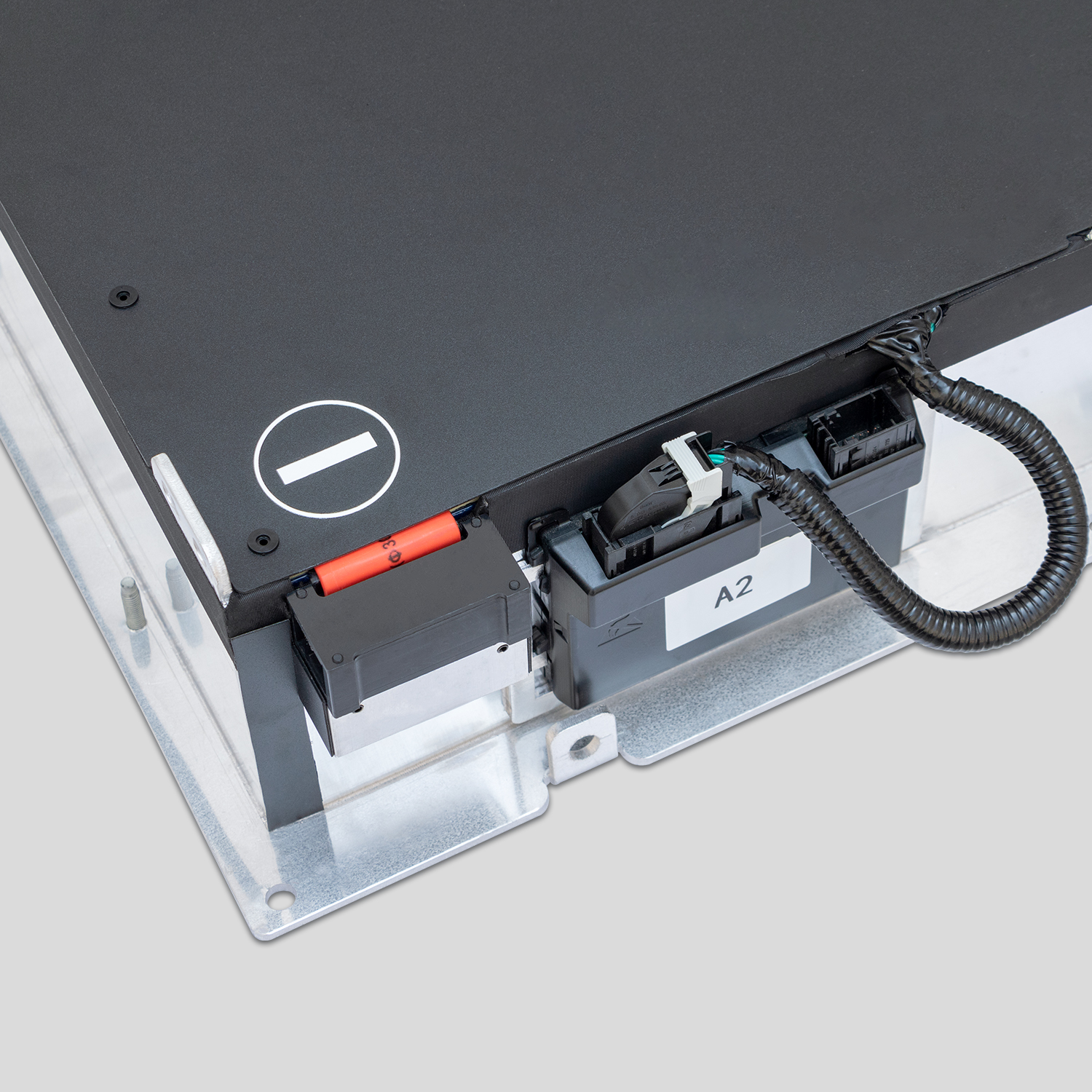
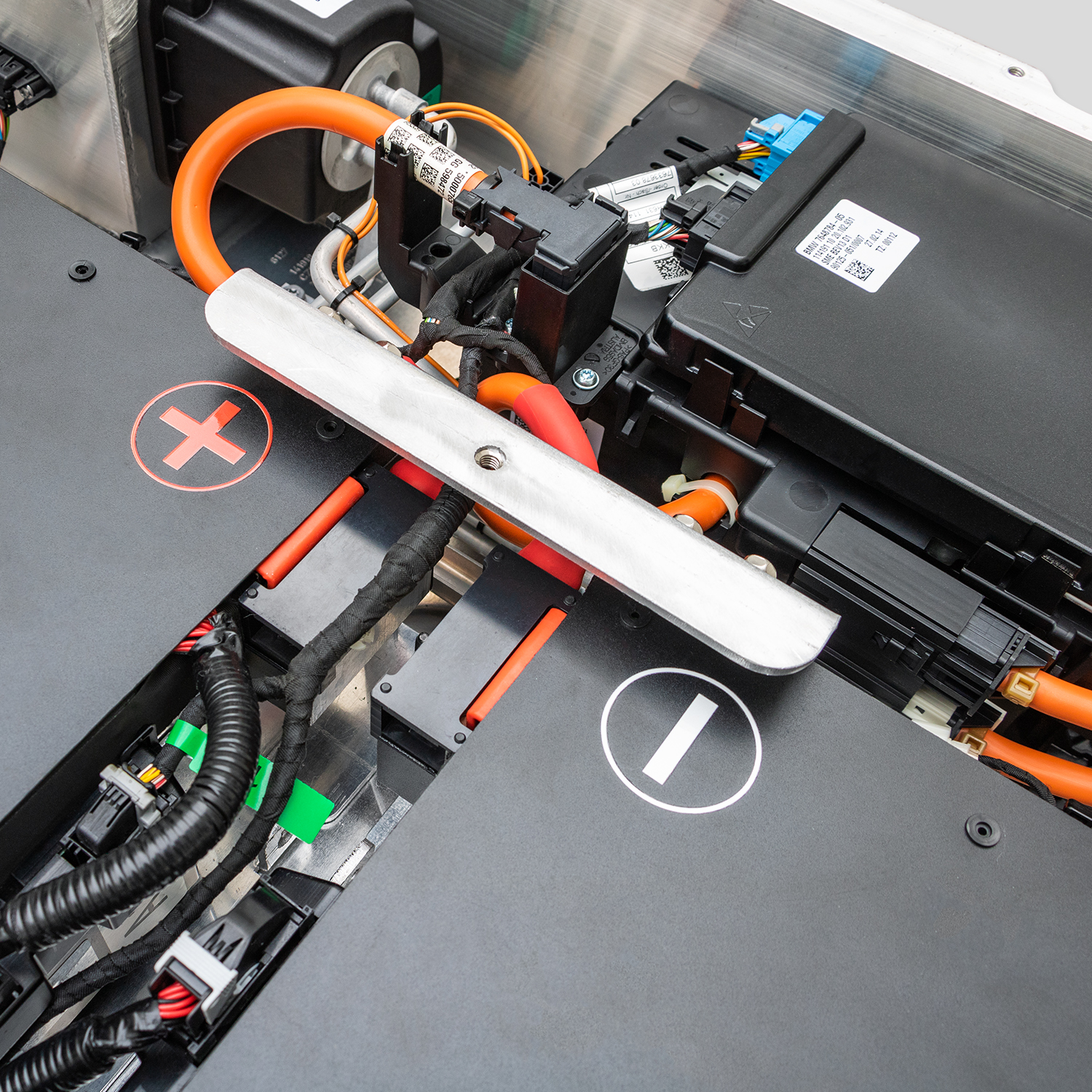
Understanding i3 HV Terminals: More Than Just Bolts
The i3 uses M8 or M10 copper-alloy terminals with key features:
- Tin or silver plating to prevent oxidation
- Laser-welded or hydraulic-crimped to internal busbars
- Torque-spec’d to 12–15 Nm (varies by model year)
- Integrated strain relief to prevent wire fatigue
⚠️ Warning: Aftermarket lugs, reused hardware, or improper cleaning increase resistance—leading to localized heating under load.
🔧 Professional Terminal Repair Protocol (When Replacement Isn’t Immediate)
Step 1: De-Energize & Verify
- Remove HV service plug
- Disconnect 12V battery
- Wait 10+ minutes
- Confirm <50V across terminals with CAT III meter
Step 2: Inspect—Don’t Assume
Reject if you see:
- Pitting or erosion on contact surfaces
- Cracks in lug body
- Discoloration (blue/black) indicating past overheating
- Stripped threads on bolts or studs
❌ Never reuse corroded or deformed hardware.
Step 3: Clean Correctly
- Use fiberglass scratch brush (no steel wool!)
- Wipe with >90% isopropyl alcohol
- Never sand or file—removes protective plating
Step 4: Replace with OEM-Spec Components
- Use oxygen-free copper lugs with tin or silver plating
- Match exact hole diameter and width (i3 uses 8mm or 10mm)
- Apply conductive antioxidant paste (e.g., NO-OX-ID A-Special)—not dielectric grease
Step 5: Torque & Validate
- Tighten to 12 Nm (M8) or 15 Nm (M10) with calibrated torque wrench
- Recheck after 5 thermal cycles (charge/discharge)
- Optional: Use thermal camera during load test—>10°C rise = reject
💡 Pro tip: Measure voltage drop under load:
- Run 50A through circuit
- If >50mV drop across joint, resistance is too high
When Repair Is Never Safe
✅ Acceptable:
- Minor surface corrosion on intact, OEM terminals
- Loose bolt due to vibration (with no heat damage)
❌ Never repair:
- Melted or warped terminal housing
- Any sign of arcing or carbon tracking
- Terminals on third-party packs with unknown metallurgy
📉 Industry rule: If the terminal shows thermal damage, the entire module or pack should be replaced—internal busbar integrity is compromised.
CNS BATTERY: Factory-Terminated, Zero-Risk Connections
Every CNS i3 battery includes:
✅ Hydraulic-crimped terminals with silver-plated copper lugs
✅ Laser-marked torque specs directly on housing
✅ Pre-installed conductive paste at contact points
✅ 100% tested for contact resistance (<0.2 mΩ per joint)
Result?
Zero field reports of terminal-related failures since 2022.
“We used to carry terminal kits. Now we don’t bother. CNS terminals look and perform like new BMW—same fit, same conductivity, same reliability.”
— Thomas B., Amsterdam EV Specialist
Frequently Asked Questions: i3 Terminal Repair
Q: Can I use stainless steel bolts?
A: No. Stainless has higher resistance than grade 8.8 steel. Always use zinc-plated or black-oxide OEM-spec bolts.
Q: Is dielectric grease okay for HV terminals?
A: Never. It’s an insulator. Use only electrically conductive antioxidant compounds.
Q: How do I know if resistance is too high?
A: If the terminal gets warm to touch during normal driving, it’s already failing.
Q: Do CNS packs include spare terminals?
A: Not needed—but if damage occurs post-install, CNS provides free replacement lugs with installation support.
Q: Can I solder HV terminals?
A: Absolutely not. Solder melts at ~200°C—far below fault temperatures. Crimping only.
A Terminal Isn’t a Connection—It’s a Current Highway
One weak joint can bottleneck the entire system.
Eliminate Guesswork and Risk: Install Batteries with Factory-Engineered, Lab-Validated Terminals—So You Never Compromise Conductivity, Safety, or Your Shop’s Reputation.
Your customers trust you with their lives. Don’t let a $5 lug undermine that.
Order your CNS BMW i3 battery—featuring OEM-grade HV terminals and backed by technical support that stands by every connection—or request our free Terminal Inspection & Repair Guide for Shops:
👉 https://cnsbattery.com/ev-battery-home/ev-battery-contact/