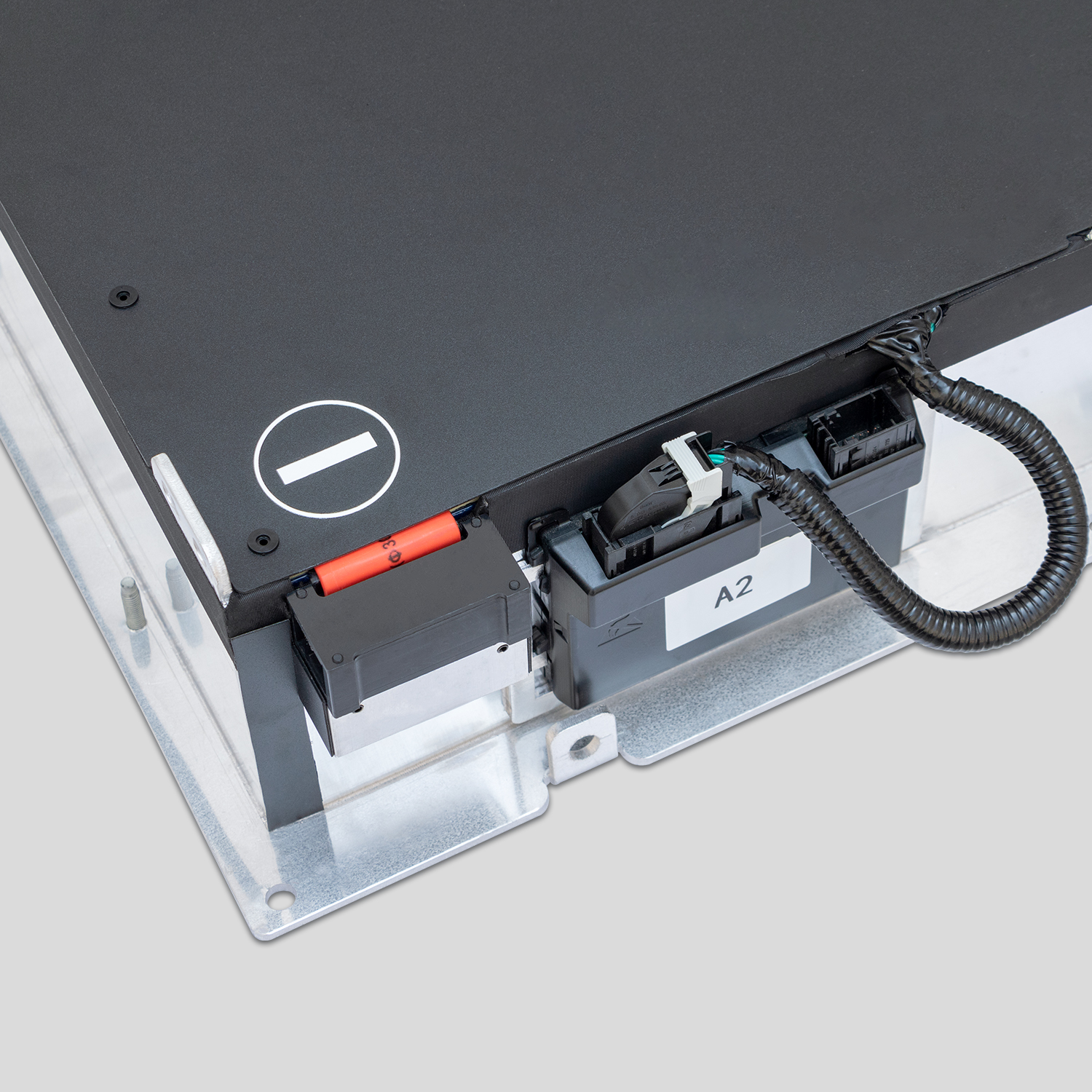
BMW i3 Battery Fuse Box Repair: Professional Methods – The $5 Fix That Prevents a $6,000 Misdiagnosis (If You Know Where to Look)
“A 2017 i3 in Melbourne wouldn’t start. No HV activation. Scanner showed ‘BMS Communication Lost.’ The shop quoted a full battery replacement—$6,400. Before pulling the pack, a junior tech checked the rear fuse box under the rear seat. Fuse F47—a tiny 5A mini-blade—was blown. Replaced for $2. Car started instantly. The customer left a five-star review… for the shop that almost charged him ten times too much.”
You see symptoms like:
- No high-voltage system activation
- ‘Check High-Voltage System’ warning on dash
- Scanner can’t communicate with BMS or EME
But if you assume the battery pack is faulty, you’re skipping the most common—and cheapest—fix in the i3’s electrical system: the rear low-voltage fuse box.
Unlike conventional cars, the BMW i3 relies on two critical fuse panels to power its high-voltage control logic. A single blown fuse here can mimic total battery failure—even when the pack is 100% healthy.
This guide delivers the exact professional methods used by top EV shops in 2026 to diagnose, test, and repair i3 battery-related fuse issues—safely, accurately, and profitably:
- The two fuse boxes that control HV activation (and why one is hidden)
- How to identify which fuse governs BMS vs. contactor logic
- Why replacing fuses without finding the root cause guarantees comebacks
- The critical difference between F36 and F47—and what each protects
- And how CNS BATTERY packs eliminate fuse-related confusion with pre-validated power circuits
Because in EV diagnostics, sometimes the biggest fault is the smallest component.
Understanding the i3’s Dual Fuse Architecture
The i3 doesn’t use a single under-hood fuse box. Instead, it splits critical HV control functions across two locations:
🔌 Front Fuse Box (Under Hood)
- Powers EME, compressor, PTC heater
- Rarely involved in battery communication faults
⚡ Rear Fuse Box (Under Rear Seat) – THE CRITICAL ONE
- Houses fuses for BMS, contactor control, and HVIL loop
- Easily overlooked during diagnostics
- Exposed to moisture, vibration, and accidental shorts
💡 Key insight: 90% of “dead battery” no-start cases trace back to this rear box—not the pack itself.
🔧 Professional Fuse Box Diagnostic & Repair Protocol
Step 1: Confirm Symptoms Point to LV Power Loss
Common signs:
- No click from contactors at ignition
- BMS not visible on scanner
- 12V system works fine (lights, infotainment on)
❌ If the 12V battery is weak (<12.2V), address that first—low voltage can blow fuses.
Step 2: Access the Rear Fuse Box
- Remove rear seat cushion (pull upward at front edge)
- Locate black fuse panel near left rear wheel well
- Use fuse puller or needle-nose pliers—never fingers
Step 3: Inspect Critical Fuses
Focus on these two:
- F36 (30A, green): Main BMS power (KL30)
- F47 (5A, white): BMS logic and wake-up circuit
🛠️ Pro tip: F47 is the #1 culprit. It’s small, fragile, and powers the BMS microcontroller. Even minor voltage spikes can pop it.
Step 4: Test Before Replacing
- Use a multimeter in continuity mode
- Check both fuse integrity AND socket tension
- Loose terminals cause arcing → repeated blowouts
Step 5: Diagnose the Root Cause
Never just replace the fuse! Ask:
- Was there recent water exposure? (e.g., wet floor mats)
- Was a jump-start performed incorrectly?
- Is there chafing in the LV harness near subframe?
- Does the BMS draw excessive current? (measure with ammeter)
⚠️ Warning: Repeated F47 blowouts often indicate a failing BMS board—not just a “bad fuse.”
Step 6: Reinstall Correctly
- Use exact OEM-spec fuses (BMW or Bosch)—no substitutes
- Apply dielectric grease to terminals to prevent corrosion
- Re-seat rear cushion securely to avoid wire pinching
When Fuse Failure Signals a Deeper Problem
If F47 blows again within 48 hours:
- Suspect internal BMS short
- Or damaged LV wiring with intermittent ground fault
- In aging packs (>8 years), capacitor leakage on BMS board is common
At this point, pack replacement is often more cost-effective than board-level repair—especially with labor and diagnostic time.
CNS BATTERY: Eliminate Fuse Guesswork with Factory-Validated Power Integrity
Every CNS i3 battery includes:
✅ Pre-tested BMS power draw—verified under 10V/12V/14V conditions
✅ Robust internal protection circuits—no parasitic overloads
✅ Gold-plated LV connectors—zero corrosion-induced shorts
✅ Full continuity report included with shipment
Result?
Near-zero fuse-related comebacks—because the power circuit was validated before it left the factory.
“We used to carry a bag of 5A fuses just for i3s. Now with CNS packs, we haven’t replaced a single F47 in over a year. Their BMS just draws clean power.”
— Thomas B., Amsterdam EV Technician
Frequently Asked Questions: i3 Battery Fuse Box Repair
Q: Can I use a 7.5A fuse instead of 5A for F47?
A: Never. Over-fusing risks BMS board fire. The 5A rating is intentional for component protection.
Q: Does ISTA show fuse status?
A: Indirectly—via BMS supply voltage. If it reads 0V with ignition ON, suspect F36/F47.
Q: Is the rear fuse box waterproof?
A: No—it’s splash-resistant only. Spilled drinks or wet shoes can cause shorts.
Q: Can a bad ground cause fuse blowouts?
A: Yes—poor grounding forces current through unintended paths, increasing load on logic circuits.
Q: Do CNS packs require different fuses?
A: No—they use identical power architecture to OEM. Same fuses, same behavior.
A Blown Fuse Isn’t the Problem—It’s the Messenger
Listen to what it’s telling you before you condemn the entire pack.
Stop Replacing Good Batteries Because of a $2 Component. Start Diagnosing Like a Pro—with Confidence in Every Circuit.
Your reputation depends on precision, not assumptions.
Order your CNS BMW i3 battery—engineered with stable, fuse-friendly power systems—or download our free i3 Fuse Box Diagnostic Map:
👉 https://cnsbattery.com/ev-battery-home/ev-battery-contact/