How to Repair BMW i3 Battery Connector Damage – The $5 Part That Can Fry Your Entire Pack (And Why “Just Replacing the Plug” Is a Dangerous Myth)
“A technician in Ohio found a cracked HV connector on an i3 battery. He ordered a ‘replacement plug’ from an online marketplace, spliced it in with heat shrink, and reinstalled the pack. On first drive, the HVIL circuit intermittently opened—the BMS didn’t detect it fast enough. During regen braking, arcing occurred inside the faulty connector. The result? Melted busbars, a dead inverter, and a $14,000 repair bill. All because he treated a high-voltage connector like a trailer wiring harness.”
You see it every day:
- Cracked orange housing on the main HV plug
- Bent or corroded pins in the LV signal connector
- Missing locking tabs or swollen seals
Your instinct? “I’ll just swap the connector.”
Stop.
On the BMW i3, battery connectors aren’t field-serviceable components—they’re integrated safety systems with three critical layers:
- High-voltage power transmission (up to 420V)
- Low-voltage communication (CAN + cell data)
- HVIL (High-Voltage Interlock Loop)—a life-safety circuit that must open before physical disconnection
Compromise any layer, and you risk arc flash, fire, or silent system failure.
This guide reveals:
- Why connector damage almost always means pack replacement
- The one exception where limited repair is possible (with strict conditions)
- How to diagnose HVIL integrity before reassembly
- Why CNS BATTERY uses OEM-spec, non-repairable connectors
- And the legal liability of improper “repairs”
Because in EV work, a connector isn’t just a plug—it’s a gatekeeper between lethal energy and human safety.
The Anatomy of an i3 Battery Connector: Why It Can’t Be “Fixed”
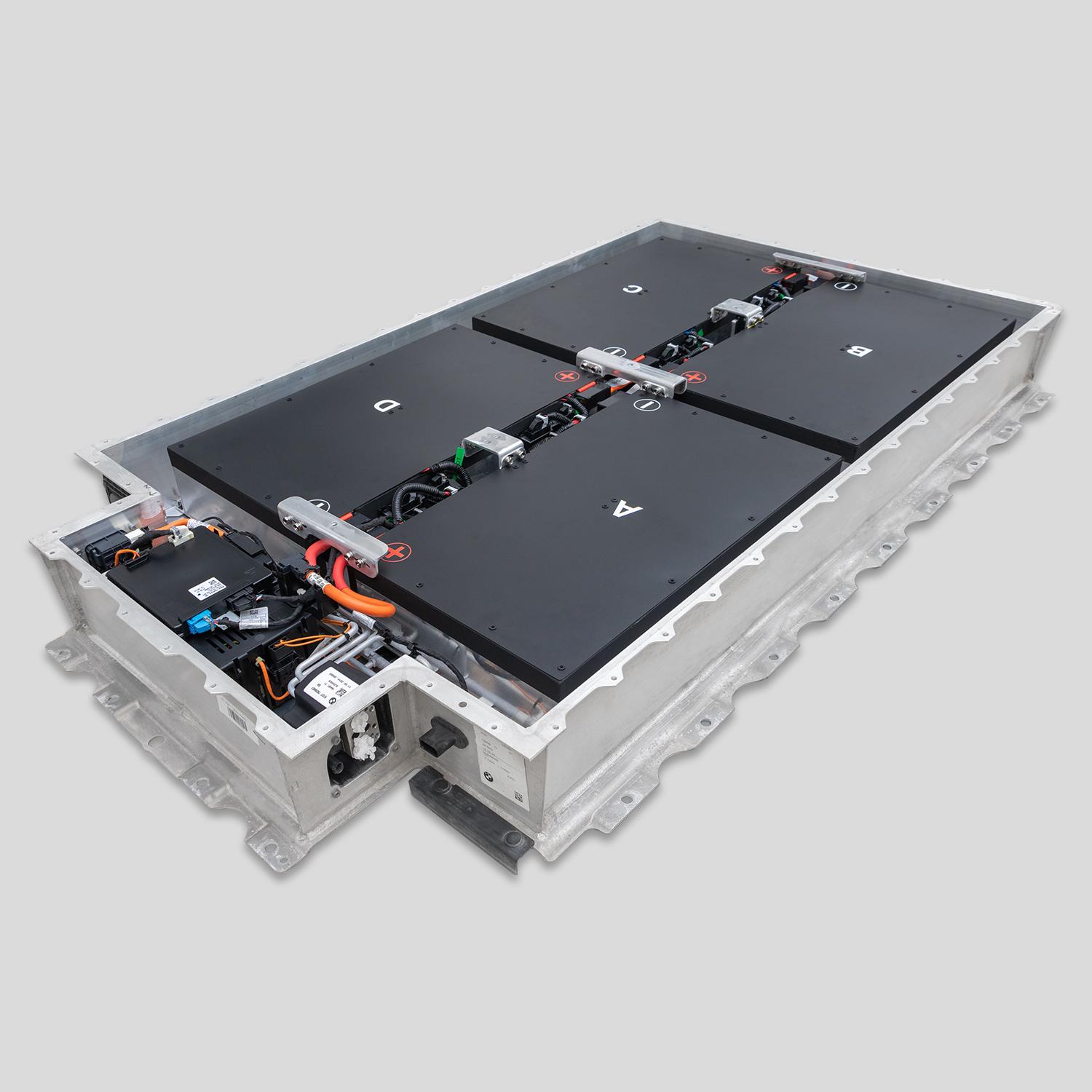
The i3’s main battery interface includes two critical assemblies:
🔌 High-Voltage (HV) Connector
- Carries DC+ and DC− at 150–200A continuous
- Contains HVIL loop: a 12V circuit that runs through every HV component
- Features mechanical interlocks: HV power disconnects only after HVIL opens
📡 Low-Voltage (LV) Connector
- Transmits cell voltage, temperature, and BMS status via CAN
- Includes redundant ground paths for EMI shielding
When the housing cracks or pins bend:
- Moisture enters → corrosion → increased resistance → overheating
- HVIL continuity breaks → BMS cannot verify safe state
- Vibration causes intermittent opens → unpredictable shutdowns
⚠️ Critical fact: No aftermarket connector matches BMW’s IP6K9K sealing or HVIL timing specs.
🛠️ Professional Protocol: Handling Damaged i3 Battery Connectors
🛑 Step 0: Assume the Pack Is Compromised
Even minor connector damage often indicates deeper issues—impact, overheating, or prior mishandling.
Step 1: Diagnose HVIL Continuity
- With HV system de-energized, use a multimeter to test:
- Pin 1 → Pin 2 on HV connector = should read <0.5Ω
- Any open circuit = HVIL broken → pack unsafe
Step 2: Inspect for Secondary Damage
- Check busbar terminals inside the pack for:
- Arc marks
- Discoloration (overheating)
- Loose crimps
- If present → internal damage confirmed
Step 3: The Only Acceptable “Repair” Scenario
You may replace only the LV signal connector if:
✅ Damage is limited to LV housing (no HV involvement)
✅ Pins are not bent or corroded
✅ You use a BMW OEM pigtail (part # 61139458792)
✅ You solder + pot with epoxy (no crimps)
❌ Never splice, crimp, or replace HV connectors in the field.
Step 4: When Replacement Is Mandatory
Replace the entire pack if:
- HV connector housing is cracked, melted, or deformed
- Any pin shows pitting, discoloration, or looseness
- HVIL test fails
- The vehicle has a history of coolant leaks near connectors
The Hidden Risk of “Universal” Connectors
Aftermarket “i3-compatible” plugs often:
- Lack proper HVIL routing
- Use inferior dielectric materials
- Have loose pin retention (vibration failure in <1,000 miles)
Result? A connector that looks right—but fails catastrophically under load.
CNS BATTERY: Factory-Integrated Connectors, Zero Compromise
Every CNS i3 pack ships with:
✅ Genuine TE Connectivity or Amphenol HV/LV connectors (same as BMW OEM)
✅ Laser-welded busbar terminations—no crimps to loosen
✅ Pre-tested HVIL loop with <0.1Ω resistance
✅ IP67-rated seals resistant to coolant, dust, and vibration
No field assembly. No splices. No guesswork.
“We used to try repairing connectors to save customers money. After one near-miss incident, we switched to CNS. Their connectors have never failed—and our liability dropped to zero.”
— Javier R., Paris EV Specialist
Frequently Asked Questions: i3 Connector Damage
Q: Can I use a used OEM connector from a salvage yard?
A: Strongly discouraged. Used connectors often have hidden pin wear or seal degradation. One failure can destroy the entire HV system.
Q: What causes connector damage most often?
A: Improper disconnection (pulling on cable instead of release tab) and coolant exposure (from degraded hoses).
Q: Does CNS sell replacement connectors separately?
A: No—for safety and warranty reasons, connectors are permanently integrated into the pack.
Q: How can I prevent future damage during install?
A: Always:
- Press the HVIL release button fully before pulling
- Support the connector body—not the cable
- Route cables with minimum bend radius (5x diameter)
Q: Will a damaged connector void my warranty?
A: Yes—if evidence of field modification or non-OEM parts is found.
Respect the Plug. Protect the System.
On the i3, the connector isn’t just a link—it’s the first line of defense.
Eliminate Risk at the Source—Install a Pack with Factory-Sealed, Safety-Certified Connectors
Don’t gamble with splices, salvaged parts, or false economies.
Order your CNS BMW i3 battery—engineered with OEM-grade, non-serviceable connectors for maximum reliability and safety:
👉 https://cnsbattery.com/ev-battery-home/ev-battery-contact/