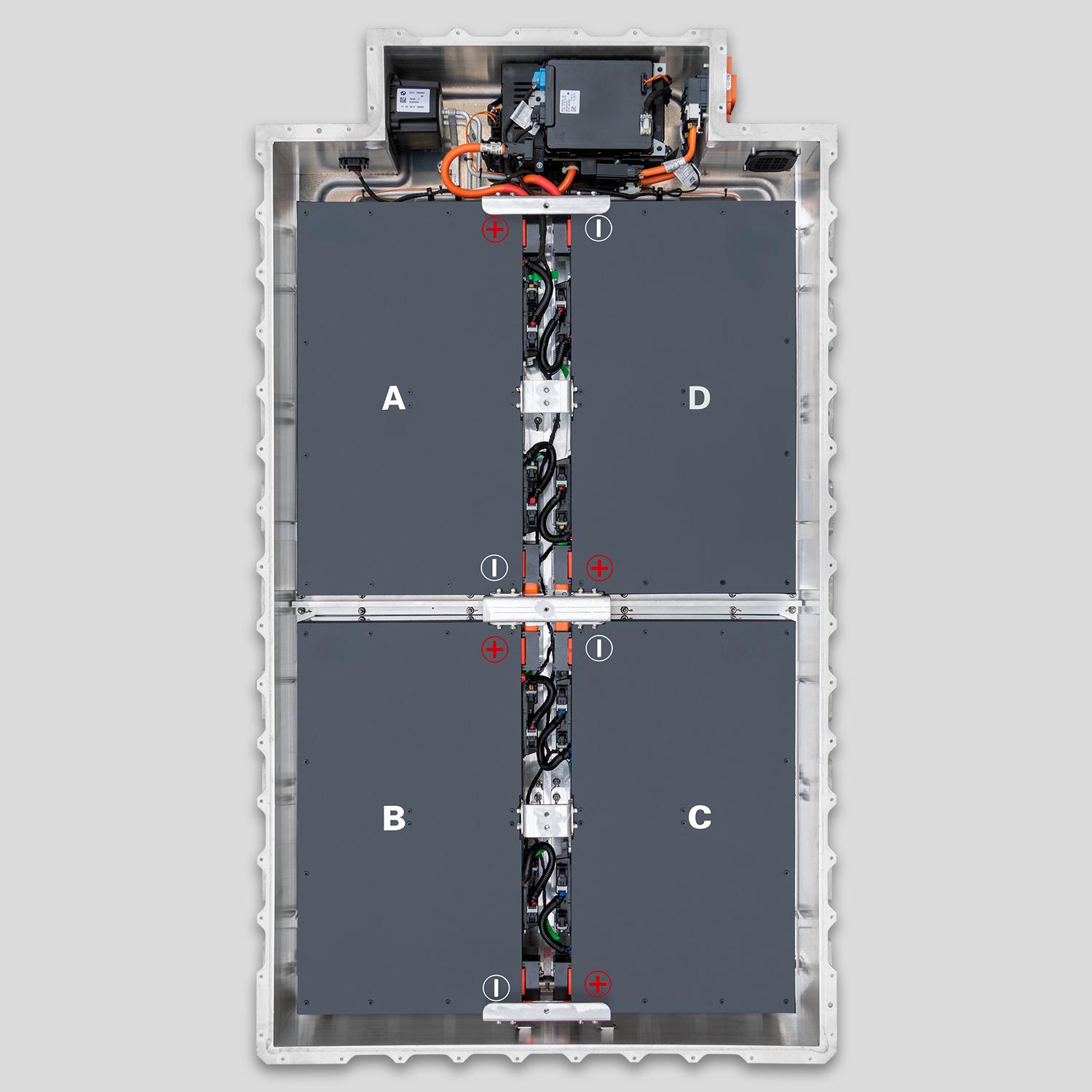
BMW i3 Battery Degradation: Can It Be Reversed? The Truth About “Reconditioning” Scams—and What Actually Works
“I spent $320 on a ‘battery reconditioning’ service that promised to ‘restore 80% capacity.’ They ran a ‘deep cycle’ for 48 hours. My usable kWh went from 21.3 to 21.1. Then they said, ‘It’s working—just needs more sessions!’ I walked out. Six months later, I replaced the pack with CNS. Instantly back to 480 km range. Some losses can’t be undone—but they can be replaced.”
You watch your i3’s range shrink year after year.
The dashboard shows fewer bars.
Charging feels slower.
And you wonder:
“Is there a way to turn back the clock on my battery?”
You’ve seen ads for “rebalancing,” “reconditioning,” or “cell regeneration”—all claiming to reverse degradation.
But here’s the hard truth from electrochemistry:
Battery degradation is permanent. Once lithium ions are lost to side reactions or the anode structure breaks down, they don’t come back. No software trick, pulse charger, or “magic box” can restore what’s chemically gone.
In this guide, you’ll learn:
- The science behind irreversible degradation in NMC cells
- Why “rebalancing” only masks symptoms—not fixes capacity loss
- The one legitimate way to regain lost range (hint: it’s not magic)
- How CNS BATTERY gives you a true reset—with new cells and full warranty
- And how to spot red-flag “miracle cure” scams
Because hope is valuable—but so is honesty.
Why Battery Degradation Is Permanent (Not Just “Low Calibration”)
BMW i3 packs use lithium nickel manganese cobalt oxide (NMC) cells. Over time, three irreversible processes occur:
- Loss of Lithium Inventory (LLI)
Lithium ions get trapped in the solid electrolyte interface (SEI) layer—permanently reducing capacity. - Loss of Active Material (LAM)
Electrode structures crack or dissolve, reducing surface area for reactions. - Electrolyte Breakdown
High temps or overcharging decompose the liquid medium, increasing internal resistance.
🔬 These are chemical changes, not software glitches. You can’t “reboot” chemistry.
📉 What “Reconditioning” Services Actually Do (And Why It Fails)
Most “reconditioning” involves:
- Deep discharging to 0%
- Slow recharging over 24–72 hours
- Repeated cycling to “wake up lazy cells”
What really happens:
✅ Temporary voltage stabilization
✅ Minor cell rebalancing (if BMS allows)
❌ Zero recovery of lost capacity
Worse: deep discharges accelerate degradation in already weak cells.
⚠️ Red flags:
- Claims of “restoring 20–30% capacity”
- Vague explanations (“resets the battery memory”)
- No before/after kWh data
Real capacity is measured in usable kilowatt-hours—not dashboard bars.
The Only Real Solution: Replace with New Cells
If your i3 shows:
- <22 kWh usable (on a 94Ah/33kWh pack)
- ≤7 dashboard bars
- Rapid range drop in cold weather
…then degradation has crossed the point of no return.
But you don’t need to buy a new car—or pay BMW $14,000.
CNS BATTERY offers brand-new CATL NMC cells in OEM-form packs, delivering:
- True 50kWh or 62kWh capacity (upgrade options available)
- Plug-and-play compatibility with all i3 model years
- 2-year / 80,000 km warranty with SoH guarantee
- Full technical support for coding and installation
“My 2015 i3 dropped to 180 km summer range. After CNS 50kWh install? 370 km. It’s not ‘fixed’—it’s reborn.”
— Javier R., Paris
This isn’t reversal. It’s replacement with better-than-original performance.
How to Confirm True Degradation (Before Spending a Dime)
Use BimmerLink or ISTA to check:
- Usable Capacity (kWh) – the gold standard
- Cell Voltage Spread – >0.2V indicates imbalance
- Dashboard Bar Count – correlates roughly with SoH
| Original Pack | Healthy SoH | Moderate Degradation | Severe Degradation |
|---|---|---|---|
| 60Ah (22kWh) | ≥19 kWh | 16–18 kWh | <16 kWh |
| 94Ah (33kWh) | ≥28 kWh | 22–27 kWh | <22 kWh |
| 120Ah (42kWh) | ≥36 kWh | 28–35 kWh | <28 kWh |
If you’re in the red zone—no software can save you.
Protect Your Next Battery: Smart Habits That Slow Degradation
Once you install a new CNS pack, extend its life with:
- Avoid daily 100% charges (use 80–90% for daily driving)
- Don’t store below 20% SoC
- Park in shade or garage in hot climates
- Precondition while plugged in in winter
New cells deserve smart care.
Frequently Asked Questions: i3 Battery Degradation
Q: Can software updates improve range?
A: Minor efficiency tweaks—yes. But they won’t increase usable kWh if cells are degraded.
Q: Is LFP better for longevity?
A: Yes—but CNS uses modern NMC 811 with superior energy density and thermal stability, ideal for i3 packaging.
Q: Do battery blankets help in winter?
A: They reduce cold-induced power limits—but don’t prevent chemical degradation.
Q: Can I mix old and new modules?
A: Never. Mismatched internal resistance causes imbalance and safety risks.
Q: How long do CNS packs last?
A: Designed for ≥2,000 cycles (≈300,000 km). Most owners report <10% loss after 3 years.
Accept the Science—Then Take Back Your Range
Degradation can’t be reversed.
But your driving freedom can be restored.
Stop Chasing Miracles. Start Driving with Confidence.
CNS BATTERY replaces irreversible loss with brand-new performance—so your i3 feels like it just left the factory.
Get your custom quote and reclaim every kilometer:
👉 https://cnsbattery.com/ev-battery-home/ev-battery-contact/