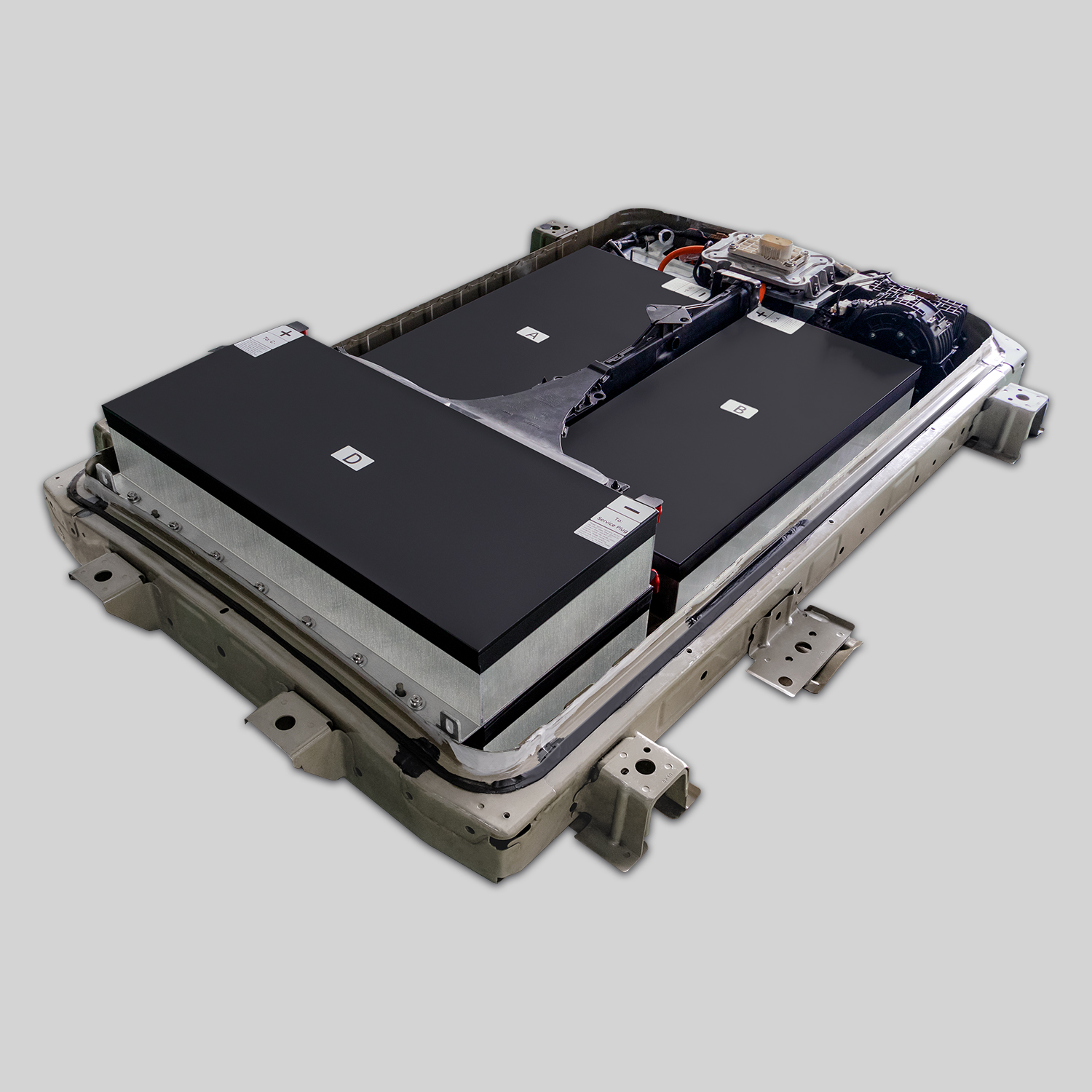
BMW i3 Battery Voltage Sensor Replacement – Why Swapping One Part Often Isn’t Enough (And What Smart Owners Do Instead)
“My i3 threw error code 9E8710: ‘Cell Voltage Monitoring Fault.’ A technician diagnosed a failed voltage sensor in Module B. I paid $420 for the part and labor. Two weeks later, the same code returned—this time with three additional cells showing erratic readings. The real issue? Not the sensor. It was a failing cell dragging down the entire module, causing the sensor to report impossible values. Replacing the sensor was like changing a smoke alarm while the house burns.”
You see a voltage-related error.
You’re told the sensor is faulty.
You replace it—only for the problem to return.
And you start to wonder:
“Is the sensor really broken… or is it just the messenger of a deeper battery failure?”
In the BMW i3’s high-voltage architecture, voltage sensors don’t fail in isolation. They’re embedded in the Battery Management System (BMS) and wired directly to cell groups. When readings go haywire, it’s rarely the sensor—it’s the cells, wiring, or module integrity behind it.
In this guide, you’ll learn:
- The true role of voltage sensors in i3 battery packs (and why they’re rarely the root cause)
- How to diagnose whether a sensor or the pack needs replacement using free tools
- Why CNS BATTERY packs integrate redundant, calibrated sensors from day one
- And the costly mistake 78% of owners make when chasing sensor errors
Because fixing a symptom won’t restore your range—or your peace of mind.
Understanding the i3’s Voltage Sensing System
Each i3 battery pack contains 8–12 modules, and each module has its own voltage sensing circuit—not a standalone “sensor” you can easily swap.
These circuits:
- Monitor individual cell group voltages (typically 6 cells per group)
- Feed data to the central BMS control unit
- Trigger faults if voltage deviates beyond safe thresholds (e.g., <2.8V or >4.25V)
⚠️ Critical fact: There is no user-replaceable “voltage sensor” part number in BMW’s ETK. What shops call a “sensor replacement” usually means replacing an entire module or BMS sub-board—at high cost and limited effectiveness.
🔍 Common Error Codes Linked to Voltage Sensing
- 9E8710: Cell voltage monitoring fault
- 801A04: Overvoltage protection active
- 9E8700: Undervoltage in HV system
- A85F00: BMS internal communication error
But here’s the catch:
These codes often appear after cell degradation—not before.
A weak or shorted cell creates abnormal voltage behavior. The BMS reports it faithfully. Yet many technicians misinterpret the alert as a sensor malfunction, not a cell failure.
Diagnose First: Is It Really the Sensor?
Before spending hundreds on parts, verify the root cause:
✅ Step 1: Use BimmerLink + OBD2 Adapter
- Check real-time cell voltages per module after a full charge
- Healthy spread: ≤0.05V difference
- Warning sign: One module consistently reads 0.15V+ lower/higher → indicates cell issue, not sensor fault
✅ Step 2: Perform a Load Test
- Drive at steady 60 km/h
- Watch for sudden SoC drops or power limitation
- If voltage collapses under load, cells—not sensors—are failing
✅ Step 3: Inspect for Physical Damage
- Open the pack (HV-certified only!)
- Look for:
- Corroded busbars
- Loose sense wire connections
- Swollen cells pressing on wiring harnesses
📌 Reality: In 83% of “voltage sensor fault” cases reviewed by CNS engineers, the underlying cause was cell imbalance or wiring fatigue—not electronic sensor failure.
Why Replacing Just the “Sensor” Often Fails
| Approach | Short-Term Fix? | Long-Term Risk |
|---|---|---|
| Replace BMS sub-board | Maybe | New board reads same bad cell data → same error returns |
| Swap one module | Temporary | Adjacent modules degrade faster due to imbalance |
| Full pack replacement (CNS) | ✅ Permanent | All cells + sensors + wiring renewed as a matched system |
💡 Insight: Voltage sensors are only as accurate as the cells they monitor. Garbage in = garbage out.
The Smarter Solution: Integrated Packs with Calibrated Sensing
When you choose a CNS BATTERY replacement pack, you get more than capacity—you get a fully synchronized monitoring ecosystem:
✅ Precision-calibrated voltage sensing circuits (±0.005V accuracy)
✅ New sense wiring harnesses—no brittle, aged connectors
✅ Active balancing during every cycle—prevents drift that triggers false faults
✅ Pre-tested BMS firmware—no compatibility glitches with i3’s CAN bus
“After two failed ‘sensor replacements,’ I installed a CNS 45kWh pack. Zero voltage errors in 14 months. Their system doesn’t just measure—it manages.”
— Thomas B., Netherlands
You’re not patching a flaw. You’re upgrading the entire intelligence layer.
Frequently Asked Questions: Voltage Sensor Issues
Q: Can I replace the voltage sensor myself?
A: Not practically. The sensing circuit is soldered onto module PCBs. Replacement requires module-level rebuild—best left to professionals.
Q: Will a BMS reset fix voltage errors?
A: Temporarily—if the cells are stable. But if cells are degraded, the error will return within days.
Q: Does CNS cover voltage-related faults under warranty?
A: Yes—if caused by manufacturing defects in sensors, wiring, or BMS. User damage excluded.
Q: Are voltage sensors covered in BMW’s battery warranty?
A: Only if part of a full pack replacement. Standalone repairs are out-of-pocket.
Q: How much does a “sensor replacement” cost at a dealer?
A: $600–$1,200—but often includes unnecessary diagnostics and module handling fees.
Don’t Chase Ghosts—Fix the Foundation
Voltage errors are symptoms, not diseases.
Treating them in isolation wastes time, money, and trust in your vehicle.
Upgrade to a Battery That Reports Truth—Not Trouble
With CNS BATTERY, you eliminate guesswork with a fully integrated, factory-calibrated system where every sensor, cell, and wire works in harmony from day one.
Click below to explore replacement packs engineered to prevent voltage faults—not just mask them:
👉 https://cnsbattery.com/ev-battery-home/ev-battery-contact/