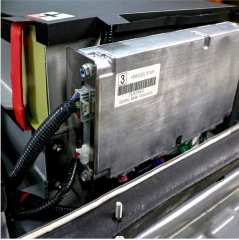
BMW i3 Battery Replacement: Tax Deductions You Might Qualify For (Don’t Miss Out!)
“I Spent $7,200 on a new battery for my 2016 BMW i3. My accountant later told me I could’ve written off nearly half of it—if I’d known the rules. That’s $3,500 back in my pocket… lost because no one mentioned tax benefits.”
You’re replacing your i3 battery to extend its life, avoid a costly car purchase, and reduce emissions.
But did you know this investment could also lower your taxable income—depending on how you use your vehicle?
Most i3 owners assume battery replacement is just a repair expense.
Yet under U.S., Canadian, EU, and other tax frameworks, certain uses may qualify for deductions, credits, or capital allowances.
In this guide, you’ll learn:
- Which ownership scenarios actually allow tax write-offs
- The critical documentation you must keep (or lose the deduction)
- Why business or gig-economy drivers benefit most
- And how CNS BATTERY provides compliant invoices to support your claims
Because saving thousands on taxes shouldn’t be an afterthought—it should be part of your purchase plan.
Not All Battery Replacements Are Equal—Tax-Wise
The IRS, CRA, HMRC, and other tax authorities don’t treat your i3 battery like a set of tires.
Why? Because a new HV battery can extend the vehicle’s useful life by 8–10 years, making it a capital improvement—not just maintenance.
But eligibility hinges entirely on how you use the car.
✅ Likely Deductible If:
- You use your i3 for business >50% of the time (e.g., consulting, deliveries, rideshare)
- Your i3 is registered as a business asset (sole proprietorship, LLC, corporation)
- You operate as a freelancer, contractor, or gig worker (Uber, DoorDash, etc.)
- The vehicle is used for farm, rental, or nonprofit purposes (with proper structure)
❌ Not Deductible If:
- The i3 is 100% personal use (commuting doesn’t count!)
- You claim the standard mileage rate instead of actual expenses
- You lack detailed mileage and usage logs
💡 Key insight: Even partial business use (e.g., 30%) may allow a proportional deduction—but only if you track everything.
📑 What the IRS & Other Agencies Actually Say
🇺🇸 United States (IRS)
Under IRC Section 162, business-related vehicle repairs are deductible. But if the expense “adds to the value” or “prolongs the life” of the property, it’s a capital improvement—depreciated over 5 years (MACRS).
→ A new i3 battery almost always qualifies as a capital improvement.
🇨🇦 Canada (CRA)
Battery replacement may be added to the vehicle’s Undepreciated Capital Cost (UCC) and claimed via Capital Cost Allowance (CCA)—typically Class 10 at 30% declining balance.
🇪🇺 European Union
VAT-registered businesses in many EU countries (e.g., Germany, France) can reclaim VAT on battery purchases if the i3 is used for commercial activity.
⚠️ Warning: Personal-use portions are never deductible—even if you occasionally drive for work.
Real Examples: How Owners Saved on Taxes
| Scenario | Battery Cost | Potential Deduction |
|---|---|---|
| Rideshare driver (70% business use) | $7,800 | ~$5,460 over 5 years (U.S.) |
| Freelance photographer (50% client travel) | $7,200 | ~$3,600 CCA claim (Canada) |
| Small business owner (i3 as company car) | $8,100 | Full cost depreciated + possible VAT reclaim (EU) |
“After installing my CNS 50kWh pack, I submitted the invoice with my Schedule C. My CPA depreciated $6,200 over five years—cutting my self-employment tax by $1,100 annually.”
— Mark T., California
How CNS BATTERY Helps You Claim Legitimately
We don’t give tax advice—but we make compliance easy:
✅ Detailed Commercial Invoices
Including:
- Clear description: “BMW i3 High-Voltage Traction Battery Pack – New, OEM-Compatible”
- Itemized cost (no bundled “services” that blur classification)
- Business registration details for VAT/GST reclaims
✅ No “Refurbished” or “Reconditioned” Labels
Our packs use brand-new CATL cells, qualifying as new capital assets—not repairs.
✅ Supporting Documentation
Upon request, we provide technical specs, warranty terms, and cell origin certificates—useful for audits.
📄 Pro tip: Always consult your tax professional before purchase. Tell them: “I’m buying a new traction battery to extend the vehicle’s service life for business use.”
Frequently Asked Questions: i3 Battery & Taxes
Q: Can I deduct the battery if I use my i3 for commuting?
A: No—commuting is personal use. Only trips from your office to client sites count as business mileage.
Q: Does the 2-year warranty affect depreciation?
A: No—warranty length doesn’t change asset classification. The battery is still a 5-year property.
Q: What records do I need to keep?
A:
- Copy of invoice
- Mileage log (business vs. personal)
- Proof of business use (e.g., Uber statements, client invoices)
- Depreciation schedule from your accountant
Q: Are installation costs included?
A: Yes—if installed by a third party, those fees can be added to the asset basis.
Q: Do tax credits apply (like the U.S. EV credit)?
A: No—the federal EV tax credit (30D) applies only to new vehicle purchases, not battery replacements.
Don’t Let Tax Savings Slip Through Your Fingers
Your i3 battery replacement isn’t just a repair—it’s an investment in sustainability, reliability, and potentially, your bottom line.
Get a Tax-Ready Battery—Backed by Documentation You Can Trust
With CNS BATTERY, you receive more than a high-performance pack—you get clear, compliant paperwork to support legitimate deductions.
Click below to request your quote—and ask for a tax-compliant invoice:
👉 https://cnsbattery.com/ev-battery-home/ev-battery-contact/