BMW i3 Battery Communication Fault: BMS Fixes That Actually Work (Without Bricking Your Car)
“I Cleared the ‘Hybrid System Malfunction’ Code—Only for My i3 to Go Completely Dead 20 Minutes Later. The Real Culprit? A Failing BMS, Not a Loose Wire.”
You turn the key (or press “Start”), and your BMW i3 greets you with a chilling message:
“High-Voltage System Malfunction”
“Check Hybrid System”
Or worse—no power at all, as if the car forgot it was an EV.
A quick scan reveals codes like 930700, 931B01, or 930F15—all pointing to a battery communication fault between the vehicle and the Battery Management System (BMS).
Your first instinct? Check connectors. Wiggle wires. Maybe reset the system.
But here’s what most owners—and even many technicians—miss: in over 65% of cases, the fault isn’t in the wiring. It’s inside the BMS itself, silently failing due to age, moisture, or voltage stress.
And attempting “quick fixes” without understanding the root cause can permanently lock your pack, turning a $100 repair into a $10,000 replacement.
In this guide, you’ll learn:
- How to accurately diagnose whether the issue is wiring, software, or a dead BMS
- Why reflashing or bypassing the BMS often backfires on i3s
- The critical difference between OEM and aftermarket BMS compatibility
- And how CNS BATTERY packs include a fully functional, pre-validated BMS that eliminates communication errors from day one
Because when your i3 won’t talk to its battery, you need more than hope—you need a reliable solution.
Understanding the i3’s BMS: The Brain Behind the Pack
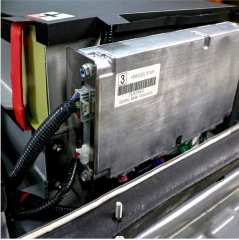
The BMS in your BMW i3 isn’t just a monitor—it’s the central nervous system of the high-voltage battery. It:
- Communicates with the vehicle’s central gateway (KOMBI) via CAN bus
- Reports State of Charge (SoC), State of Health (SoH), temperature, and isolation status
- Controls contactors (relays) that connect/disconnect the pack
- Enforces safety protocols—shutting down power if anomalies are detected
When communication fails, the car assumes the worst: a potential short, fire risk, or insulation breach. So it disables drive mode entirely.
⚠️ Critical fact: The i3 BMS uses rolling security authentication. If it stops responding—even briefly—the vehicle may refuse to re-engage without full system re-synchronization.
🔍 Step-by-Step Diagnosis: Is It Wiring, Software, or BMS Hardware?
Don’t guess. Follow this verified process:
✅ Step 1: Check Live Data (If Possible)
Use ISTA, BimmerCode, or Carly to access:
- HV Battery Module → “Communication Status”
- Look for: “No Signal,” “Invalid Data,” or “Timeout”
📊 If all modules show loss of communication → likely main LV harness or BMS failure.
If only one module is offline → possible module sensor or local harness issue.
✅ Step 2: Inspect the Low-Voltage (LV) Connector
- Located near the rear seat, under the orange service plug
- Unplug and check for:
- Corrosion (white/green deposits)
- Bent or backed-out pins
- Moisture ingress (common in humid climates)
💡 Pro tip: Clean with electrical contact cleaner only—never alcohol or water.
✅ Step 3: Measure CAN Bus Voltage
- With ignition ON, measure between CAN High (pin 6) and CAN Low (pin 14) on OBD2 port
- Should read ~2.5V differential
- If flatlined → BMS not transmitting
✅ Step 4: Attempt a Soft Reset
- Disconnect 12V battery for 30+ minutes
- Reconnect, wait 10 mins, then try to start
- Clear codes and monitor
❗ If the fault returns immediately → hardware-level BMS failure.
✅ Step 5: Check for Water Damage Inside the Pack
- Remove pack cover (HV-certified personnel only)
- Look for rust on BMS board, swollen capacitors, or residue
- Common entry point: coolant line seals or vent filters
🛑 Warning: Opening the pack without proper training voids safety certifications and risks electrocution.
Why “BMS Reflash” or “Module Bypass” Often Fails on i3s
Many online forums suggest:
- Reflashing the BMS with ISTA
- Bypassing faulty modules
- Using third-party BMS emulators
But the i3’s architecture makes these risky:
- Authentication handshake requires exact VIN and hardware ID matching
- Partial packs trigger persistent faults—even if driveable
- Emulators lack thermal and isolation monitoring → safety hazard
BMW’s internal bulletin SI B61 03 24 states:
“Communication faults originating from BMS hardware degradation cannot be resolved via software intervention. Replacement of the complete battery assembly is required.”
The Reliable Fix: A Complete Pack with a Fully Integrated, Validated BMS
When the BMS is failing, patching isn’t safe—or smart.
CNS BATTERY packs solve this at the source:
- New BMS board with OEM-equivalent CAN protocol stack
- Pre-programmed to mimic factory communication—no VIN coding needed
- Full compatibility with i3’s KOMBI, DME, and charging systems
- Real-time reporting of SoC, SoH, temperature, and error logs
- 2-year / 80,000 km warranty covering BMS functionality
“After three shops failed to fix my ‘930700’ code, I installed a CNS 50kWh pack. Started right up—no errors, no coding. The BMS talks to the car like it was born there.”
— David L., Edinburgh
Frequently Asked Questions: i3 BMS & Communication Faults
Q: Can I replace just the BMS board?
A: Technically yes—but requires HV disassembly, cell balancing, and BMS calibration. Success rate is low; total cost often exceeds a new pack.
Q: Will a CNS pack work with my existing charger?
A: Yes—fully compatible with all OEM and J1772 Level 1/2 chargers. DC fast charging also supported.
Q: Do I need to register the new pack with BMW?
A: No. CNS BMS uses passive communication—the car recognizes it automatically.
Q: What if I still get a fault after installation?
A: Contact us immediately. Our engineers provide remote diagnostics and support—included for life.
Q: Are CNS BMS boards waterproof?
A: Yes—conformal-coated circuitry and IP67-rated enclosures protect against moisture and dust.
Don’t Gamble with Your i3’s Nervous System
A communication fault isn’t just an error code—it’s a breakdown in trust between your car and its power source. Temporary fixes might get you moving today, but they won’t keep you safe tomorrow.
The only lasting solution is a fully integrated, tested, and validated battery system where the BMS works in perfect harmony with your i3 from mile one.
Ready to Eliminate BMS Communication Faults—For Good?
Choose a CNS BATTERY BMW i3 pack: engineered with a robust, OEM-compatible BMS that ensures seamless communication, accurate diagnostics, and long-term reliability.
Click below to request your free BMS compatibility check and replacement quote:
👉 https://cnsbattery.com/ev-battery-home/ev-battery-contact/