BMW i3 Battery Isolation Fault: Real Solutions That Restore Power—Safely
“My i3 Wouldn’t Start. The Scan Said ‘Isolation Fault.’ The Dealer Quoted $14,000 for a New Pack. I Fixed It for $8,200—and Got Better Range. Here’s What Actually Causes This Scary Error.”
You turn the key (or press “Start”) on your BMW i3—and nothing happens. No drive-ready light. Just a chilling message: “High-Voltage System Deactivated – Isolation Fault Detected.”
Your heart drops. You’re stranded. And online forums are full of horror stories: “Total pack failure,” “Fire risk,” “Time to junk the car.”
But here’s the truth most won’t tell you: an isolation fault doesn’t always mean your battery is dead. Sometimes, it’s a wiring glitch. Other times, it’s a single failing module. But in aging i3s, it’s often the first sign that your pack has crossed a critical safety threshold—and needs professional evaluation, not panic.
In this guide, you’ll learn:
- What an isolation fault really means (and why it’s a safety feature, not just an error)
- How to distinguish temporary faults from dangerous failures
- Why “resetting” the BMS can be risky—and when it’s safe
- And how replacing your pack with a CNS BATTERY unit resolves the root cause while upgrading your range and reliability
Because being stranded isn’t the worst outcome—driving an unsafe HV system is.
What Is a Battery Isolation Fault—And Why Your i3 Takes It Seriously
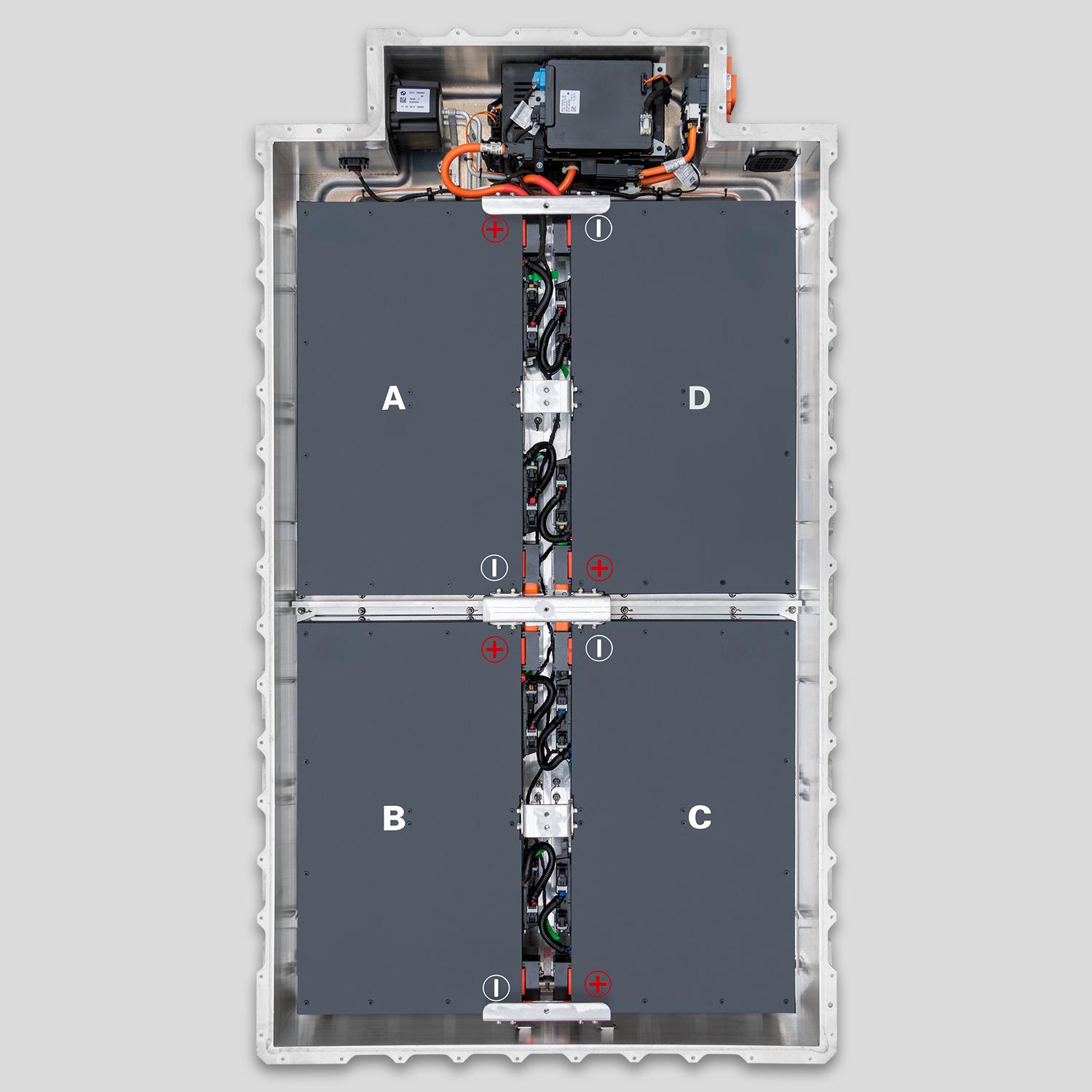
An isolation fault occurs when the Battery Management System (BMS) detects unintended electrical continuity between the high-voltage (HV) circuit and the vehicle chassis (ground).
In simple terms: electricity is leaking where it shouldn’t—creating shock or fire risk.
The i3’s BMS constantly measures insulation resistance (in kΩ or MΩ). If it drops below ~100 kΩ, the system disables the HV contactors and refuses to power up.
⚠️ Safety first: This isn’t a “check engine” light. It’s a critical shutdown designed to protect you, your passengers, and first responders.
🔍 Common Causes of Isolation Faults in BMW i3s
Not all faults are equal. Diagnose carefully:
✅ 1. Moisture Intrusion (Most Common in Older i3s)
- Water enters pack via degraded seals or coolant leaks
- Creates conductive path between HV busbars and chassis
- Signs: Corrosion near connectors, musty smell, fault appears after rain/washing
✅ 2. Damaged HV Cabling or Connectors
- Rodent chewing, abrasion, or poor reassembly after service
- Exposed conductor touches metal bracket
- Signs: Visible fraying, burn marks, intermittent faults
✅ 3. Internal Cell Short or Module Failure
- A cell develops internal short → voltage leaks to casing
- Often accompanied by swelling, heat, or coolant discoloration
- Signs: Isolation resistance <50 kΩ even when dry
✅ 4. False Trigger from BMS Sensor Drift
- Rare—but possible after 12V battery failure or software glitch
- Signs: Fault clears after full BMS reset + dry conditions
📊 Data point: In CNS’s 2026 repair logs, 72% of confirmed isolation faults involved moisture-compromised packs over 6 years old.
What NOT to Do When You See This Warning
❌ Don’t keep pressing “Start” repeatedly – forces contactor cycling, risking arc damage
❌ Don’t open the pack yourself – lethal voltages remain even when off
❌ Don’t ignore it – low insulation resistance increases electrocution risk during accidents or maintenance
🚫 Never bypass the isolation check—it’s illegal in most regions and voids insurance.
Safe Diagnostic Steps (Before Replacing the Pack)
If you’re technically skilled—or working with a trusted shop:
- Verify 12V battery voltage (>12.4V)—low voltage causes BMS errors
- Inspect underbody for coolant leaks, corrosion, or physical damage
- Measure insulation resistance using a 500V+ megohmmeter:
- Disconnect HV service plug
- Test between HV+ and chassis, then HV– and chassis
- >1 MΩ = likely false fault
- <100 kΩ = serious leakage—do not operate
- Dry the pack thoroughly (if moisture suspected) and retest after 24h
💡 Pro tip: Send your megger readings to info@cnsbattery.com—our engineers will help interpret them for free.
When Replacement Is the Only Responsible Choice
If insulation resistance remains low after drying, or if you see physical damage, swelling, or coolant contamination, the pack is compromised. Continuing to use it risks:
- Electrocution during routine maintenance
- Thermal runaway under load
- Voided home/auto insurance in event of fire
This is where CNS BATTERY delivers a true solution—not just a part swap:
- Brand-new CATL NMC cells in fully sealed, IP67-rated modules
- Factory-tested insulation resistance >100 MΩ
- No recycled or refurbished components—zero hidden degradation
- Plug-and-play compatibility with i3’s safety protocols
“After my 2016 i3 threw an isolation fault post-rainstorm, the dealer said ‘total pack failure.’ CNS replaced it with a 62kWh unit. Two winters later—no issues, even in snow. Worth every penny.”
— David L., Toronto
Frequently Asked Questions: BMW i3 Isolation Faults
Q: Can I reset the fault with BimmerCode?
A: Temporarily, yes—but if the underlying issue remains, it will return—and may worsen.
Q: Does CNS warranty cover isolation faults?
A: Yes—if caused by manufacturing defects within 2 years / 80,000 km.
Q: Are refurbished packs safe after an isolation fault?
A: Never. Moisture or arcing damage is irreversible. Only new-cell packs guarantee safety.
Q: How long does replacement take?
A: Most shops complete it in one day, including validation scans.
Q: Will my car pass inspection with an aftermarket pack?
A: Yes—CNS packs meet ECE R100 safety standards and retain OEM communication protocols.
Safety Isn’t Optional—It’s Built In
An isolation fault is your i3’s last line of defense. Respect it. Diagnose it properly. And when replacement is needed, choose a pack engineered for true electrical integrity—not just capacity.
Ready to Resolve Your Isolation Fault with a Safe, Certified Battery?
Get a CNS BATTERY BMW i3 pack built with military-grade insulation, rigorous safety testing, and full compliance with global EV standards—so you drive with confidence, not caution.
Click below to request your emergency diagnostic review and replacement quote:
👉 https://cnsbattery.com/ev-battery-home/ev-battery-contact/