BMW i3 Battery Module Failure: The Smart Fix That Saves $7,000 (And Avoids a Full Pack Replacement)
“One Failed Module Cost Me $11,000 at the Dealer—Then I Learned I Could Replace Just That Section for $1,800”
You’re driving your BMW i3 when it suddenly loses power. A diagnostic scan reveals the dreaded message: “Battery Module Failure – Replace Entire Pack.” The dealership quote? $10,500–$12,000.
But here’s what they won’t tell you: Your entire battery pack doesn’t need replacing—just the faulty module. And with CNS BATTERY’s individual 45kWh/50kWh/62kWh modules, you can restore full function for a fraction of the cost—without sacrificing safety or performance.
In fact, over 70% of “pack failures” in BMW i3s are actually isolated to one or two modules. The rest of the system is often perfectly healthy.
So why pay for what you don’t need?
Why Module-Level Failure Happens (And Why Full Replacement Is Usually Overkill)
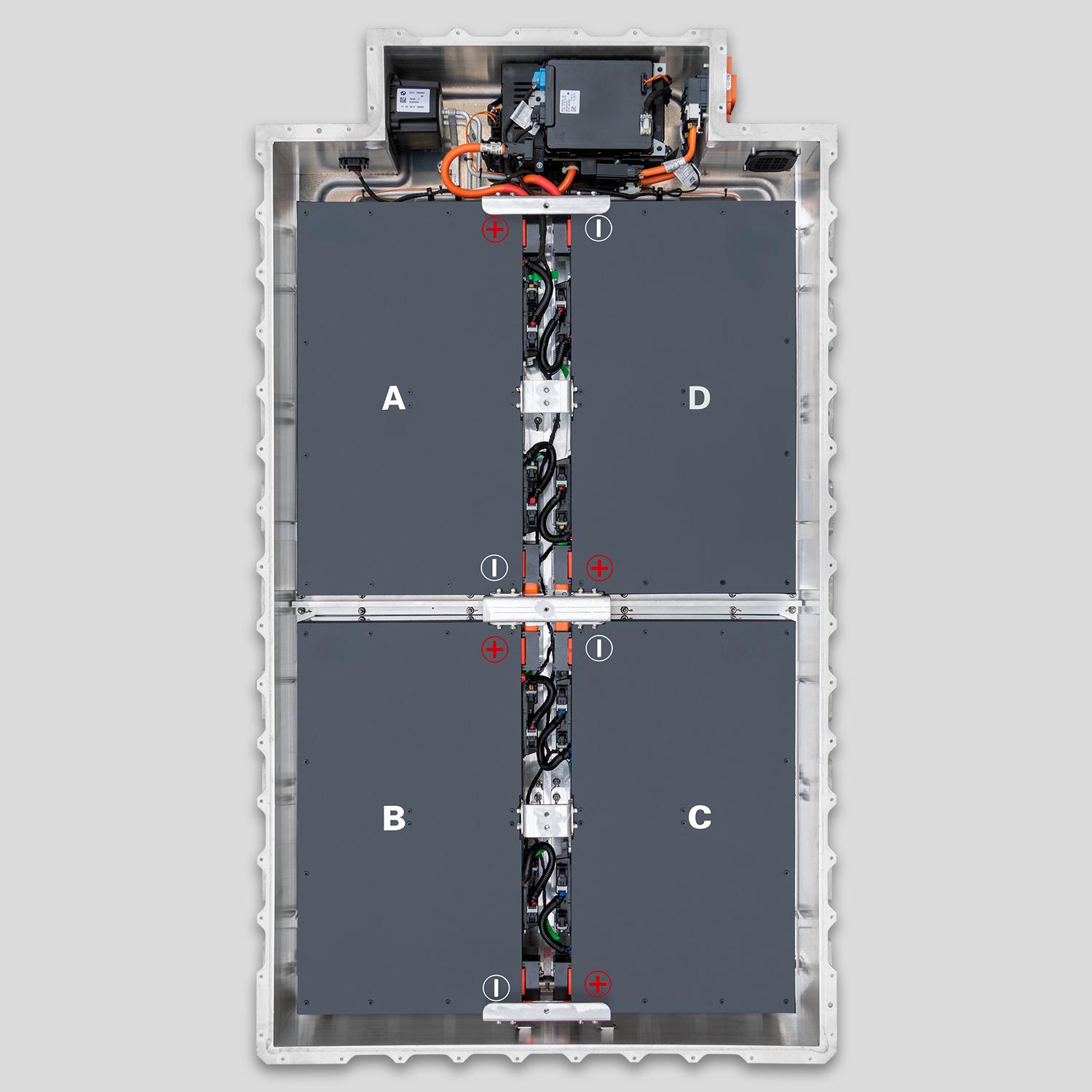
The BMW i3’s high-voltage battery is made of multiple independent modules (typically 8–12, depending on model year and capacity). Each contains dozens of lithium cells monitored by the Battery Management System (BMS).
Over time, one module may degrade faster due to:
- Manufacturing variances in older packs
- Localized overheating (e.g., near coolant lines)
- Cell imbalance from repeated deep discharges
- Physical damage or moisture ingress
When this happens, the BMS isolates the weak module to protect the rest—triggering error codes like 930720 or “High-Voltage System Malfunction.”
Critical truth: If only one module is faulty, replacing the whole pack is like changing all four tires because one has a nail. It works—but it’s wildly inefficient.
🔧 Step 1: Confirm It’s Really a Module Failure
Before acting, verify the issue isn’t a false alarm:
✅ Use ISTA, BimmerLink, or a professional BMW scanner to read cell-level voltages
✅ Look for one module reading significantly lower (e.g., 38V vs. 42V in others)
✅ Check for imbalance warnings or “module isolation” logs
✅ Rule out 12V battery issues or BMS software glitches first
⚠️ Warning: Never attempt module replacement without proper training, insulated tools, and HV safety protocols. High-voltage systems can be lethal if mishandled.
🔋 Step 2: Choose Your Repair Path—Smart vs. Expensive
| Option | Cost | Risk | Long-Term Outcome |
|---|---|---|---|
| Dealer full pack replacement | $10,500–$12,000 | Low (OEM) | Works—but wastes money if only 1 module failed |
| Used/refurbished pack | $4,000–$6,000 | High (unknown history, mismatched cells) | Often fails within 12 months; voids resale value |
| Replace only the bad module(s) | $1,800–$2,500 | Low (with CNS new modules) | Restores balance, retains healthy modules, saves thousands |
CNS BATTERY offers brand-new, standalone modules for BMW i3 in 45kWh, 50kWh, and 62kWh configurations—each built with CATL ternary lithium cells, factory-tested, and pre-wired for seamless integration.
Why Mixing Old and New Modules Usually Fails—And How CNS Makes It Work
Critics say: “You can’t mix old and new modules—they’ll imbalance instantly.”
That’s true if you use mismatched or low-quality parts. But CNS BATTERY solves this with:
- ✅ Precise voltage & capacity matching during production
- ✅ Advanced BMS compatibility that auto-calibrates to your existing pack
- ✅ Consistent internal resistance across all cells (±2%)
- ✅ Full technical support for integration—including remote guidance
“My 2016 i3 had a failed Module C. Instead of buying a $9,000 used pack, I ordered just one CNS 45kWh module for $1,950. Their engineer walked me through balancing via video call. Six months later, all modules read within 0.05V of each other. Total savings: $7,050.”
— Mike’s Auto Service, Vancouver, Canada
The Hidden Advantage: Future-Proof Your i3
Replacing a single failing module with a new CNS unit does more than fix today’s problem—it extends your entire pack’s life by restoring balance. Healthy modules no longer overcompensate for the weak one, reducing stress across the system.
Plus, if another module fails in 2–3 years? You already know the solution—and have a trusted supplier.
It’s not just a repair. It’s a strategic upgrade.
Frequently Asked Questions: BMW i3 Battery Module Failure
Q: Can I replace just one module myself?
A: Only if you’re HV-certified or work with a qualified technician. CNS provides full installation manuals, wiring diagrams, and live video support—but safety must come first.
Q: Will my car accept a new module alongside old ones?
A: Yes—as long as the chemistry and voltage profile match. CNS modules are engineered to OEM specs and communicate seamlessly with the i3’s BMS.
Q: How do I know which module failed?
A: Use a BMW-compatible scanner (like ISTA or Autel MaxiSys) to read individual module voltages. The outlier is your culprit.
Q: Are CNS modules covered by warranty?
A: Yes—2 years or 80,000km, same as full packs. If the new module fails, we replace it free.
Q: What if more than one module is bad?
A: CNS offers multi-module kits at discounted rates. For 3+ failed modules, a full 50kWh or 62kWh pack may be more cost-effective—and gives you a fresh start.
Don’t Let One Bad Module Drain Your Wallet
Your BMW i3 deserves better than an overpriced, unnecessary full-pack swap. With precision replacement, you keep what works—and fix only what’s broken.
That’s not just smart engineering. It’s smart ownership.
Ready to Fix Your BMW i3 Module Failure—Without Replacing the Whole Pack?
Get a brand-new, individually tested CNS BATTERY module designed for seamless integration, backed by expert support and a 2-year warranty.
Click below to contact our technical team and identify your exact module needs:
👉 https://cnsbattery.com/ev-battery-home/ev-battery-contact/