BMW i3 60Ah to 154Ah Upgrade: Mechanic’s Full Process
For professional EV mechanics and repair shops, the BMW i3 60Ah to 154Ah battery upgrade is one of the most in-demand services in 2026—especially as thousands of 2016-2018 i3 models with original 60Ah batteries reach the end of their lifespan. The 60Ah battery, once a standard for base-model i3s, delivers just 130-160km of real-world range, a major limitation for owners who rely on their vehicles for daily commuting or longer trips. Upgrading to a 154Ah high-capacity battery (54kWh gross capacity) transforms the i3, boosting real-world range to 400km—a 150% improvement—and extending the vehicle’s utility by 5+ years. Unlike generic upgrades, the 60Ah to 154Ah conversion requires precision, adherence to BMW’s 2026 software standards, and expertise in the i3’s unique LifeDrive architecture. This guide breaks down the full, step-by-step process from a mechanic’s perspective, covering pre-upgrade prep, safety protocols, installation, coding, and post-upgrade verification—ensuring error-free results, compliance with 2026 regulations, and maximum profitability for your shop.
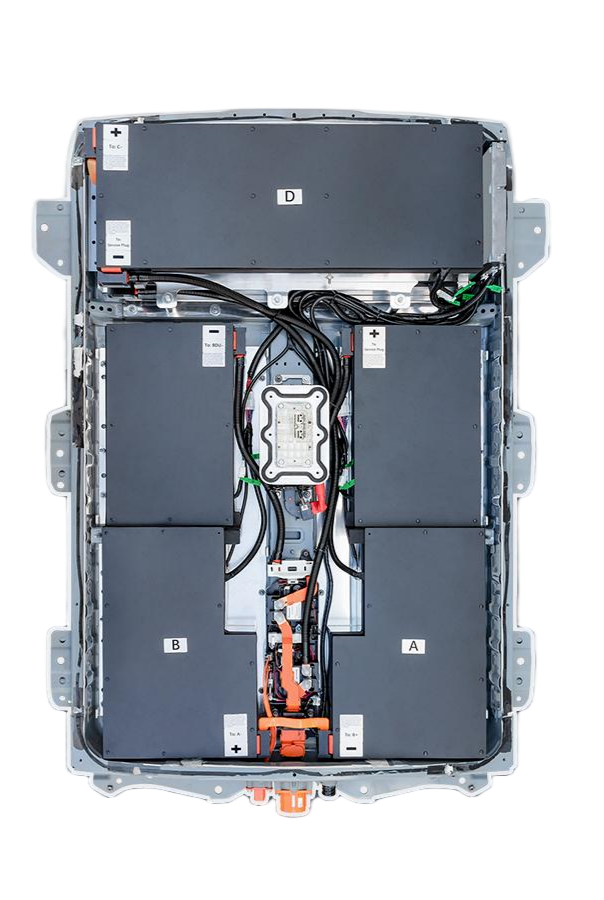
The BMW i3’s 60Ah battery (22kWh gross capacity) uses older prismatic cells, while the 154Ah upgrade leverages modern CATL NCM prismatic cells—BMW’s OEM supplier—configured as 96 cells in a 12S1P×8 arrangement, operating at 355V DC to match the i3’s high-voltage (HV) system specifications. Critical to 2026 upgrades is compatibility: the 154Ah module must feature 2026-compliant firmware (version 4.30.1x or newer) to avoid being locked out by the i3’s BMS (Battery Management System), which has been updated to address recall-related software gaps. This guide is designed for working mechanics, focusing on actionable steps, tool requirements, and common pitfalls to avoid—so you can complete each upgrade efficiently, safely, and with zero callbacks.
Pre-Upgrade Preparation: Mechanic’s Checklist (2026 Compliant)
Proper preparation is the foundation of a successful 60Ah to 154Ah upgrade—skipping these steps leads to wasted time, damaged components, or post-installation errors. As a mechanic, your goal is to verify compatibility, gather the right tools, and ensure the vehicle is ready for HV work—all aligned with BMW’s 2026 technical service bulletins (TSBs).
1. Vehicle & Battery Compatibility Verification
Start by confirming the i3 is eligible for the 60Ah to 154Ah upgrade—this step eliminates 90% of compatibility issues: • VIN Scan: Use BMW ISTA-D (latest version, compatible with Windows 10+) paired with an ICOM or K+DCAN OBD-II cable to scan the vehicle’s VIN. Ensure the vehicle is a 2016-2018 BMW i3 (base model with 60Ah battery)—2013-2015 models require an adapter harness (not needed for 2016+). • Recall Check: Verify if the vehicle is part of BMW’s 2026 secondary recall (caused by incorrect software versions from prior service). If so, update the BMS firmware before proceeding—failure to do so will skew coding and trigger HV system locks. • 154Ah Battery Verification: Inspect the new 154Ah module (preferably CATL-powered) for physical damage, confirm it matches OEM dimensions (305×31×104mm), and verify firmware version 4.30.1x or newer. Avoid generic modules—they often lack proper cell balancing (critical for 60Ah to 154Ah conversions) and fail BMS communication tests.
2. Tool & Safety Gear Preparation (Non-Negotiable)
The i3’s 360V HV system demands specialized tools and safety gear—never use generic equipment for this upgrade: • Safety Gear: Class 00 insulated gloves (1000V rated, inspected annually), CAT III 1000V voltage tester, Class C fire extinguisher (for electrical fires), and HV warning signs to mark the work area. • BMW-Specific Tools: ISTA-D diagnostic software (for coding and firmware updates), BMW battery tray removal tool (Part #12527580422), torque wrench (calibrated for 8Nm, 12Nm, and 45Nm), and a hydraulic lift (rated for 3000+ lbs) for underbody access. • Auxiliary Tools: Wire brushes (for cleaning corroded HV connectors), electrical contact cleaner, dielectric grease (for connector protection), battery lifting strap (to safely maneuver the 250kg 154Ah module), and zip ties (for securing wiring harnesses).
3. Vehicle Prep
Prepare the i3 for HV work to avoid electrical hazards and diagnostic errors: • Park the vehicle on a level surface, engage the parking brake, and chock all wheels. • Charge the 60Ah battery to 30-40% SOC (state of charge)—this prevents over-discharging during removal and simplifies BMS calibration later. • Disconnect the 12V auxiliary battery (negative terminal first) and wait 10 minutes for HV capacitors to discharge—verify 0V with a voltage tester before touching any HV components. • Disconnect aftermarket electronics (e.g., dash cams) that may interfere with ISTA-D communication.