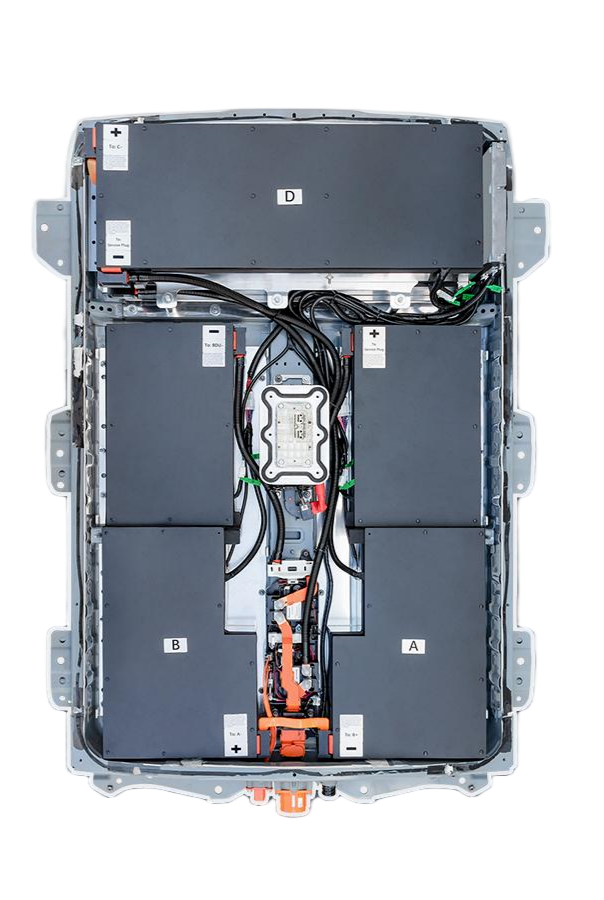
BMW i3 Battery Upgrade Installation: Step-by-Step for Mechanics
For automotive mechanics specializing in electric vehicles (EVs), BMW i3 battery upgrade installations are becoming a high-demand service in 2026. As most 2016-2022 i3 models reach the end of their original battery lifespan (5-6 years), owners are seeking upgrades—typically from 60Ah, 94Ah, or 120Ah to 154Ah modules—to restore range, extend vehicle life, and avoid dealership price gouging. Unlike basic battery replacements, i3 battery upgrades require precise adherence to BMW’s high-voltage safety protocols, BMS (Battery Management System) reprogramming, and 2026-specific compatibility checks. This step-by-step guide is tailored exclusively for mechanics, combining professional best practices, 2026 OEM guidelines, and troubleshooting tips to ensure a seamless, safe, and profitable installation—whether you’re working with OEM-quality aftermarket modules (like CNS BATTERY’s 154Ah CATL-powered option) or BMW genuine parts.
The BMW i3’s high-voltage battery system (360V DC) presents unique safety and technical challenges that differentiate it from other EVs. Mechanics must prioritize proper high-voltage isolation, component handling, and BMS calibration to avoid electrical damage, safety hazards, or warranty issues for the vehicle owner. This guide focuses on the most common 2026 upgrade: 60Ah/94Ah/120Ah to 154Ah, compatible with all 2016-2022 i3 and i3s models. We’ll cover pre-installation diagnostics, tool preparation, safety protocols, detailed step-by-step installation, post-installation testing, and 2026-specific pitfalls to avoid—all designed to streamline your workflow and ensure customer satisfaction. By following these steps, you’ll be able to complete a professional i3 battery upgrade in 4-6 hours, delivering value to your customers while maximizing your efficiency.
Pre-Installation Preparation: Mechanics’ Checklist (2026 Updated)
Proper preparation is critical to avoiding costly mistakes and ensuring a smooth installation. For 2026 i3 battery upgrades, mechanics must complete these steps before beginning any work—failure to do so can result in BMS incompatibility, electrical shorts, or damage to the i3’s LifeDrive architecture.
1. Vehicle & Battery Compatibility Verification
First, confirm the i3’s model year and original battery capacity to ensure the 154Ah upgrade module is compatible. Use BMW’s ISTA+ software (2026 latest version) to pull the vehicle’s VIN and battery specifications—this will also reveal any existing DTCs (Diagnostic Trouble Codes) related to the battery or BMS. Key compatibility notes for 2026: All 2016-2022 i3 models (including i3s) are compatible with 154Ah upgrades, but 2013-2015 60Ah models require an additional wiring adapter (included with premium aftermarket modules like CNS BATTERY’s 154Ah pack). Avoid generic 154Ah modules—they often lack CATL cells (BMW’s OEM supplier) and fail ISTA+ compatibility checks, leading to post-installation errors.
2. Tool & Safety Equipment Preparation
Gather the following tools and safety gear—all essential for compliant, safe installation (2026 BMW service guidelines require these items):
• High-voltage safety kit: Insulated gloves (Class 00, 1000V rated), insulated tools (wrenches, screwdrivers), voltage tester (CAT III 1000V rated), and a high-voltage warning sign. • BMW-specific tools: Battery tray removal tool (BMW Part #12527580422), BMS programming cable (BMW Part #61120446826), and ISTA+ software (2026 version with i3 154Ah calibration data). • General tools: Floor jack, jack stands (rated for 3000+ lbs), torque wrench (accurate to ±2 Nm), socket set (metric), and wire brushes (for cleaning electrical connectors). • Safety accessories: Fire extinguisher (Class C, for electrical fires), eye protection, and a grounded workbench for module handling.
3. Pre-Installation Diagnostics & Battery Preparation
Before disconnecting any high-voltage components: (1) Use ISTA+ to run a full battery health check on the original module—document capacity, voltage, and cell balance for the customer’s records. (2) Clear any existing DTCs related to the battery or BMS—these can interfere with post-installation calibration. (3) Prepare the replacement 154Ah module: Charge it to 50-60% capacity (optimal for installation), inspect for physical damage (dents, leaks, or loose connectors), and verify that all cell voltages are balanced (within 0.05V of each other) using a battery cell tester. For aftermarket modules, confirm that the BMS firmware is compatible with the i3’s 2026 software updates—CNS BATTERY’s 154Ah modules come pre-loaded with the correct firmware to avoid reprogramming delays.
Step-by-Step BMW i3 Battery Upgrade Installation (Mechanics’ Guide)
Follow these steps in order, adhering strictly to high-voltage safety protocols and BMW’s 2026 service specifications. This process is optimized for efficiency, taking 4-6 hours for experienced EV mechanics.
Step 1: High-Voltage System Deactivation (Critical Safety Step)
Safety is non-negotiable when working with the i3’s 360V system. (1) Park the vehicle on a level surface, engage the parking brake, and chock the wheels. (2) Turn off the ignition and remove the key fob (or ensure the vehicle is in “Sleep Mode” for keyless models). (3) Open the hood and locate the 12V auxiliary battery—disconnect the negative terminal first (torque: 8 Nm), then the positive terminal. (4) Wait 10 minutes for the high-voltage capacitors to discharge—this is mandatory per BMW’s 2026 guidelines to avoid electrical shock. (5) Use a CAT III 1000V voltage tester to confirm the high-voltage lines are de-energized (0V DC) before proceeding.
Step 2: Battery Tray Removal
The i3’s high-voltage battery module is located under the vehicle, secured by a reinforced tray. (1) Use a floor jack to lift the vehicle to a safe working height (minimum 18 inches) and secure it with jack stands—never rely solely on the jack. (2) Remove the underbody panels (6 Torx T30 screws, torque: 5 Nm) to access the battery tray. (3) Locate the high-voltage connector on the front of the battery module—remove the protective cover and use an insulated wrench to disconnect the connector (torque: 12 Nm). (4) Disconnect the BMS wiring harness connector (press the tab and pull gently to avoid damaging pins). (5) Use the BMW battery tray removal tool to loosen the 8 mounting bolts (torque: 45 Nm)—have a helper assist with lifting the tray, as the original battery module weighs ~250kg (550 lbs).
Step 3: Old Battery Module Removal & Disposal
Once the tray is loose: (1) Carefully lower the battery tray using the floor jack (or a hydraulic lift for heavier modules) to avoid damaging the underbody or wiring. (2) Remove the old battery module from the tray—inspect the tray for corrosion or debris, and clean it with a wire brush if needed. (3) Dispose of the old module in compliance with 2026 environmental regulations—lithium-ion EV batteries must be recycled at a certified facility (CNS BATTERY offers a battery recycling program for mechanics). Do not puncture, incinerate, or short-circuit the old module, as this poses a fire risk.
Step 4: New 154Ah Module Installation
Prepare the new module for installation: (1) Place the 154Ah module into the cleaned battery tray—ensure it is aligned with the mounting holes (misalignment can damage the module or tray). (2) Secure the module to the tray using the original bolts (torque: 35 Nm). (3) Lift the battery tray back into position under the vehicle—use a helper to align the tray with the mounting points. (4) Tighten the 8 tray mounting bolts using the torque wrench (torque: 45 Nm)—follow the star pattern to ensure even pressure. (5) Reconnect the high-voltage connector (torque: 12 Nm) and replace the protective cover. (6) Reconnect the BMS wiring harness connector—ensure it clicks into place to confirm a secure connection.
Step 5: BMS Reprogramming & Calibration (2026 Critical Step)
The i3’s BMS must be reprogrammed to recognize the new 154Ah module—failure to do so will result in error lights, incorrect range readings, and battery damage. (1) Reconnect the 12V auxiliary battery (positive terminal first, then negative; torque: 8 Nm). (2) Connect the ISTA+ software to the vehicle’s OBD-II port using the BMW programming cable. (3) Select “Battery Replacement” from the ISTA+ menu, then choose “154Ah High-Voltage Module” as the replacement type. (4) Follow the on-screen prompts to reprogram the BMS—this process takes 15-20 minutes and will calibrate the BMS to the new module’s capacity, cell balance, and charging parameters. (5) Once reprogramming is complete, clear any new DTCs and run a BMS self-test to confirm compatibility.
Step 6: Post-Installation Testing & Verification
After installation, verify that the upgrade is successful with these tests: (1) Turn on the ignition and check the dashboard for warning lights—no battery or high-voltage errors should appear. (2) Use ISTA+ to run a full system scan—confirm that the BMS reads the new 154Ah capacity and that all cells are balanced. (3) Test the charging system: Connect the vehicle to a Level 2 charger (7.4kW) and confirm that it charges at the correct rate (10-80% in 25-30 minutes for 154Ah modules). (4) Conduct a test drive: Drive the vehicle for 10-15 miles, testing acceleration, regenerative braking, and range readings—all should function as normal. (5) Document the post-installation results (capacity, charging time, test drive notes) for the customer’s records.
Mechanics’ Troubleshooting Guide (2026 Common Issues)
Even with proper preparation, issues can arise. Here are the most common problems mechanics face during i3 battery upgrades in 2026, and how to resolve them:
Issue 1: BMS Reprogramming Failure
If ISTA+ fails to reprogram the BMS, check: (1) The replacement module’s firmware (ensure it’s compatible with 2026 i3 software—update if needed using the module’s manufacturer tool). (2) The programming cable (replace if it’s faulty or outdated). (3) Existing DTCs (clear all codes before reprogramming). For CNS BATTERY modules, contact technical support for a firmware update tool—this resolves 90% of reprogramming issues.
Issue 2: High-Voltage Connector Leaks or Loose Connections
If the high-voltage connector leaks or is loose: (1) Inspect the connector for damage (cracks, bent pins) and replace if needed. (2) Clean the connector with electrical contact cleaner to remove corrosion. (3) Reconnect the connector and torque to 12 Nm—ensure the protective cover is properly secured to prevent water intrusion (a common 2026 issue in wet climates).
Issue 3: Incorrect Range Readings Post-Installation
If range readings are inaccurate: (1) Run a BMS calibration (charge to 100%, leave plugged in for 2 hours, drive to 10-15%, then recharge to 80%). (2) Verify that the module’s capacity is correctly programmed in ISTA+. (3) Check for cell imbalance—use a cell tester to ensure all cells are within 0.05V of each other; if not, use the BMS to balance the cells.
2026 Mechanics’ Pro Tips for Profitable Installations
To maximize efficiency and customer satisfaction: (1) Stock OEM-quality 154Ah modules (like CNS BATTERY’s) to avoid compatibility issues and reduce return rates. (2) Offer a post-installation warranty (we recommend 2 years/80,000km) to differentiate your service from dealerships. (3) Streamline your workflow by preparing tools and modules the night before—this cuts installation time by 30%. (4) Educate customers on battery maintenance (charge to 80%, avoid fast charging, protect from extremes) to reduce future service calls.
By following this step-by-step guide, mechanics can complete professional BMW i3 battery upgrades in 2026 that are safe, reliable, and profitable. The 154Ah upgrade is in high demand, as it delivers 300-330km (186-205 miles) of real-world range and extends the i3’s life by 7-8 years—providing exceptional value to customers. As EV battery experts, we’re here to support mechanics with OEM-quality modules, technical support, and recycling programs—helping you grow your EV service business in 2026 and beyond.
For bulk pricing on 154Ah OEM-quality modules, technical support, or additional installation resources, visit https://cnsbattery.com/ev-battery-home/ev-battery-contact/ to speak with our mechanics’ support team. Elevate your EV service offerings and become the go-to provider for BMW i3 battery upgrades in 2026.