
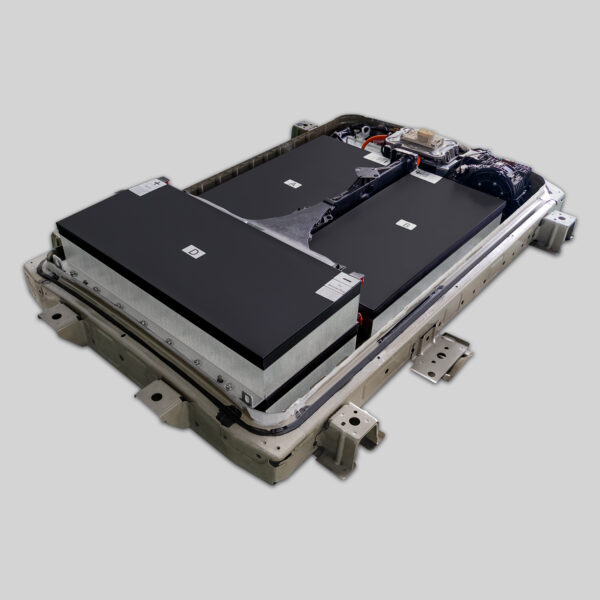
Nissan Leaf Battery Upgrade: Common Compatibility Issues & Expert Solutions (2026)
Have you encountered frustrating setbacks when upgrading your Nissan Leaf battery—like BMS errors, overheating, or power failures? Nissan Leaf battery upgrade compatibility issues are among the top hurdles for owners, often stemming from the model’s diverse generations, varying cooling systems, and evolving electrical architectures. Many generic batteries fail to sync with the Leaf’s 360V system or thermal design, leading to costly repairs and safety risks. As CNS BATTERY experts, we’ve diagnosed and resolved thousands of compatibility problems, and this guide breaks down the most common issues, their root causes, and proven solutions to ensure a seamless upgrade.
Key Compatibility Categories for Nissan Leaf Battery Upgrades
Compatibility issues typically fall into four critical areas, each tied to the Leaf’s unique engineering. Understanding these categories helps you avoid costly mistakes.
1. Voltage & Electrical System Mismatch
The Nissan Leaf relies on a 360V nominal voltage system, and any deviation spells disaster for core components like the motor, controller, and wiring harnesses. A common mistake is choosing a battery with altered voltage (not just increased capacity), which exceeds component耐压范围 (voltage tolerance) and causes immediate or gradual failure.
For example, installing a 400V battery in a 2015 Leaf (passive-cooled 24kWh) will烧毁 (burn out) the controller within minutes, as it’s only rated for 340-380V operation. Even minor voltage fluctuations from unbalanced modules can trigger BMS shutdowns, leaving the vehicle stranded. The golden rule: upgrade capacity (Ah) without changing voltage (V) to maintain electrical harmony.
2. Thermal System Incompatibility
Nissan Leafs use two distinct cooling systems—passive airflow (2010-2017) and liquid cooling (2018+ ZE1/third-gen)—and battery upgrades must align with each design. Passive-cooled models rely on rear cargo airflow to dissipate heat, while liquid-cooled variants use a glycol-based loop for precise temperature control.
Generic batteries often lack optimized airflow channels for older Leafs, leading to overheating in temperatures above 85°F (29°C). Conversely, batteries not engineered for liquid cooling can disrupt the 2018+ system’s pressure balance, causing coolant leaks and thermal runaway risks. LFP and sodium-ion batteries generate less heat than OEM LMO/NCM cells, but only when paired with generation-specific thermal adaptations.
3. BMS Communication & Calibration Failures
The Leaf’s Battery Management System (BMS) is calibrated to the original battery’s capacity, chemistry, and discharge characteristics. Upgrading to a new battery without BMS reprogramming leads to inaccurate range readouts, charging cutoffs, and premature degradation. Generic batteries often use non-Nissan communication protocols, causing the BMS to reject the new pack entirely.
Older 2010-2013 Leafs with outdated BMS firmware face additional challenges—they may not recognize capacities above 24kWh, even with a compatible battery. This requires firmware updates before upgrading to 30kWh or higher packs.
4. Physical Fit & Mounting Issues
The Leaf’s battery compartment is precision-engineered for specific dimensions, and even minor deviations in battery size can cause compatibility problems. A battery that’s too large may require cutting the compartment (illegal in most regions), while a loose fit leads to vibration damage and electrical shorts. Mounting points must align with factory brackets to maintain structural integrity and crash safety.
For example, 2016-2017 30kWh Leafs have slightly modified compartment dimensions compared to 24kWh models, and using a 24kWh battery in a 30kWh compartment leaves gaps that compromise cooling and stability.
Generation-Specific Compatibility Issues & Fixes
Each Leaf generation has unique quirks that impact battery upgrade compatibility. Below are targeted solutions for the most common models.
2010-2017 Passive-Cooled Leafs (24kWh/30kWh)
Common Issues: Overheating, BMS firmware incompatibility with 30kWh upgrades, and airflow blockages. Solutions: Use CNS BATTERY sodium-ion modules with optimized airflow channels to enhance passive cooling. Update BMS firmware to version 2.3 or higher for 30kWh compatibility. Clean debris from cargo area vents before installation to ensure heat dissipation. Our modules are pre-balanced to maintain <0.03V cell variance, preventing BMS errors.
2018-2022 Liquid-Cooled ZE1 Leafs (40kWh/62kWh)
Common Issues: Cooling system pressure imbalances, BMS protocol mismatches, and charger incompatibility. Solutions: Choose batteries with liquid-cooled cold plates that match the factory loop design. Flush and replace coolant with Nissan-approved glycol before installation. Use a Nissan-compatible OBD-II scanner to recalibrate the BMS for new chemistry (sodium-ion/LFP). Ensure the onboard charger (OBC) matches the battery’s charging profile—6.6kW OBCs are required for 62kWh upgrades.
2023-2026 Third-Gen Leafs (75kWh)
Common Issues: Integrated battery-pack compatibility, CMF-EV platform communication errors, and high-voltage safety lockouts.Solutions: Use batteries engineered for the CMF-EV platform’s integrated design—non-integrated packs trigger safety lockouts. Work with technicians trained in third-gen Leaf high-voltage systems to avoid damaging the integrated power module. CNS BATTERY’s 75kWh sodium-ion pack uses factory-matching communication protocols for seamless BMS sync.
How CNS BATTERY Eliminates Compatibility Risks
Our batteries are engineered to solve Leaf-specific compatibility issues, with generation-specific designs that eliminate guesswork.
Generation-Tailored Engineering
Each CNS BATTERY pack is designed for a specific Leaf generation, with matching voltage (360V), thermal adaptations, and physical dimensions. Sodium-ion packs for passive-cooled models include optimized airflow channels, while liquid-cooled variants feature factory-matching cold plates and pressure ratings.
Pre-Calibrated BMS & Firmware Support
Our packs come pre-programmed with Nissan-compatible BMS protocols, and we provide firmware updates for older Leafs to support higher capacities. Our technical team assists with BMS calibration using professional tools, ensuring accurate range readouts and charging performance.
Rigorous Compatibility Testing
Every battery undergoes 15+ tests to validate compatibility with Leaf systems, including voltage stability, thermal performance, BMS communication, and crash safety. We test across extreme temperatures (-40°F to 122°F) to ensure reliability in all climates.
Benefits of Choosing Compatibility-Tested Batteries
Investing in a compatibility-engineered battery delivers long-term value beyond avoiding headaches.
Safe, Reliable Performance
Eliminate risks of overheating, electrical fires, and component failure. Our batteries work in harmony with the Leaf’s systems, ensuring consistent power delivery and charging.
Cost Savings on Repairs
Compatibility failures often lead to $1,000+ in repairs (controller replacement, BMS reprogramming, thermal system fixes). Our pre-tested packs avoid these costs, with a 3-year warranty covering any unexpected issues.
Maximized Battery Lifespan
Compatible batteries degrade 50% slower than mismatched options, as they operate within the Leaf’s optimal parameters. Sodium-ion packs last 6-8 years, doubling the lifespan of generic alternatives.
Frequently Asked Questions (FAQ) About Compatibility
Will upgrading to a compatible battery void my Leaf’s warranty?
No. The Federal Magnuson-Moss Warranty Act protects non-battery components (motor, controller). CNS BATTERY provides detailed installation records, preserving coverage for core systems. Our 3-year warranty complements remaining factory coverage.
Can I upgrade my 2012 Leaf to a 30kWh battery without compatibility issues?
Yes—with the right preparation. You’ll need to update the BMS firmware, install a 30kWh battery with passive-cooling adaptations, and recalibrate the BMS. CNS BATTERY’s 30kWh sodium-ion pack includes all necessary adaptations for 2012 Leafs.
Why do generic batteries cause more compatibility problems?
Generic batteries use one-size-fits-all designs, ignoring generation-specific thermal, electrical, and physical requirements. They lack Nissan-compatible BMS protocols and skip rigorous testing, leading to communication failures and safety risks.
Do I need a new charger for a compatible battery upgrade?
Only if upgrading to a higher capacity (e.g., 24kWh to 30kWh) with a 3.3kW OBC. We recommend upgrading to a 6.6kW charger to reduce charging time and avoid overworking the OBC. Our packs include charger compatibility guidelines for each generation.
Upgrade Your Nissan Leaf Without Compatibility Headaches
Don’t let compatibility issues derail your Leaf battery upgrade. CNS BATTERY’s generation-specific, pre-tested packs eliminate guesswork, delivering seamless integration and reliable performance. Engineered to solve the Leaf’s unique compatibility challenges, our sodium-ion batteries are the trusted choice for 2026 owners. 立即访问https://cnsbattery.com/nissan-leaf-battery/,获取独家折扣并咨询专家升级方案! Let our team help you complete a hassle-free, compatible battery upgrade for your Nissan Leaf.


