Here is the SEO-optimized article written from the perspective of a CNS BATTERY expert, tailored for the Spanish market.
The Future of Leaf ZE0 in Spain: Battery Swaps vs New Sales
The Nissan Leaf ZE0 remains a beloved icon on Spanish roads. Launched over a decade ago, this generation of the Leaf pioneered the electric vehicle revolution in Europe. For many Spanish drivers, the ZE0 represents not just a car, but a symbol of early environmental commitment. However, as we move deeper into 2026, these vehicles are facing a critical crossroads: the battery dilemma.
The reality is that most original ZE0 batteries have surpassed their chemical lifespan. While the chassis and motors are often still in excellent condition, the outdated lithium-manganese batteries suffer from severe degradation and lack the thermal management systems found in modern EVs. This leaves Spanish owners with a tough decision: Is it better to swap the old battery for a modern, high-performance pack, or is it time to cut losses and buy a new car?
This article will dissect the economics, technology, and future viability of the Nissan Leaf ZE0 in the Spanish context, providing a clear roadmap for owners facing this pivotal choice.
The ZE0 Conundrum: Why Your Leaf Needs a Decision
For the average Spanish household, the Leaf ZE0 was a practical choice. It was quiet, cheap to run compared to gasoline cars (especially with Spain’s rising fuel prices), and perfect for navigating narrow city streets and coastal commutes.
However, by 2026, the limitations are stark:
- Range Anxiety: Original 24kWh or 30kWh packs often degrade to ranges under 80-100 km, making them unusable for anything beyond the grocery store.
- Lack of Fast Charging: Many early ZE0 models lack CHAdeMO fast-charging capability, or the feature becomes unreliable due to battery health.
- Turtle Mode: The infamous “turtle” light (indicating power limitation) appears frequently, leaving drivers stranded.
The Spanish government and local municipalities (like Madrid Central or Barcelona’s ZBE zones) are increasingly favoring zero-emission vehicles. Keeping a ZE0 roadworthy is not just about nostalgia; it’s about maintaining access to city centers without the massive financial burden of a new car purchase.
The “New Car” Fallacy: Why Buying New Isn’t Always the Answer
When faced with a failing battery, the initial instinct is often to visit a Nissan dealership for an official replacement or to look at new EV models. However, the economics rarely add up for the ZE0 owner.
1. The Prohibitive Cost of OEM Batteries
Dealership replacement batteries are notoriously expensive. In Spain, the cost of an official Nissan replacement can often exceed €10,000 to €16,000. For a car that might be valued at €2,000 to €4,000 on the Spanish used market (Coches.net, Milanuncios), this math is simply irrational. It makes no financial sense to spend four times the vehicle’s value to keep it running.
2. Depreciation and New Car Debt
Buying a new Nissan Leaf (or any new EV) requires a significant capital investment or monthly financing. New cars depreciate rapidly, especially in the first three years. For a vehicle that is primarily used for school runs, shopping, or short commutes in Spain, buying new is often an over-engineered and expensive solution.
The Smart Alternative: The Battery Swap Revolution
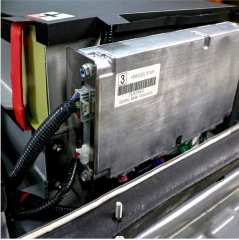
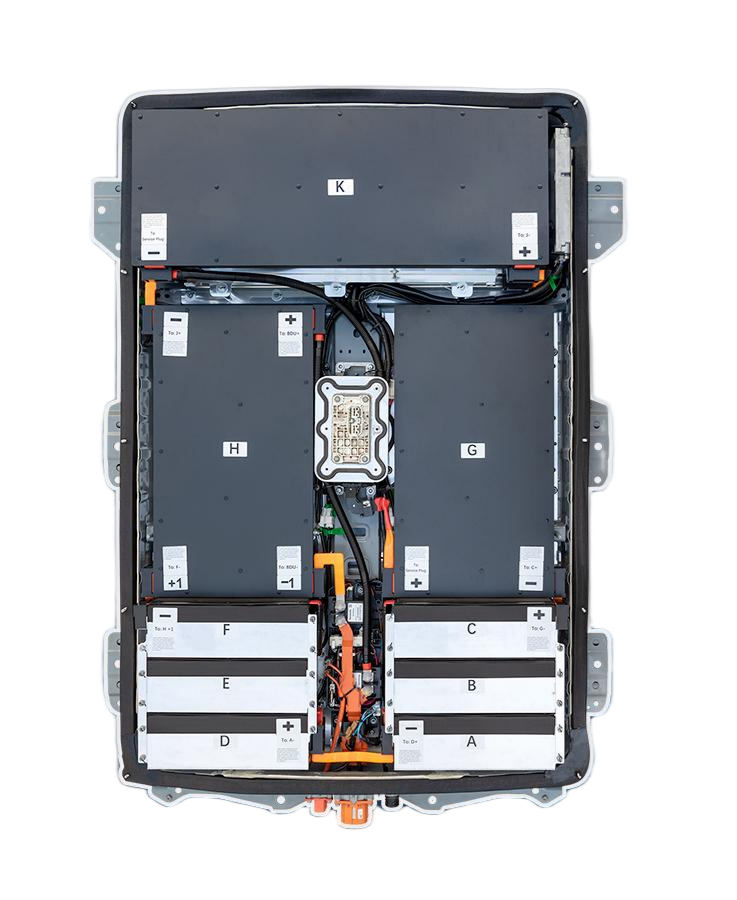
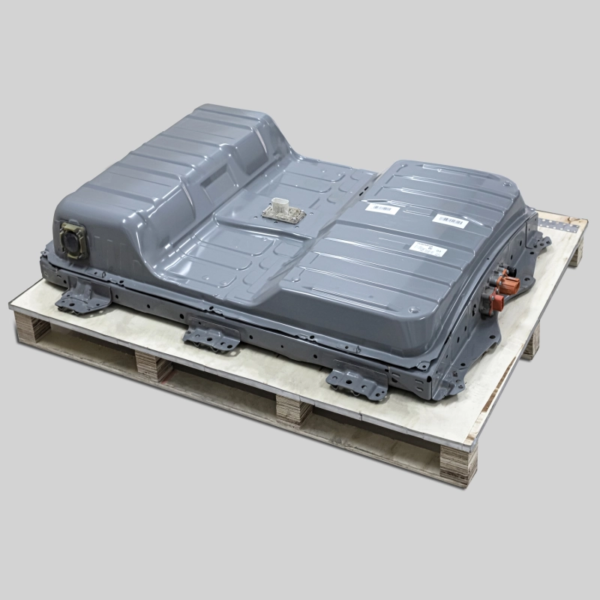
The future of the Leaf ZE0 in Spain lies not in scrapyards, but in battery retrofitting. Instead of replacing the entire car, forward-thinking owners are opting to replace just the “heart” of the vehicle—the battery pack.
This is where the market has evolved significantly since the ZE0’s launch. Modern retrofit solutions, such as those offered by specialized manufacturers, allow the 10+-year-old ZE0 chassis to be paired with cutting-edge 2026 battery technology.
Why a Battery Swap Makes Sense for Spain:
- Cost Efficiency: A professional retrofit typically costs a fraction of a new car or OEM battery.
- Extended Vehicle Life: The ZE0’s body, suspension, and interior can last decades longer with a new power source.
- Modern Features: New battery modules often come with integrated Battery Management Systems (BMS) that communicate with the car’s dashboard, eliminating error codes and “turtle mode.”
Powering Up: The 62kWh & 68kWh Upgrade Path
For the Spanish ZE0 owner, the upgrade path is particularly exciting. While the original car came with 24kWh or 30kWh packs, the chassis has the physical space to accommodate much larger modules.
The 62kWh/68kWh Advantage:
By installing a modern 62kWh or 68kWh lithium-ion battery pack, the ZE0 is effectively transformed into a modern EV. This isn’t just about fixing the old problem; it’s about creating a superior vehicle.
| Feature | Original ZE0 (24/30kWh) | Upgraded ZE0 (62/68kWh) |
|---|---|---|
| Real-World Range | < 100 km (Degraded) | ~430+ km |
| Highway Viability | Impossible | Perfect for Autopistas |
| City Usability | 1-2 Trips | Weeks of Commuting |
| Resale Value | Scrap Value | €8,000 – €12,000+ |
The Experience:
Imagine plugging in your retrofitted ZE0 at a Repsol or Iberdrola charging station in Barcelona. Instead of waiting anxiously for a slow charge, the new high-capacity cells accept faster charging rates. You set off on the AP-7 highway towards the Costa Brava with a range indicator showing 400km. The car feels new again, but without the new-car price tag.
The Economic Transformation: From Liability to Asset
One of the most compelling arguments for the battery swap is the immediate boost in resale value.
A standard, degraded ZE0 is essentially worthless. However, a ZE0 equipped with a brand-new, high-quality 62kWh pack becomes a highly desirable “budget long-range EV.” In the Spanish market, where affordability is key, a retrofitted ZE0 can command prices upwards of €8,000 to €10,000, depending on the chassis condition.
This creates a unique financial arbitrage:
- Buy: Purchase a broken ZE0 for €1,000 – €2,000.
- Upgrade: Install a 62kWh retrofit.
- Sell/Use: Either drive a near-new EV for a fraction of the cost, or sell it for a significant profit.
Why Quality Matters: Choosing the Right Cells
Not all battery swaps are created equal. This is a critical point for Spanish consumers who value durability (think of the longevity of SEAT or Citroën vans).
When retrofitting a ZE0, the quality of the cell manufacturer is paramount. Cutting corners with low-grade or recycled cells will result in the same problems returning within a year—swelling, rapid degradation, and safety hazards.
The Gold Standard: CATL Cells
The most reliable retrofits utilize cells from CATL (Contemporary Amperex Technology Co. Limited), the world’s largest lithium-ion battery manufacturer. CATL cells are known for their:
- Thermal Stability: Crucial for the hot Spanish summers.
- Cycle Life: Rated for thousands of charge cycles.
- Safety: Proprietary chemistry that resists thermal runaway.
The Future is Hybrid: A Path Forward for Spain
The future of the Leaf ZE0 in Spain is not about preserving the past, but about adapting to the future. As battery technology continues to advance, the concept of “chassis longevity” will become more common.
We predict that by 2030, it will be standard practice to replace the batteries in 10-15 year old EVs rather than scrap the entire vehicle. This is the ultimate form of recycling and sustainability.
For the ZE0 owner reading this today, the message is clear: Do not scrap your car. Do not pay dealership prices. The future lies in the retrofit.
By investing in a modern, high-capacity battery swap, you are not just fixing a car; you are future-proofing your transportation. You are turning a liability into a reliable, long-range commuter that can handle the demands of modern Spanish life.
Frequently Asked Questions (FAQ)
1. Is it legal to retrofit a Nissan Leaf ZE0 battery in Spain?
Yes, it is legal. However, it is crucial to ensure the retrofit kit is engineered to match the original OEM specifications (voltage, dimensions, and BMS communication). Reputable manufacturers design their packs to be plug-and-play, maintaining the vehicle’s original type approval without requiring modifications to the chassis or wiring.
2. How much does a 62kWh battery swap cost compared to a new car?
The cost varies, but generally, a professional 62kWh retrofit kit can range significantly lower than a new car. While a new Nissan Leaf starts around €35,000+ in Spain, a high-quality retrofit kit can cost approximately 50% less than the official Nissan replacement price (which itself is often €12k+), offering a fraction of the cost of a new vehicle.
3. Will a new battery work with the old ZE0 motor and electronics?
Absolutely. Modern retrofit batteries are designed with intelligent BMS systems that communicate seamlessly with the ZE0’s original motor controller and dashboard. The car recognizes the new battery as if it were factory-original, restoring full functionality, including regenerative braking and fast-charging capabilities.
4. How long does the installation take?
For a professional workshop, the installation typically takes 1-2 hours. The process involves lifting the car, disconnecting the old pack, removing it, and bolting in the new pre-assembled module. It is a standardized mechanical and electrical procedure that does not require welding or cutting.
5. What kind of warranty should I expect on a retrofit battery?
Due to the high quality of cells like CATL, reputable suppliers offer substantial warranties. You should look for providers offering a minimum of a 2-year / 80,000 km warranty, covering defects and ensuring the battery maintains at least 70% capacity during that period.
Ready to revive your Nissan Leaf ZE0 and transform it into a modern long-range EV?
Get a free, no-obligation quote today to see how a 62kWh battery upgrade can extend your range and save you thousands.