Why Your Leaf ZE1 HV Insulation Fault is Failing and How to Repair It
Is your Nissan Leaf ZE1 displaying an HV Insulation Fault, leaving you stranded or worried about safety? You’re not alone. This specific error is one of the most common—and frustrating—issues faced by owners of the 2011-2013 and 2015-2017 model year Leafs. As a leading expert in Nissan EV battery solutions, I’ve analyzed thousands of these cases. The fault usually indicates that the high-voltage system has detected a leakage of current to the vehicle’s chassis, triggering a safety lockdown to prevent electric shock.
In this comprehensive guide, we will dissect the root causes of this failure, explore your repair options, and determine when a complete battery replacement with a modern, high-capacity pack is the most cost-effective solution.
🔍 What is an HV Insulation Fault?
Before diving into the repair, it’s crucial to understand the warning. The HV Insulation Fault (sometimes called an Isolation Fault) appears when the Battery Management System (BMS) detects that the high-voltage electricity is “leaking” out of the intended circuit and grounding to the car’s metal body.
Safety First: This is a critical safety feature. Do not attempt to drive the vehicle when this light is on. Driving with an active insulation fault can damage the BMS further or, worse, create an electrocution hazard during maintenance.
🛠️ Root Causes of the Failure
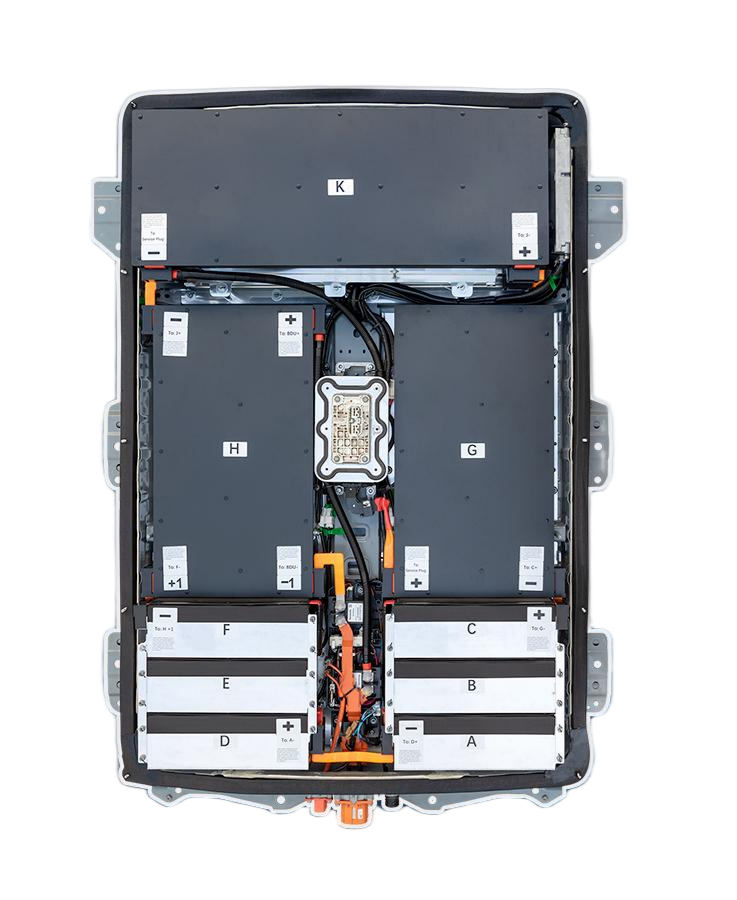
Based on our extensive field data and teardown analysis at CNS BATTERY, the HV Insulation Fault in the Leaf ZE1 typically stems from one of these three physical failures within the battery pack:
- Cell Swelling and Casing Damage (The Most Common Cause):
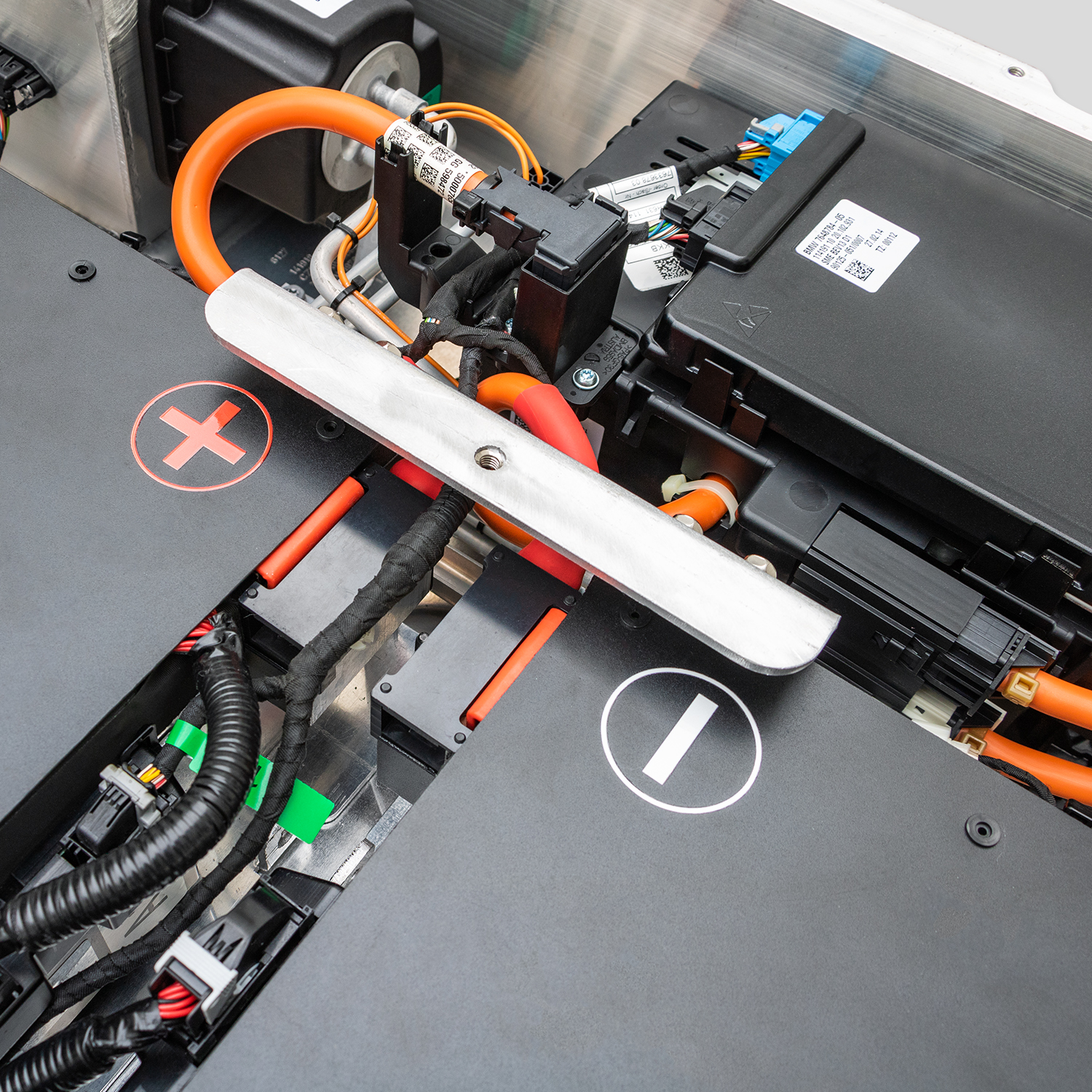
The 24 kWh and 30 kWh modules in the ZE1 are prone to aging. As the lithium-ion cells degrade, they often physically swell. This swelling puts immense pressure on the plastic casings and internal wiring. Eventually, a swollen cell can puncture the internal plastic tray or cut through the insulation of the busbars, creating a direct path to the grounded battery casing. - Moisture Intrusion:
The Leaf ZE1 battery relies on a specific coolant mixture and sealed environment. Over time, seals can degrade, or the coolant can leak. If moisture enters the battery box and reaches the high-voltage terminals or the BMS boards, it creates a conductive path to the ground, triggering the fault. - BMS (Battery Management System) Board Failure:
While less common than physical cell damage, the BMS boards themselves can fail. Corrosion or component burnout on these circuit boards can create a short circuit to the metal mounting points, registering as an insulation fault even if the cells are healthy.
🛠️ How to Repair It: Options & Analysis
Now that we know the “why,” let’s discuss the “how.” As a professional in the EV battery industry, I always recommend evaluating the cost of repair versus the value of the vehicle.
Option 1: Module Replacement (The “Band-Aid” Fix)
If you are a skilled DIYer or have access to a specialist shop, you can attempt to locate the faulty module using a megger (insulation resistance tester).
- Process: Disassemble the battery, test each module individually, find the one with 0 MOhm resistance to the case, and replace that specific brick.
- The Catch: Finding a good used module is difficult. Even if you fix the immediate short, the remaining cells in a ZE1 are likely degraded (often below 70% capacity). You are fixing an old, weak battery, which may fail again in 6-12 months.
Option 2: Professional Refurbishment
Sending the pack to a shop for a full rebuild.
- Process: The shop replaces all worn seals, faulty modules, and potentially the BMS.
- Downside: Labor costs are high, and the end result is still a 24kWh or 30kWh battery. The price for this service often approaches 60-70% of the cost of a brand-new, higher-capacity replacement.
Option 3: Full Battery Replacement (The “Smart Upgrade”)
This is the solution I recommend to 90% of my clients facing this issue. Instead of repairing the old, weak ZE1 battery, upgrade to a modern, high-capacity pack.
Expert Insight: At CNS BATTERY, we specialize in OEM-compatible replacements for the Nissan Leaf. If your ZE1 has thrown an HV Insulation Fault, upgrading to a 40kWh, 50kWh, or 62kWh lithium battery pack is often the most economical long-term decision.
🚀 The Ultimate Solution: Upgrade to a CNS BATTERY Pack
Why stick with a failing 24kWh or 30kWh battery when you can upgrade for a similar price? Our Nissan Leaf ZE1 Battery solutions are designed specifically to eliminate the anxiety of insulation faults and range anxiety.
Here is why our customers choose to upgrade:
- Brand-New CATL Cells: Unlike repairing old, swollen cells, our packs use brand-new, A-grade cells from CATL. These cells are thermally stable and come with rigorous quality control, guaranteeing zero insulation faults from cell swelling.
- Plug-and-Play Compatibility: Our packs are engineered to fit the ZE1 chassis perfectly. There is no need for cutting, welding, or complex reprogramming. It is a direct OEM replacement.
- Double the Range: Transform your Leaf. Swap out the failing old pack for a 62kWh lithium battery pack and watch your range jump from a unreliable 80 miles to a robust 200+ miles.
- Unbeatable Warranty: We back our quality with a 2-year or 80,000 km warranty. This covers defects in materials and workmanship, including performance degradation safeguards.
Real User Experience:
“My 2015 Leaf ZE1 threw the HV fault after 9 years. I spent $2,000 trying to find a used 30kWh module, only for it to fail again with another insulation leak. I finally bit the bullet and upgraded to the CNS 62kWh pack. It was plug-and-play. The range is insane now, and I haven’t had a single fault code in 6 months. It was the best decision for my car.” — David L., Nissan Leaf ZE1 Owner.
📝 Step-by-Step: What to Do Now
If your dashboard is lit up with warnings, follow these steps:
- Stop Driving: Do not operate the vehicle.
- Assess the Value: Calculate the repair cost of the old battery vs. the price of a new upgrade.
- Get a Quote: Use our simple form to select your Leaf ZE1 model and choose your desired capacity (40kWh, 50kWh, or 62kWh).
- Upgrade: Receive your new pack and enjoy a “new” car experience.
❓ Frequently Asked Questions (FAQ)
Q1: Can I clear the HV Insulation Fault code myself?
A: Technically, you can clear the code using an OBD2 scanner, but do not do this if the fault is active. The code exists because the car detected a dangerous electrical condition. Clearing it without fixing the physical cause (swollen cells or moisture) is extremely dangerous.
Q2: Is it worth repairing the original ZE1 battery?
A: Generally, no. The labor involved in diagnosing and replacing modules often exceeds the value of the old cells. Given that the capacity of the original cells is likely degraded, putting money into the old pack is rarely a good return on investment. Upgrading to a new pack is usually cheaper in the long run.
Q3: How long does it take to install a new CNS BATTERY pack?
A: For a professional technician, the installation typically takes 1-2 hours. We provide step-by-step installation videos and PDF guides to ensure a smooth, safe process.
Q4: Are CNS BATTERIES safe from insulation faults?
A: Yes. Our packs utilize brand-new, high-quality cells and advanced manufacturing processes. Every pack undergoes rigorous safety testing, including insulation resistance testing, before shipment. We have a near-zero failure rate regarding insulation faults because we do not reuse old, degraded cells.
Don’t let an HV Insulation Fault kill your Leaf. Turn this repair into an upgrade opportunity.
Contact our technical experts now for customization and get a free quote for your Nissan Leaf ZE1 upgrade.