⚡ Expert Review: The Ultimate 30kWh to 62kWh Upgrade Solution for Your Nissan Leaf
Is your Nissan Leaf suffering from range anxiety? If you own an early-generation Nissan Leaf (specifically the 24kWh or 30kWh models), you know the struggle. The original battery capacity simply doesn’t cut it for modern commutes. The good news? Upgrading from a 30kWh battery to a 62kWh pack is the single most transformative modification you can make to your EV.
As a specialist in the EV aftermarket, I’ve seen countless Leaf owners stuck between the rock of expensive dealership replacements and the hard place of unreliable refurbished batteries. Today, I want to walk you through why a high-capacity OEM-compatible upgrade is the smartest investment for your Leaf, and how to do it safely and affordably.
🛑 The Problem with Early-Gen Leaf Batteries
If you are driving a Nissan Leaf from the 2011-2015 era (specifically the ZE0 or early ZE1 models), your car likely came with a 24kWh or 30kWh battery pack.
- Severe Range Limitation: These original packs offered a theoretical range of around 70-100 miles (110-160 km). In real-world conditions, especially with AC/heat, this often drops to a frustrating 60 miles (96 km).
- Degradation: After a decade of use, these batteries have likely degraded significantly. You might be staring at a “Turtle Mode” warning or seeing your capacity bars disappear one by one.
- The Refurbished Trap: Many owners look at “refurbished” or “used” battery replacements to save money. However, these are often just old, worn-out cells repackaged. They fail quickly, lack proper thermal management, and offer zero warranty peace of mind.
The Verdict: Simply replacing your old 30kWh pack with another old 30kWh pack is a waste of money. You need a capacity jump.
🚀 The “Plus” Upgrade: Why 62kWh is the Sweet Spot
The Nissan Leaf “Plus” models (2018-2023) introduced the 62kWh and 68kWh batteries, effectively doubling the energy density of the early models.
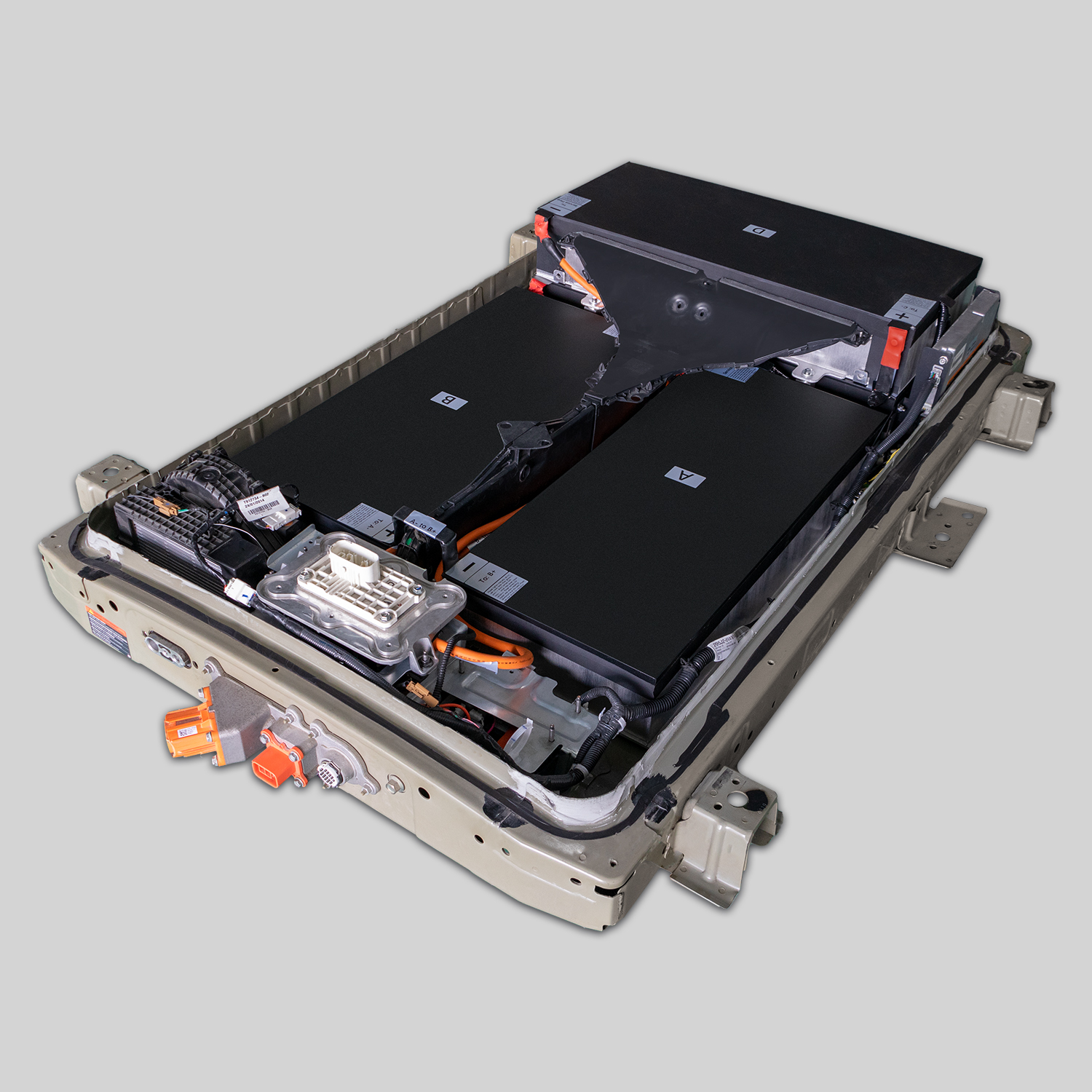
By upgrading your 30kWh Leaf to a 62kWh CNS BATTERY pack, you achieve the following transformation:
- Range Revolution: You are looking at a real-world range of 200-260 miles (320-420 km). This turns your aging Leaf into a viable daily driver capable of highway trips.
- Modern Cell Technology: Unlike the old LMO (Lithium Manganese Oxide) chemistry in your old pack, modern upgrades use NMC (Nickel Manganese Cobalt) chemistry. This is the same technology used by CATL and other Tier-1 suppliers—offering higher energy density, better thermal stability, and a longer cycle life.
- OEM Compatibility: This isn’t a “hack.” A proper upgrade kit is designed to fit the Leaf chassis perfectly, communicate with the Vehicle Control Module (VCM), and retain all factory safety features.
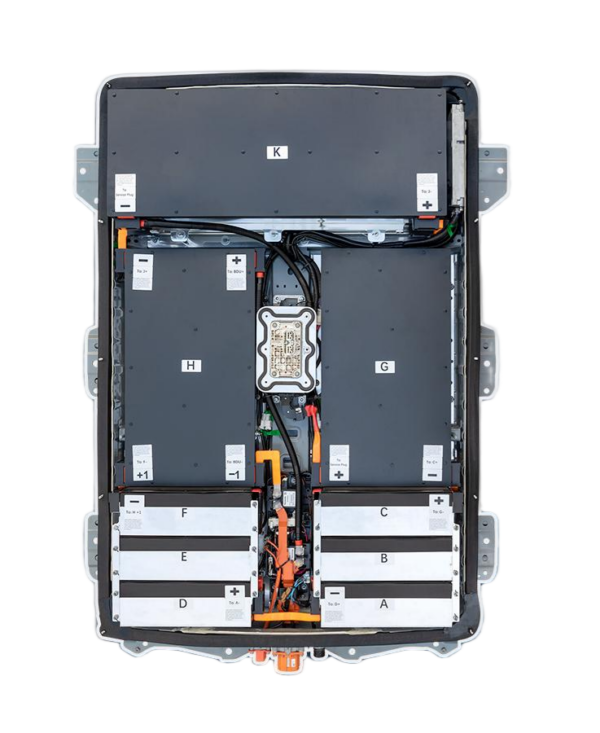
🛠️ Inside the Upgrade: What Makes a Quality 62kWh Pack?
Not all aftermarket batteries are created equal. When you are looking at an upgrade to fix your Nissan Leaf, you need to scrutinize the internal components. Based on our technical specifications and industry standards, here is what separates a reliable fix from a future headache:
1. The Core: Battery Cells
The heart of the pack is the cell. Never accept “recycled” or “used” cells for an upgrade.
- The Standard: Top-tier manufacturers like CNS use brand-new, A-grade cells sourced from reputable factories (like CATL).
- The Risk: Cheap alternatives often use “B-grade” or repurposed cells from报废 (scrap) EVs. These cells have inconsistent voltage, degrade rapidly, and are prone to swelling.
2. The Brain: BMS (Battery Management System)
The BMS is your safety net.
- Function: It monitors every single cell’s voltage and temperature 100 times per second.
- Requirement: For a Leaf upgrade, the BMS must be perfectly programmed to mimic the OEM communication protocol. A mismatch here will result in error codes or, worse, a fire.
3. Thermal Management
Early Leafs suffered because their batteries got too hot. A quality 62kWh upgrade must include:
- Thermal Pads: High-quality insulation between modules.
- Cooling Channels: Proper design to dissipate heat, preventing thermal runaway.
💰 The Economics: Is the Upgrade Worth It?
Let’s look at the math. This is the primary reason owners choose this route.
| Option | Cost Estimate (USD) | Range Result | Longevity | Warranty |
|---|---|---|---|---|
| Dealership OEM Replacement | $12,000 – $16,000 | Same as New | Excellent | Factory Standard |
| Refurbished/Used Battery | $3,000 – $5,000 | Slightly Better | Poor (1-2 Years) | Minimal/None |
| CNS 62kWh New Cell Upgrade | ~$7,800 | Double (420km+) | Excellent | 2 Years / 80,000km |
The Analysis: Paying $16,000 to replace a 10-year-old car doesn’t make financial sense. Paying $4,000 for a used battery is a gamble. Investing $7,800 for a brand-new 62kWh pack with a 2-year warranty gives you a “new” car experience at half the price of the factory option.
🛡️ Why Choose a CNS BATTERY 62kWh Solution?
As experts in Nissan and BMW EV powertrains, we don’t just sell batteries; we provide a complete powertrain solution.
- Plug-and-Play Design: We understand that not everyone is a mechanic. Our packs are designed for direct OEM replacement. The connectors, brackets, and communication protocols are an exact match for the Nissan Leaf chassis (ZE0, ZE1, AZE0).
- Unbeatable Warranty: We back our product with a 2-Year / 80,000 km warranty. This covers manufacturing defects and ensures your battery maintains at least 70% capacity during this period. Most competitors offering new cells don’t offer this level of coverage.
- Global Support: Whether you are in the USA, Europe, or elsewhere, we handle the logistics. We provide DDP (Delivered Duty Paid) shipping and handle the complex customs clearance for lithium batteries.
- Expert Installation Guidance: Upgrading isn’t just about dropping in a box. We provide detailed video tutorials and remote video support to ensure your technician wires it correctly. A bad connection is the #1 cause of failure, and we mitigate that risk.
📝 Final Expert Verdict
If your 30kWh Nissan Leaf is on its last legs, don’t scrap it or settle for a band-aid fix. The 62kWh upgrade is the definitive “fix” that restores your car to its full potential.
By choosing a new-cell solution from a reputable manufacturer, you are essentially buying a new electric car for the price of a transmission rebuild. You get the safety of modern chemistry, the range of a modern EV, and the peace of mind of a solid warranty.
Ready to revive your Leaf?
Don’t let range anxiety kill your EV dreams. Get a free, no-obligation quote today to see how much a 62kWh upgrade will cost for your specific model.
👉 Get Your Free Custom Quote Now
❓ Frequently Asked Questions (FAQ)
Q1: Is the 62kWh battery compatible with my old Nissan Leaf model (e.g., 2013 Leaf)?
Yes, absolutely. Our 62kWh packs are engineered to be OEM-compatible with the Nissan Leaf ZE0, ZE1, and AZE0 chassis. We provide the necessary brackets and harness adapters to ensure a perfect fit. Before purchasing, we recommend providing your VIN for a final compatibility check.
Q2: How long does the installation take?
Professional installation typically takes 1 to 2 hours. It involves removing the old pack, lifting in the new 62kWh unit, and connecting the high-voltage and signal cables. We provide comprehensive installation manuals and video guides. For DIY enthusiasts, we also offer remote video support to walk you through the BMS programming.
Q3: What kind of warranty does the 62kWh upgrade come with?
We offer a 2-Year / 80,000 km warranty (whichever comes first). This warranty covers defects in materials and workmanship. We also guarantee that the battery will retain at least 70% of its capacity during the warranty period. This is significantly better than the warranty offered on most refurbished battery swaps.
Q4: Are these batteries safe? (Regarding fire risk)
Safety is our top priority. Unlike cheap, uncertified packs, our batteries use Brand New A-Grade CATL cells and include a robust Battery Management System (BMS) that prevents overcharging, short circuits, and overheating. The cells are enclosed in a durable, fire-resistant casing that meets international transportation standards (UN38.3).
Q5: How much will my range increase?
You can expect a real-world range of approximately 420 km (260 miles) on a full charge with the 62kWh pack. This is a massive improvement over the original 30kWh pack, which likely struggled to reach 120 km in real-world conditions. Your actual range will vary slightly depending on driving style and weather conditions.