The Truth About e-NV200 Evalia CATL vs Envision AESC for Long-Term Reliability
Are you facing the difficult decision of replacing your Nissan e-NV200 or Evalia battery? You’re likely caught between the allure of the original AESC (Automotive Energy Supply Corporation) modules and the rising reputation of CATL (Contemporary Amperex Technology Co. Limited) replacements. As an electric vehicle owner, your primary concerns are reliability, longevity, and the dreaded “range anxiety.”
At CNS Battery, we understand this struggle intimately. With over a decade of experience in R&D and manufacturing, we’ve seen firsthand how battery degradation impacts daily commutes and business operations. We are dedicated to providing high-performance, OEM-compatible lithium-ion solutions that prioritize your safety and driving range.
This article cuts through the marketing hype to give you the hard facts about CATL vs. Envision AESC batteries. We will analyze their long-term reliability to help you make an informed decision.
⚡️ The Core Dilemma: Original AESC vs. Modern CATL
When your Nissan e-NV200 or Evalia battery degrades, you generally have three options: repair the old pack (risky), buy a refurbished OEM pack (expensive and aged), or purchase a brand-new aftermarket pack.
The most significant debate currently revolves around the chemistry and structure of Envision AESC (the original supplier) versus CATL (the world’s largest battery manufacturer).
1. Envision AESC: The Original, But Aging
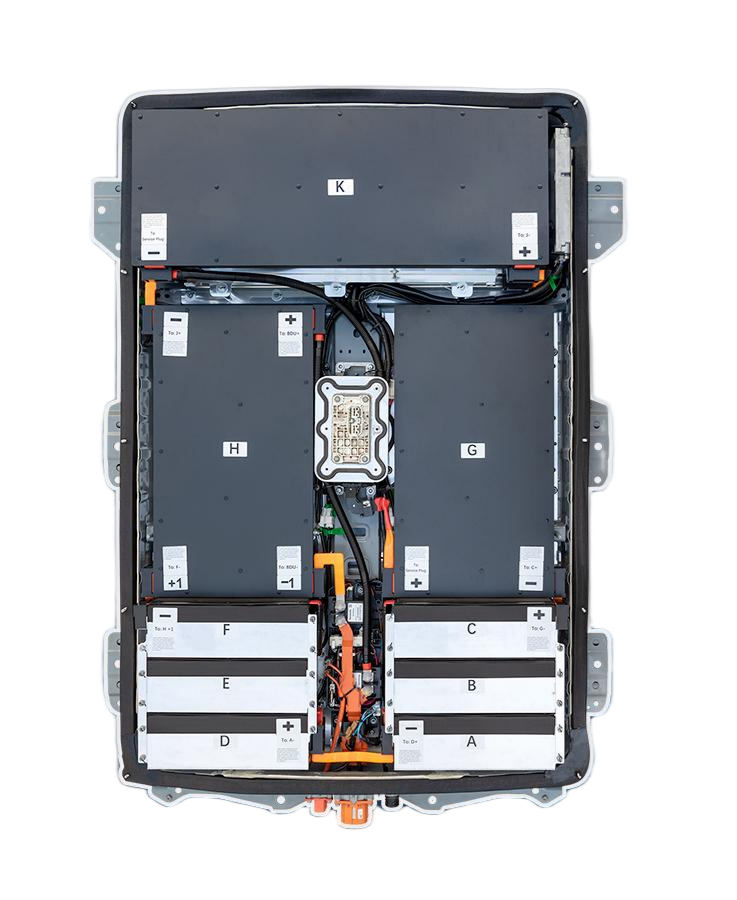
The original e-NV200 batteries utilized AESC’s laminated lithium-ion technology.
- The Reality: While these were cutting-edge a decade ago, AESC technology is now considered older generation. These cells suffer from higher internal resistance and are more prone to swelling over time.
- Long-Term Risk: If you are looking at a used AESC pack, you are buying into a technology that has already lost significant capacity and is nearing the end of its natural lifespan. Even new AESC modules for replacement are based on this older tech.
2. CATL: The Modern Standard
CATL is the current global leader in battery technology, supplying giants like Tesla and BMW.
- The Reality: Modern CATL cells (specifically prismatic cells) offer superior energy density and thermal management.
- Long-Term Reliability: CATL cells utilize more stable NMC (Nickel Manganese Cobalt) chemistry. They are less prone to physical deformation (swelling) and offer a more consistent discharge curve over thousands of cycles.
Expert Insight: Switching to a new CATL-based battery pack isn’t just a replacement; it’s an upgrade. You are moving from 10-year-old battery technology to the current industry standard.
📊 Side-by-Side Comparison: Longevity & Performance
To help you visualize the difference, here is a breakdown of how these two technologies perform over the long haul.
| Feature | Envision AESC (Original/Old Tech) | CATL (Modern Standard) |
|---|---|---|
| Technology Age | Legacy (1st/2nd Gen) | State-of-the-Art |
| Swelling Risk | High (Cells often swell, causing casing damage) | Low (Rigid structure, minimal expansion) |
| Cycle Life | ~1500 cycles (Theoretical) | ~3000+ cycles (With proper BMS) |
| Thermal Stability | Moderate (Prone to heat degradation) | High (Better heat dissipation) |
| Availability | Scarce, mostly used/refurbished | New, readily available |
Why CATL Wins for Long-Term Use:
If you are looking for a “fit and forget” solution, CATL is the clear winner. The structural integrity of CATL prismatic cells is significantly better than the older AESC laminated pouch cells. This means your battery pack is less likely to suffer from physical damage caused by cell expansion, which is a common failure mode in older Nissan EVs.
🔋 Why a Brand-New CATL Pack is the Best Investment
Many owners hesitate, thinking, “But Nissan designed the car for AESC.” While that is true, the laws of physics and chemistry have evolved.
- Zero Swelling Technology: One of the biggest killers of the e-NV200 battery is cell swelling. As old AESC cells degrade, they puff up and crack the plastic frames, leading to short circuits. Brand-new CATL cells from a reputable manufacturer like CNS Battery are engineered to minimize this expansion, ensuring the physical integrity of your pack for years.
- Higher Energy Density: You can often achieve the same range in a lighter or smaller package. This reduces strain on your vehicle’s suspension and drivetrain.
- Advanced BMS Compatibility: A common myth is that the Nissan BMS (Battery Management System) won’t “talk” to CATL cells. This is false. At CNS, we program our BMS units specifically for Nissan protocols. Our systems communicate seamlessly with the Leaf and e-NV200 logic, ensuring perfect voltage and resistance curves are reported to the dashboard.
🛠️ The CNS Battery Advantage
As a leading OEM in the EV aftermarket, we don’t just sell batteries; we sell peace of mind. When you choose a CNS Battery pack for your e-NV200 or Evalia, you are choosing:
- 100% Brand New Cells: We use only Grade A cells sourced directly from the factory. No recycled, refurbished, or second-hand cells.
- 2-Year / 80,000km Warranty: This is the industry’s strongest warranty. We back our long-term reliability claims with a guarantee that far exceeds standard aftermarket offerings.
- OEM Fitment: Our packs are designed to bolt directly into your vehicle without any modifications. No cutting wires or hacking the chassis.
- Real-World Range: Our 40kWh and 50kWh packs are designed to deliver the range you need for daily business or family use, often outperforming the original degraded battery.
💡 Making the Right Choice for Your e-NV200
Replacing your battery is a significant decision. If you opt for a refurbished AESC pack, you are essentially buying a used product that has already lost 30-50% of its life. You are gambling on whether it will last another year.
Choosing a new CATL-based solution from a trusted manufacturer means:
- Starting the clock at 100%: You get a fresh lifecycle of 3000+ charge cycles.
- Safety: Modern cells have better built-in safety mechanisms.
- Cost Efficiency: While a new pack has a higher upfront cost than a cheap refurb, it is significantly cheaper than buying a new van. When spread over 5-8 years of reliable service, the cost per mile is unbeatable.
Don’t let your e-NV200 or Evalia go to the scrapyard. Revive it with the latest technology.
❓ Frequently Asked Questions (FAQ)
1. Will a CATL battery work with my Nissan e-NV200 BMS?
Yes, absolutely. While the physical cells are different, the voltage output and resistance curves of our CATL packs are engineered to match Nissan specifications. Furthermore, our BMS units are programmed to communicate the correct state of charge (SOC) and state of health (SOH) to your vehicle’s dashboard, ensuring no error codes.
2. Is it worth repairing my old AESC battery?
Generally, no. Repairing old AESC modules is a short-term fix. The remaining good cells in your old pack are still old and will degrade rapidly. You also run the risk of the repaired cells swelling and destroying the casing again. A complete pack replacement with new technology is the only long-term solution.
3. How long does the installation take?
For a professional technician, installing a CNS Battery pack typically takes 1 to 2 hours. The process is straightforward: disconnect the old pack, unbolt it, lift in the new one, and reconnect. We provide detailed installation guides and videos to support the process.
4. What is the warranty on a CNS Battery?
We offer a minimum 2-year or 80,000km warranty (whichever comes first) on all our automotive batteries. This covers defects in materials and workmanship and includes protection against premature capacity loss.
5. Can I get a quote for my specific model?
Yes. We provide customized solutions for various e-NV200 and Evalia models, including different kWh options.
Ready to get back on the road with a reliable, long-lasting battery?