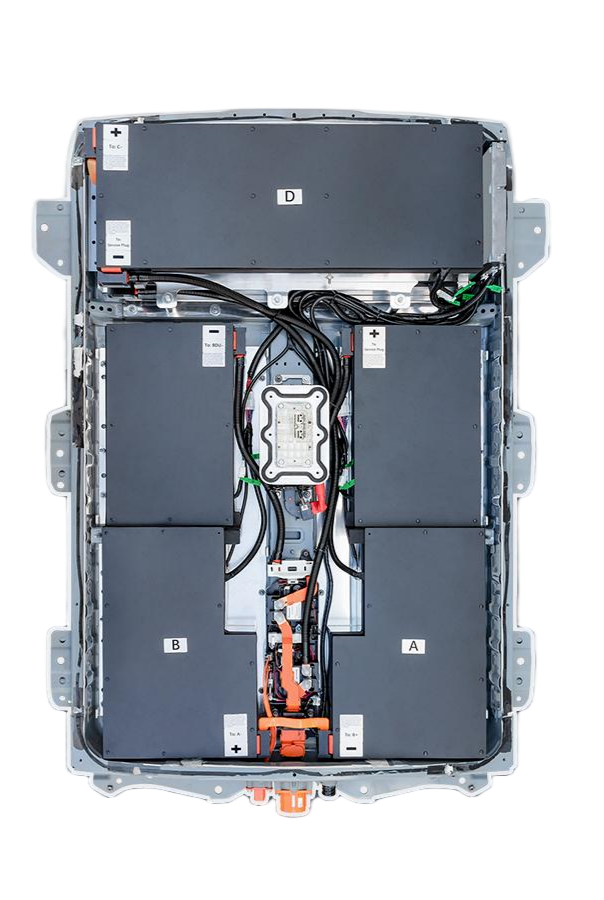
Title: Step-by-Step: Leaf ZE1 62kWh to 24kWh Replacement
Introduction: Why Downsize Your Battery?
If you own a Nissan Leaf ZE1 and are reading this, you might be surprised to see a guide for replacing a 62kWh battery with a smaller 24kWh unit. In the EV world, we usually talk about “upgrades” for more range, but there is a specific, strategic reason why some owners and mechanics are looking at this conversion: cost-effective restoration for specific use cases.
While CNS BATTERY specializes in high-capacity, OEM-standard replacements (like our premium 40kWh, 50kWh, and 62kWh packs), we understand that not every vehicle needs maximum range. For urban couriers, city commuters, or budget-conscious rebuilders, a smaller, reliable battery pack can be the perfect solution to bring a ZE1 back to life without the premium price tag of a full-capacity new pack.
However, it is crucial to clarify that the “24kWh” figure often refers to a specific refurbishment standard or a misnomer for older generation packs. At CNS, we prioritize safety and longevity, which is why our standard offering focuses on modern, high-density cells. For the purpose of this guide, we will walk you through the mechanical and electrical process of replacing a ZE1 battery, assuming you have a compatible 24kWh (or similar low-capacity) module ready for installation.
⚠️ Safety First: Preparing for the Swap
Before you even touch a wrench, safety is paramount. Lithium-ion batteries store immense energy, and the Nissan Leaf ZE1 packs operate at high voltages.
Essential Safety Gear:
- Insulated Gloves: Class 0 or higher (rated for 1000V).
- Safety Glasses: To protect from sparks or debris.
- Non-Conductive Tools: Ensure your wrenches and sockets have no exposed metal that could bridge connections.
Pre-Work Protocol:
- Park on a Level Surface: Engage the parking brake.
- Disconnect the 12V Battery: Always start by removing the negative terminal of the car’s auxiliary battery. This cuts power to the BMS (Battery Management System) and prevents shorts.
- Wait 10 Minutes: Allow the capacitors in the inverter and charger to discharge fully.
🛠️ Phase 1: Removing the Old 62kWh Battery
The ZE1 battery is located under the floor of the vehicle. Removing the heavy 62kWh unit requires patience.
Step 1: Access the Service Plug
- Open the center console storage compartment.
- Remove the service plug (also known as the MSD – Manual Service Disconnect). This is the primary high-voltage safety cut-off.
Step 2: Disconnect Low Voltage Cables
- Locate the Battery Management System (BMS) connector on the side of the battery pack.
- Carefully disconnect the LV communication harness.
Step 3: Disconnect High Voltage Cables
- Using insulated tools, disconnect the positive and negative HV cables from the contactors. Cover the exposed terminals immediately with insulating tape.
Step 4: Unbolt the Battery
- Slide under the vehicle. You will see the battery secured by multiple bolts along the chassis rails.
- Support the battery with a transmission jack or an EV battery lift cart.
- Remove all mounting bolts and carefully lower the pack.
🔋 Phase 2: Installing the 24kWh Replacement
Installing a smaller capacity pack (like a repurposed older Leaf module or a custom low-kWh solution) requires checking physical dimensions and electrical compatibility.
Step 1: Physical Fitment Check
- Compare the dimensions of the 24kWh unit with the ZE1 chassis rails. The mounting points must align perfectly. If there is a gap, custom brackets may be required (this is where professional expertise is vital).
Step 2: Reconnect High Voltage
- Lift the new pack into place using the jack.
- Secure it with the mounting bolts (torque to Nissan specification, usually around 40-50 Nm).
- Reconnect the HV cables. Ensure the lugs are clean and tight to prevent arcing.
Step 3: Reconnect Low Voltage & BMS
- Plug in the BMS communication harness.
- Reinstall the service plug.
Step 4: Reconnect 12V
- Reattach the negative terminal of the 12V battery.
💻 Phase 3: System Reset and Programming
This is the most critical step. The car’s ECU expects a certain voltage and capacity.
BMS Programming:
Simply plugging in a different battery will likely result in error codes. The BMS needs to be reprogrammed or “flashed” to recognize the new cell chemistry and capacity parameters.
- Warning: If you are using a standard Nissan BMS, it may not accept a 24kWh profile without modification. Many low-capacity swaps utilize a custom or aftermarket BMS that is calibrated to mimic the ZE1 communication protocol.
Error Code Check:
Use a Nissan Consult III+ scanner (or equivalent) to clear any pre-existing codes and verify the new battery voltage is registering correctly.
📝 Expert Recommendation: Choosing the Right Pack
While downsizing to 24kWh is technically possible, our experience at CNS BATTERY shows that most ZE1 owners benefit more from a direct replacement or an upgrade.
Why consider a higher capacity?
- Resale Value: A car with 24kWh has very limited market appeal.
- Modern Cell Technology: Our standard 40kWh and 62kWh packs use brand-new CATL cells. These offer superior thermal management and cycle life compared to older, smaller modules you might find for a 24kWh conversion.
- Warranty Security: We offer a 2-year / 80,000 km warranty on our standard packs, which is difficult to match with a custom low-kWh retrofit.
If your goal is simply to get the car running affordably, we recommend considering a 40kWh replacement. It offers a perfect balance of range (approx. 240km) and cost, and it fits the ZE1 chassis perfectly without the need for complex bracket modifications.
❓ Frequently Asked Questions (FAQ)
Q1: Can I really replace a 62kWh Leaf battery with a 24kWh pack?
A: Technically, yes, but it is not a simple “plug-and-play” job. The physical size, voltage, and communication protocols differ significantly. You will likely need custom brackets and BMS reprogramming. For most users, a 40kWh replacement is a safer and more practical choice.
Q2: What are the risks of a custom low-kWh conversion?
A: The main risks are electrical incompatibility and safety. If the BMS is not correctly calibrated, it can lead to overcharging, thermal runaway, or the car simply refusing to start. Additionally, older or smaller battery modules may not have the structural integrity of a new OEM-spec pack.
Q3: Does CNS BATTERY offer 24kWh replacement packs?
A: We primarily specialize in high-performance, OEM-compatible packs (40kWh, 50kWh, 62kWh) using new CATL cells. However, we offer OEM customization services. If you have a specific requirement for a lower capacity pack for a fleet or industrial application, our technical experts can discuss a tailored solution.
Q4: How long does a battery replacement take?
A: For a professional technician, removing and installing a standard ZE1 battery pack takes approximately 1-2 hours. If the BMS requires complex programming or custom coding for a non-standard capacity, this time can increase significantly.
Q5: What is the warranty on a converted battery?
A: Standard warranties usually apply to OEM-spec replacements. For custom conversions, the warranty depends on the components used and the quality of the installation. At CNS, our standard warranty covers manufacturing defects on our produced packs, but installation errors or modifications are typically excluded.
Ready to Restore Your Nissan Leaf?
Whether you are planning a complex capacity swap or looking for a reliable OEM-standard replacement, having the right parts and advice is crucial. Don’t risk a DIY job with incompatible hardware.
Contact our technical experts now for customization and support. We can help you determine the best battery solution for your Nissan Leaf ZE1, ensuring safety, compatibility, and long-term reliability.