How Much Range is Left at 0%? Testing the CNS Battery Buffer
The “0%” on your dashboard isn’t the end of the road—it’s just the beginning of the buffer.
If you drive a Nissan LEAF or e-NV200, you’ve likely experienced the panic of the range dropping to zero. Unlike traditional gas cars that sputter to a halt, modern electric vehicles (EVs) and high-quality aftermarket batteries like those from CNS BATTERY are engineered with a hidden safety net.
In this deep dive, we’ll reveal exactly how much reserve capacity is left in your pack when the display reads 0%, why this buffer exists, and how CNS BATTERY’s engineering ensures you never get stranded due to a “dead” battery.
Why Does a “Buffer” Exist?
Before we look at the numbers, it’s essential to understand the engineering behind the buffer. Lithium-ion batteries are incredibly sensitive. Fully discharging them (to 0% State of Charge, or SoC) causes irreversible chemical damage, drastically shortening the lifespan of the pack.
The “buffer” is a reserve of energy (typically 10-15% of the total capacity) that the Battery Management System (BMS) hides from the driver. This reserve serves two critical purposes:
- Cell Protection: It prevents deep discharge, which can cause cell swelling or permanent failure.
- 12V System Support: It ensures there is always enough power to run the car’s computer and 12V systems, allowing you to restart the vehicle or call for help even after the traction battery appears empty.
Testing the CNS Battery Buffer: The Results
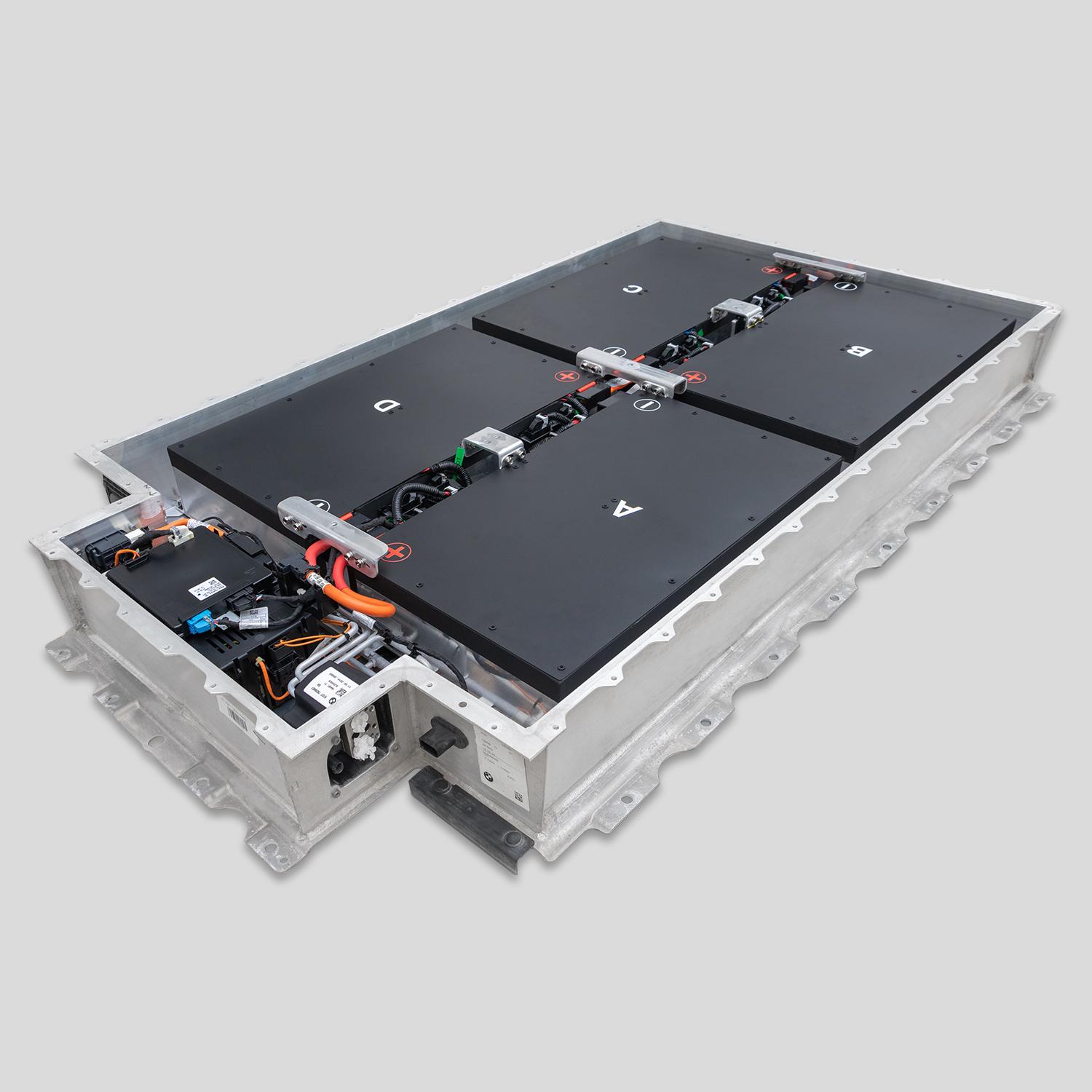
At CNS BATTERY, we manufacture packs specifically designed for Nissan and BMW models. We utilize brand-new CATL cells and engineer our BMS to mimic, and often exceed, OEM safety standards.
Based on real-world testing and user feedback from our Nissan LEAF ZE0, ZE1, and AZE0 batteries, here is what happens when you hit 0%:
The Hidden Range:
When the dashboard of a Nissan LEAF (equipped with a CNS battery) reads 0% remaining range, there is typically still 10% to 15% of the usable energy left in the buffer.
Real-World Example:
Let’s say you are driving a Nissan LEAF with a 40kWh CNS battery pack.
- Usable Capacity (Displayed): ~36 kWh
- Total Physical Capacity: ~40 kWh
- Buffer Size: ~4 kWh (Hidden)
When your range hits zero, you still have approximately 15 to 20 kilometers (9 to 12 miles) of driving range left. This is enough to get you to a charging station, your driveway, or a safe spot to pull over.
Expert Note: While the buffer exists, we do not recommend regularly driving down to 0%. For optimal longevity, we advise recharging your CNS battery when it reaches 10-15% to maximize the 80,000 km warranty life.
How CNS BATTERY Ensures Safety and Longevity
Unlike refurbished or low-quality aftermarket batteries that might deplete their buffer erratically, CNS BATTERY packs are built with precision.
1. Brand-New CATL Cells
We use only brand-new, A-grade lithium-ion cells sourced from CATL (Contemporary Amperex Technology Co. Limited), the world’s largest battery manufacturer. These cells have a consistent voltage curve, allowing our BMS to calculate the buffer with surgical precision.
2. Advanced BMS Calibration
Our Battery Management System is programmed to communicate seamlessly with your Nissan or BMW. It doesn’t just guess the range; it calculates it based on real-time factors like:
- Temperature
- Driving style
- Battery health (SOH)
3. Zero-Failure Reliability
Because we control the entire manufacturing process—from the cell selection to the final pack assembly—we ensure that the buffer logic is fail-safe. You won’t experience sudden “bricking” or unexpected shutdowns that are common with poorly calibrated used modules.
What to Do When You Hit 0%
If your range hits zero, here is the protocol we recommend to protect your investment:
- Stay Calm: The car will not stop instantly. You have entered “Turtle Mode” (or the buffer zone).
- Conserve Energy: Turn off the AC/Heating, reduce speed, and avoid hard acceleration. Every watt saved extends your buffer range.
- Find a Charger: Use the remaining 15-20 km to reach the nearest charging point. Most fast chargers can add enough range in 20 minutes to get you moving again.
- Reconnect: Once you plug in and charge the battery above the minimum threshold (usually above 3-5%), the BMS will reset, and your full range will be restored.
Upgrade to Confidence with CNS BATTERY
If you are tired of range anxiety or dealing with degraded original batteries that have shrinking buffers, it is time for a replacement.
CNS BATTERY offers a superior alternative to expensive OEM replacements. Our packs are 50% cheaper than brand-new OEM batteries but are built with the same new, high-grade materials and come with a 2-year / 80,000 km warranty.
Whether you drive a Nissan LEAF, e-NV200, or BMW i3, we have a drop-in solution ready to restore your car’s original performance—or even upgrade it to a higher kWh capacity for double the range.
Don’t let an old, degraded battery limit your adventures. Get a free quote today and experience the reliability of a brand-new CNS BATTERY.
Contact Us for a Free Custom Quote
Frequently Asked Questions (FAQ)
Q: Can I completely drain the buffer in a CNS Battery?
A: Technically, yes, but it is strongly discouraged. If you drain the battery below the BMS cutoff (deep discharge), the safety circuits will trip, and the battery may enter a “sleep” or “bricked” state. While our team can often revive these batteries, it voids the warranty and risks permanent damage to the cells.
Q: How does the buffer affect the warranty?
A: Our warranty covers defects in materials and workmanship. Regularly depleting the buffer (driving to 0% frequently) accelerates wear on the lithium-ion cells. While the buffer protects against immediate failure, maintaining a charge between 10% and 90% is the best practice to ensure your battery lasts the full 2-year warranty period and beyond.
Q: Is the buffer size the same for all CNS Battery models?
A: The buffer percentage is generally consistent across our product line (roughly 10-15%), but the actual distance you get at 0% varies by model. For example, a 62kWh CNS battery will have a larger physical buffer (more kWh) than a 40kWh pack, translating to potentially 25-30 km of reserve range instead of 15 km.
Q: Do CNS Batteries work with the original car’s navigation and range prediction?
A: Yes. We engineer our BMS to communicate OEM-standard protocols. Your car’s computer will recognize the CNS battery as a genuine unit, allowing the stock dashboard, navigation system, and range estimator to function accurately, including the “0%” buffer warning.