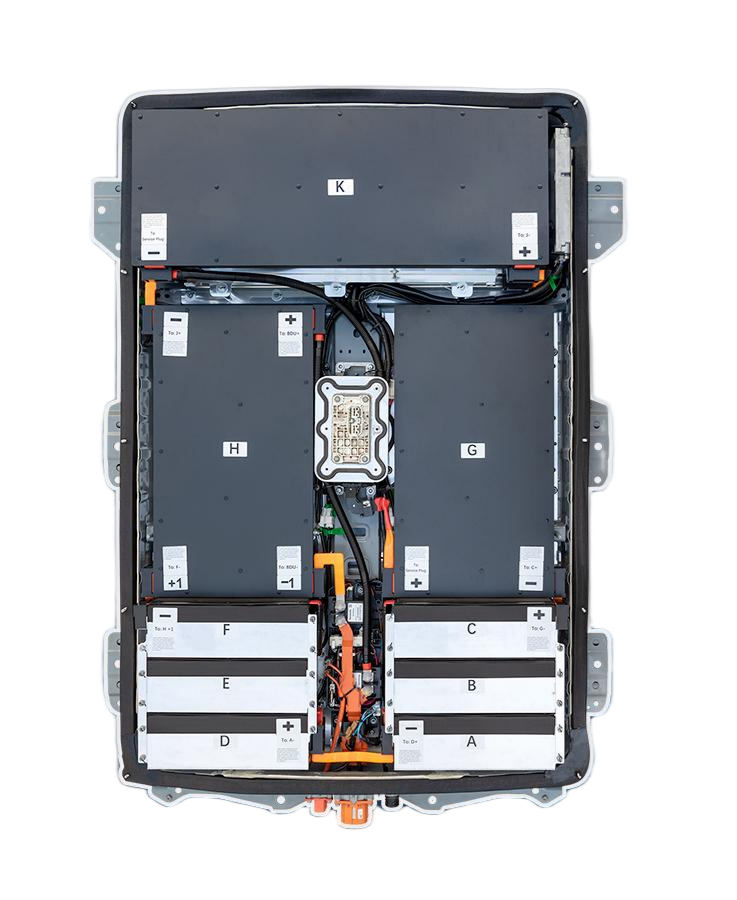
Why Nissan Leaf Owners are Switching from AESC to CATL Technology
If you own a Nissan Leaf and are facing battery degradation, you’re likely familiar with the tough choice: pay an exorbitant price for a refurbished AESC (Automotive Energy Supply Corporation) pack or buy a new car. However, a growing number of owners are discovering a third, superior path—switching to a brand-new CATL (Contemporary Amperex Technology Co. Limited) battery solution.
As a leading EV battery manufacturer specializing in Nissan and BMW models, CNS BATTERY has seen a massive shift in demand. Leaf owners are moving away from the limitations of the original AESC chemistry and embracing the modern, high-performance advantages of CATL technology. This article explores why this switch is becoming the ultimate upgrade for extending the life and range of your Leaf.
The Limitations of Original AESC Batteries
The Nissan Leaf has been a pioneer in the electric vehicle market, largely relying on battery technology from AESC. While these batteries served their purpose in the early days of EV adoption, they have inherent limitations that become apparent over time.
- Chemistry and Degradation: AESC batteries, especially in older Leaf models (like the ZE0 and early ZE1), often utilized Lithium Manganese Oxide (LMO) or LMO/NMC hybrid chemistry. This chemistry is known to degrade faster in high-heat environments and suffers from significant capacity loss over just a few years.
- Lack of Active Thermal Management: Many Leaf models equipped with AESC batteries lack a robust active liquid cooling system. Without effective cooling, the battery cells overheat, accelerating the aging process and leading to the dreaded “battery bar” loss.
- Refurbished Market Issues: Finding a brand-new AESC pack is nearly impossible. The aftermarket is flooded with used or refurbished modules. These “recycled” cells are often already degraded, mismatched in health, and prone to swelling or failure shortly after installation.
Simply put, sticking with a refurbished AESC pack often means buying someone else’s worn-out technology.
The CATL Advantage: Next-Gen Battery Technology
So, why are savvy Nissan Leaf owners switching to CATL?
CATL is the world’s largest lithium-ion battery manufacturer. They supply power to premium brands like Tesla, BMW, and Volvo. When you upgrade to a CATL-based battery pack through a provider like CNS BATTERY, you are essentially giving your Leaf a “heart transplant” with the most advanced technology available.
Here is what makes CATL technology superior for your Leaf:
- Premium NMC Chemistry: CATL cells utilize advanced Nickel Manganese Cobalt (NMC) chemistry. Compared to the older LMO cells in AESC packs, NMC offers higher energy density, meaning more range in the same space, and significantly better thermal stability.
- Brand New Cells: Unlike the gamble of buying used AESC modules, a CATL upgrade utilizes brand new, A-grade cells. There is no prior degradation, no hidden damage, and no “battery lottery.” You start with 100% health.
- Enhanced Durability: CATL cells are engineered for longevity. When paired with a professional Battery Management System (BMS), these packs are designed to withstand thousands of charge cycles while maintaining over 70-80% capacity for much longer than the original equipment.
- Cost Efficiency: This is the most compelling factor. Replacing your Leaf’s battery with a new CATL solution from a specialized manufacturer costs roughly 50% less than buying a new car or even attempting to source rare OEM parts.
Real-World Benefits: Range, Safety, and Warranty
Switching from AESC to CATL isn’t just about the cell chemistry; it is about the complete engineering package.
1. Drastically Extended Range
Many Leaf owners upgrade their kWh capacity when switching to CATL. For example, a Leaf ZE0 owner might switch from a degraded 24kWh or 30kWh pack to a brand new 40kWh, 50kWh, or even 62kWh CATL module. This isn’t just a repair; it is a performance upgrade that can push your range back to modern EV standards (300km+).
2. Superior Safety Systems
Older AESC packs often lack the sophisticated monitoring of modern systems. A professionally engineered CATL replacement pack, like those designed by CNS, includes a state-of-the-art BMS that monitors every cell’s voltage and temperature in real-time. This prevents overcharging, overheating, and short circuits, making your car safer than when it rolled off the original assembly line.
3. Peace of Mind with Extended Warranty
One of the biggest risks of buying used AESC modules is the lack of warranty. At CNS BATTERY, we back our CATL technology with an industry-leading 2-year / 80,000 km warranty. This coverage far exceeds what you would get from a scrap-yard refurbisher and provides the confidence that your investment is protected.
Making the Switch: A Smart Investment
If you love your Nissan Leaf but hate the range anxiety and fear of breakdowns, switching from aging AESC technology to a new CATL powertrain is the definitive solution.
It transforms your vehicle from a high-maintenance liability into a reliable, long-range commuter. You retain the car you know and love, avoid the massive depreciation hit of buying new, and enjoy the latest battery technology on the market.
Don’t let outdated battery technology force you into an expensive new car payment. Explore the modern alternative.
Ready to upgrade your Nissan Leaf with a brand-new CATL battery? Get a free, no-obligation quote today and see how much you can save.
Get Your Free CATL Battery Quote Now
Frequently Asked Questions (FAQ)
Q: Is it difficult to install a CATL battery in my Nissan Leaf?
A: Not at all. Our battery packs are designed for OEM compatibility. The physical dimensions and connector placements are engineered to match the original Nissan specifications (Plug-and-Play). We also provide detailed installation videos and manuals. If you have experience changing a car battery or light bulb, you can likely do it with guidance, or a standard mechanic can install it in about 1-2 hours.
Q: Will a CATL battery work with my Leaf’s BMS (Battery Management System)?
A: Yes. Our engineering team precisely configures the BMS parameters to communicate seamlessly with your Leaf’s Vehicle Control Unit (VCU). Before shipping, we perform VIN compatibility checks to ensure the voltage, capacity, and communication protocols match your specific model year (ZE0, ZE1, or AZE0).
Q: How much longer will a CATL battery last compared to my old AESC pack?
A: While the original AESC packs often degrade significantly within 3-5 years (especially in hot climates), a new CATL pack is built to last. We design our batteries for a cycle life of over 3000 cycles. With proper maintenance, you can expect this upgrade to last you for well over a decade, easily surpassing the lifespan of the original factory battery.
Q: Are these batteries safe? I’ve heard stories about aftermarket batteries catching fire.
A: Safety is our top priority. Our batteries utilize A-grade, brand new cells from CATL, not recycled or salvaged cells. Each pack includes a robust BMS with protections against over-current, over-voltage, over-temperature, and short circuits. We also use high-quality structural materials and insulation. Unlike sketchy “grey market” batteries, our products undergo rigorous quality control to meet international safety standards.