🚫 Don’t Ruin Your Upgrade: The Critical Nissan Leaf Battery Compatibility Guide
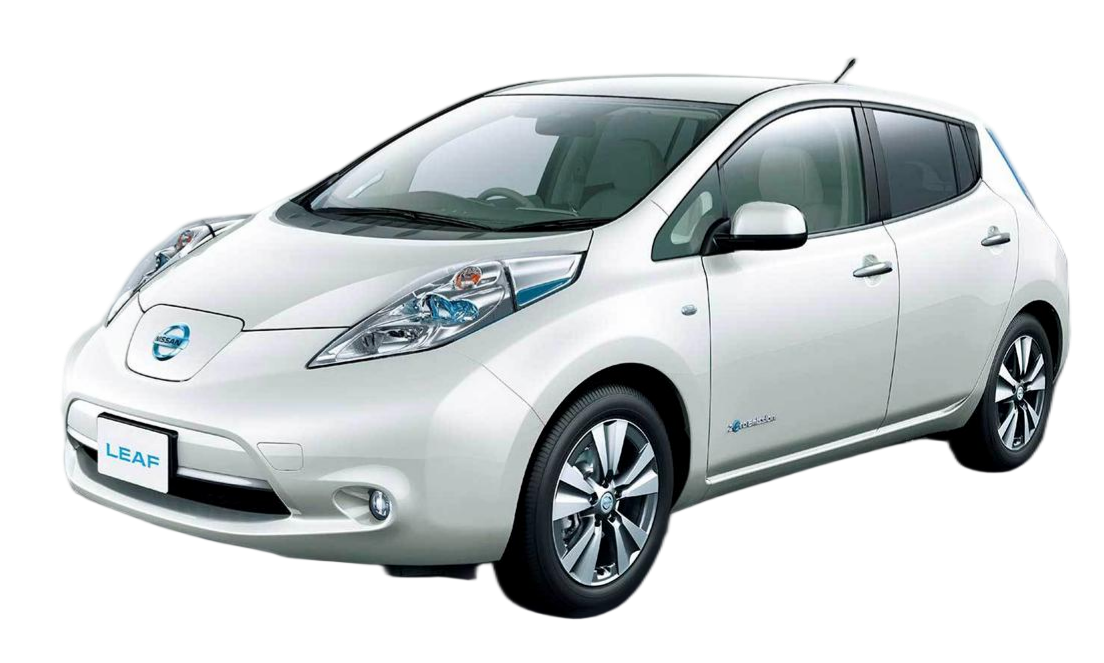
Upgrading your Nissan Leaf’s battery is one of the most exciting (and cost-effective) ways to breathe new life into your EV. Whether you’re driving a 2012 Leaf ZE0 or a 2023 Leaf e-Plus, the prospect of doubling your range or restoring your car to “like new” condition is incredibly tempting.
However, the path to a successful upgrade is often paved with compatibility pitfalls. Installing the wrong battery pack isn’t just a waste of money; it can trigger error codes, damage your Battery Management System (BMS), or even leave your car stranded.
As a leading OEM-compatible battery manufacturer, CNS BATTERY has seen countless customers struggle with mismatched parts. This guide is designed to cut through the confusion and ensure your Nissan Leaf battery upgrade fits perfectly, functions safely, and delivers the performance you expect.
⚡ The Compatibility Minefield: Why “One Size Fits All” is a Myth
Many drivers assume that because a battery pack is labeled “for Nissan Leaf,” it will work in their specific model year. This is dangerously incorrect.
The Nissan Leaf has undergone significant technological evolution since its launch. The hardware and software requirements for a ZE0 (2011-2017) are fundamentally different from those of a ZE1 (2018-2023) or the newer Ariya platform.
The Core Compatibility Factors:
- Vehicle Identification Number (VIN): This is your golden ticket. The VIN dictates the exact hardware configuration of your original factory battery.
- BMS Communication Protocol: The “language” your car speaks to the battery. A mismatch here results in a refusal to charge or drive.
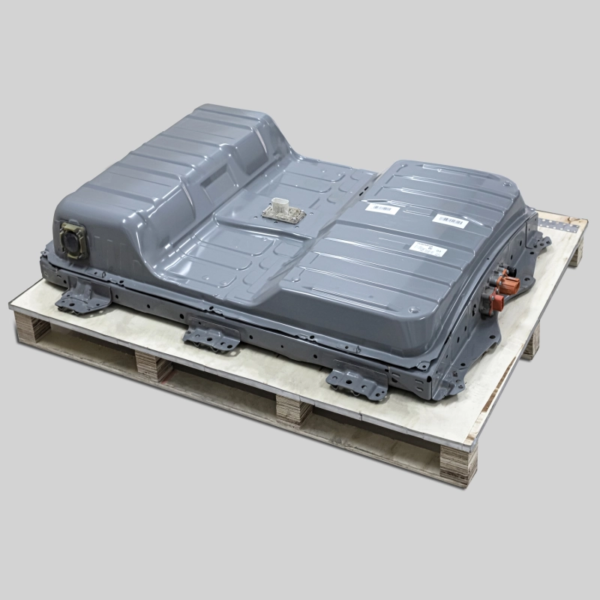
- Physical Dimensions & Mounting Points: Even if the electronics work, if the battery doesn’t bolt into the chassis correctly, it’s useless.
🔍 Decoding Your Leaf: Model-Specific Compatibility
To ensure a seamless upgrade, you must first identify your Leaf’s generation. Below is the breakdown of compatibility standards we adhere to at CNS.
1. The ZE0 Generation (2011–2017)
This is the most common candidate for upgrades due to severe battery degradation in older units.
- Common Upgrades: 40kWh -> 62kWh or 68kWh.
- Critical Compatibility Note: The ZE0 uses a specific CAN-Bus protocol. Upgrading requires not just a physical fit but also BMS programming to match the car’s existing software version.
- CNS Solution: Our packs for the ZE0 are engineered with plug-and-play connectors. We provide pre-programmed BMS units or remote video guidance to ensure the new high-capacity cells communicate flawlessly with your 2011-2017 Leaf.
2. The ZE1 Generation (2018–2023)
The ZE1 introduced a more modular design but is notoriously strict about OEM specifications.
- Common Upgrades: Replacement of degraded 40kWh packs or upgrades to higher-density modules.
- Critical Compatibility Note: The ZE1 has tighter physical tolerances and stricter thermal management requirements. The battery cooling system must align perfectly with the chassis ducts.
- CNS Solution: We offer OEM-standard dimensional accuracy. Our batteries for the ZE1 feature the exact interface matching required by the Type 2 connectors and the vehicle’s cooling system, ensuring zero modifications are needed during installation.
3. The e-NV200 & Commercial Variants
- Compatibility Challenge: While mechanically similar to the early Leaf, the software logic for commercial vans differs.
- CNS Solution: We validate compatibility specifically for the e-NV200 chassis, ensuring the battery supports both passenger and cargo thermal loads effectively.
✅ The “Plug-and-Play” Standard: What True Compatibility Looks Like
When we say our batteries are compatible, we don’t mean “mostly fits.” True compatibility means meeting the following standards:
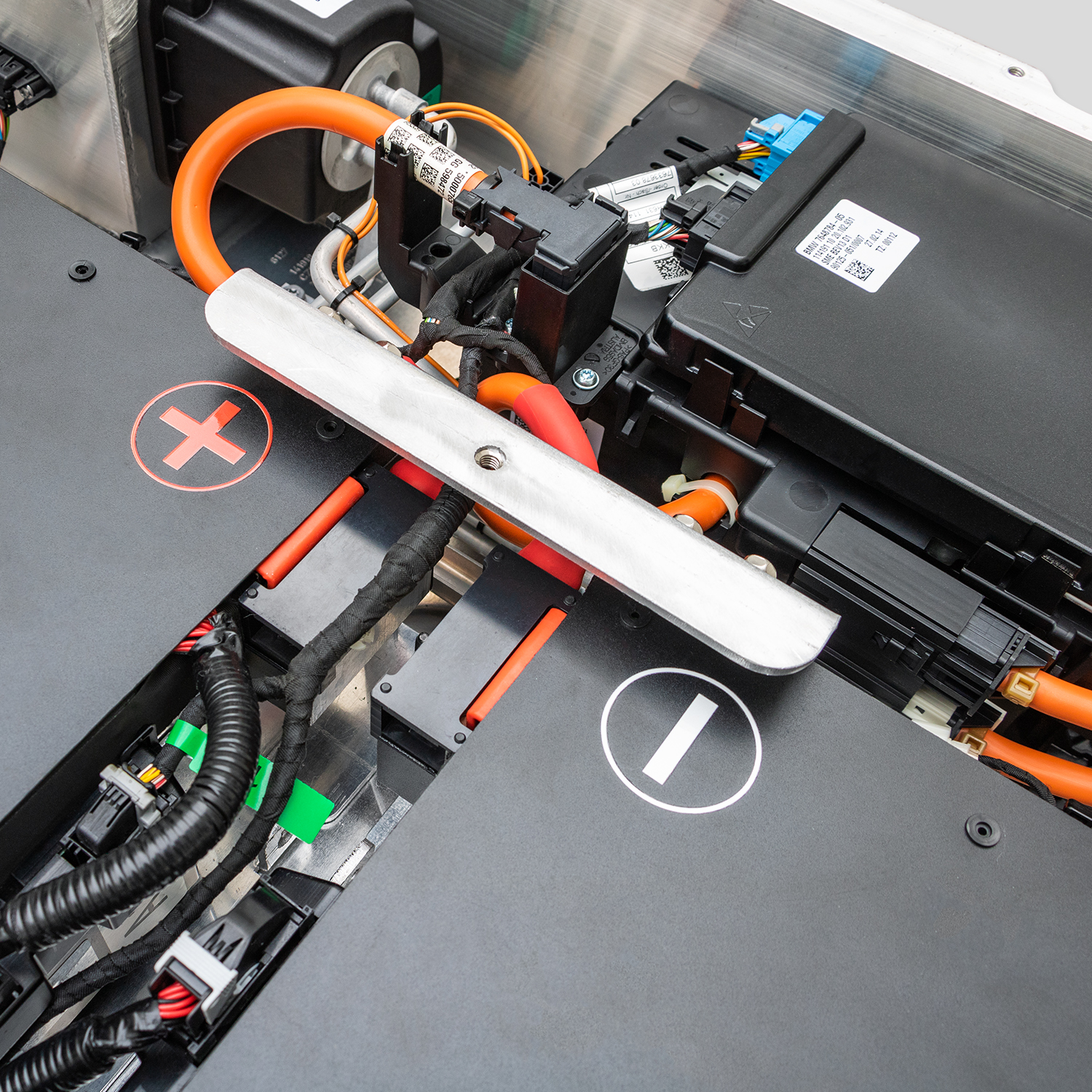
- OEM Interface Matching: Every connector, bolt hole, and sensor port matches the original factory design.
- Zero Modifications: You should not need to cut wires, modify brackets, or use adapters.
- Seamless BMS Integration: The battery should report State of Charge (SOC) and temperature data to the dashboard without error codes.
Why Cheap Alternatives Fail:
Many generic battery sellers on the market cut corners. They might use the right cells (like CATL) but neglect the casing design or software tuning. This results in “Frankenstein” installations where the driver must jury-rig the cooling lines or fight with the dashboard display.
🛡️ Avoiding the “Refurbished” Trap
Another major compatibility and safety issue arises when drivers consider using cells harvested from scrap batteries.
- The Risk: Used or refurbished cells are often mismatched in age and chemistry. Even if the physical fit is correct, the internal resistance of old cells doesn’t match new ones, leading to thermal runaway (overheating) or rapid capacity fade.
- The CNS Guarantee: We utilize brand-new, original-specification cells from top-tier manufacturers like CATL. This ensures that the electrochemical profile of the battery is consistent and compatible with your Leaf’s charging algorithms.
🛠️ Your Path to a Perfect Fit: The 3-Step Process
To eliminate compatibility anxiety, we have streamlined a process that prioritizes accuracy and peace of mind.
Step 1: The VIN Check (Pre-Sale)
Before you buy, we require your VIN. Our technical team cross-references this with our database to confirm that the specific batch of batteries we ship to you is programmed and configured for your exact vehicle year and trim.
Step 2: The Physical Fit Test
Our engineering team physically tests every batch against donor vehicles. We verify:
- Mounting bracket alignment.
- High-voltage connector reach.
- Coolant hose routing.
Step 3: The Software Handshake
We don’t just ship a box of cells. We ship a fully integrated system. If your car requires specific “coding” to recognize a higher kWh rating, we provide the tools and guidance (including remote video support) to make that handshake happen.
📝 Conclusion: Upgrade with Confidence
Upgrading your Nissan Leaf battery shouldn’t be a gamble. Compatibility is the foundation of safety, longevity, and performance. By choosing a solution designed with OEM-standard R&D and backed by technical expertise, you save over 50% compared to dealership prices while gaining a battery that lasts.
Don’t let compatibility fears hold you back from the range and reliability you deserve. Let us handle the technical details so you can enjoy the drive.
Ready to verify your car’s compatibility? Get a free, no-obligation quote today.
Get Your Free Custom Quote Now
💡 Frequently Asked Questions (FAQ)
Q1: How do I know if my specific Leaf model (e.g., 2015 S Plus) is compatible with your 62kWh upgrade?
A: Every vehicle is different. The only way to guarantee compatibility is through a VIN check. Please contact our technical experts and provide your VIN. We will confirm within 24 hours whether your specific model year and trim support the upgrade and if any specific BMS programming is required.
Q2: Will installing a new battery void my car’s warranty or trigger error codes?
A: If installed correctly with a compatible pack, no error codes should appear. Our batteries are designed to mimic the original factory communication protocols. Regarding the car’s warranty, while the powertrain warranty might be expired on older Leafs, our batteries come with their own 2-year / 80,000 km warranty, ensuring your investment is protected regardless of the vehicle’s original warranty status.
Q3: What if my car has a unique software version that doesn’t recognize the new battery?
A: This is rare, but we are prepared. Our customer service team includes automotive battery certification experts. If a software mismatch occurs, we offer remote video guidance and technical support to reprogram the BMS or adjust the settings in real-time, ensuring a successful “handshake” between the car and the battery.
Q4: Are the cooling systems compatible with older Leaf models?
A: Yes. We understand thermal management is critical for compatibility. Our upgraded packs for the ZE0 and ZE1 generations are engineered with the exact same thermal interface as the OEM batteries. The coolant hoses connect directly to your car’s existing chassis ducts without modification, ensuring optimal temperature control for the new cells.