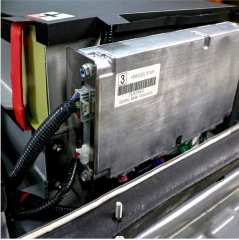
🔋 The Ultimate Guide to 2023 Nissan Leaf Battery Upgrades: Performance, Cost & Reliability
If you own a 2023 Nissan Leaf, you already know it’s a reliable workhorse in the electric vehicle (EV) market. However, as your vehicle ages or if you are looking to maximize your daily range, the question of battery health inevitably arises. Unlike traditional engines, an EV’s heart is its battery pack. When considering a replacement battery for a 2023 Nissan Leaf, the options often boil down to exorbitant Original Equipment Manufacturer (OEM) prices or unreliable refurbished units.
This guide is designed to help you navigate the landscape of Nissan Leaf battery upgrades. We will explore why upgrading your battery pack is a superior financial decision compared to buying a new car and why choosing a high-quality, new cell solution is critical for long-term peace of mind.
📉 Why the 2023 Nissan Leaf Needs a Battery Solution
The 2023 Nissan Leaf primarily comes in two battery variants: the standard 40 kWh and the extended-range 62 kWh. While Nissan’s engineering is robust, lithium-ion batteries degrade over time due to thermal cycling and chemical aging.
- The Reality of Degradation: Even under optimal conditions, a Leaf’s battery capacity can drop to 80-90% within the first few years. For older models or those used for frequent fast charging, this can plummet lower, drastically reducing your usable range.
- The OEM Dilemma: Nissan’s official replacement batteries are notoriously expensive. Replacing a 2023 Leaf battery through a dealership often costs upwards of $15,000 to $20,000, making the repair cost nearly as much as the car is worth.
- The Refurbished Trap: Many buyers turn to “refurbished” or “used” battery packs to save money. However, these packs are often assembled from salvaged cells with unknown cycle lives. They frequently suffer from swelling, sudden death, or poor performance in cold weather.
For 2023 models, which are still relatively new but may be facing early signs of degradation, investing in a brand new battery pack is the only way to restore the vehicle to “like-new” condition safely.
⚡ Top New Battery Kits for 2023 Nissan Leaf
When searching for a replacement, the market offers specific configurations tailored to the Leaf’s three main chassis codes: ZE1 (2018+), AZE0 (2015-2017), and ZE0 (2011-2014). For the 2023 model (ZE1), compatibility with the latest Battery Management System (BMS) is non-negotiable.
Here are the top new battery kits available for upgrading your Leaf:
1. The Standard Upgrade: 40 kWh New Lithium Pack
For owners of the base 40 kWh 2023 Leaf, this kit replaces the aging stock battery with a fresh unit.
- Technology: Utilizes new NMC (Lithium Nickel Manganese Cobalt Oxide) chemistry.
- Benefit: Restores the original EPA range of approximately 149 miles (240 km) in the ZE1 model. It is the most cost-effective way to bring your car back to factory specifications without the premium OEM price tag.
2. The Range Extender: 62 kWh Lithium Battery Kit
This is the most popular upgrade path. Many owners are opting to swap their degraded 40 kWh pack for a brand new 62 kWh unit, or simply refreshing their existing 62 kWh pack.
- Performance: This kit boosts your range to approximately 226 miles (364 km).
- Hardware: These new kits are engineered for perfect physical and electrical compatibility with the 2023 Leaf chassis. They include new, high-density cells that offer better energy retention and faster charging acceptance than a decade-old OEM pack.
3. The High-Capacity Option: 68 kWh Custom Modules
For the true enthusiast or taxi driver, the 68 kWh configuration represents the cutting edge of Leaf battery technology.
- Innovation: This is not a stock Nissan option. It involves custom module arrangements using the latest high-capacity prismatic cells.
- Result: Owners report real-world ranges exceeding 470 km (approx. 290 miles) on a full charge. This is ideal for maximizing the utility of your 2023 Leaf for long-distance travel or commercial use.
💰 Cost Comparison: OEM vs. New Aftermarket vs. Refurbished
To understand the value proposition, let’s break down the financial reality of replacing a 2023 Nissan Leaf battery.
| Solution Type | Estimated Cost (USD) | Expected Lifespan | Risk Level | Best For |
|---|---|---|---|---|
| Nissan OEM Replacement | $16,000 – $20,000 | 8-10 Years | Low | Dealerships, Warranty Holders |
| Refurbished/Used Pack | $3,000 – $5,000 | 1-3 Years | High | Short-term fixes, Low budget |
| New Aftermarket (CNS) | $7,000 – $9,000 | 10+ Years | Low | Savvy owners, Long-term value |
The Verdict: A new aftermarket kit offers the safety and performance of an OEM battery at roughly 50% of the cost. It is the only solution that offers a “zero-failure” reliability standard suitable for a daily driver like the 2023 Leaf.
⚙️ Why New Cells Matter: CATL Quality & BMS
When evaluating a battery kit for a 2023 Nissan Leaf, two technical specifications are paramount: the cell manufacturer and the Battery Management System (BMS).
1. The Power of CATL Cells
Leading aftermarket solutions utilize cells from CATL (Contemporary Amperex Technology Co. Limited), the world’s largest lithium-ion battery manufacturer. CATL supplies batteries to Tesla, BMW, and Volkswagen.
- Advantage: Using brand-new CATL cells means your 2023 Leaf gets cells that are chemically fresh, with no previous charge cycles. This eliminates the risk of cell imbalance and thermal runaway associated with used cells.
2. Precision BMS Programming
The 2023 Leaf has sophisticated communication protocols. A generic battery will not work.
- OEM Compatibility: Top-tier replacement kits feature BMS units that are pre-programmed to mimic the original Nissan protocol. This ensures seamless integration with the car’s dashboard, allowing for accurate State of Charge (SOC) readings and regenerative braking functionality.
- Safety: The BMS also provides critical protection against over-voltage, under-voltage, and short circuits—vital for maintaining the safety of your vehicle.
🛠️ Installation & Support: Is it DIY Friendly?
One of the biggest concerns owners have is the complexity of the swap. The good news is that replacing the battery in a 2023 Nissan Leaf is a well-documented procedure.
- Time Required: For a professional mechanic, the swap typically takes 1-2 hours. It is largely a mechanical process of unbolting the old pack and lifting in the new one.
- DIY Feasibility: While it is possible for a home mechanic with the right tools (like a transmission jack), the critical step is the BMS programming. Reputable suppliers offer remote video guidance to ensure the new battery communicates correctly with the car’s ECU.
- Warranty Confidence: Look for suppliers that offer a 2-year / 80,000 km warranty. This level of coverage indicates the manufacturer’s confidence in their product’s durability and provides you with peace of mind that you won’t be left stranded.
📝 Conclusion: Revive Your 2023 Leaf
Owning a 2023 Nissan Leaf is a smart choice for eco-friendly transportation. When the time comes to address battery degradation, choosing a new 62 kWh or 40 kWh lithium battery kit is the most logical economic decision. You avoid the depreciation hit of buying a new car and bypass the gamble of unreliable refurbished batteries.
By opting for a solution built with new CATL cells and engineered for perfect OEM compatibility, you can restore your Leaf to its original glory—or even surpass it with an upgraded capacity. This ensures another decade of reliable, emission-free driving.
❓ Frequently Asked Questions (FAQ)
Q1: Will a new aftermarket battery void my Nissan warranty?
While the original factory warranty on a 2023 model may be affected by a component swap, most 2023 Leafs are approaching the end of their standard 8-year powertrain warranty. Installing a new pack actually extends the life of your vehicle. Reputable manufacturers ensure their BMS mimics the OEM signal perfectly to avoid triggering diagnostic errors.
Q2: How long does a new replacement battery last?
A new lithium-ion pack from a quality manufacturer is designed to last over 10 years or 200,000+ miles. Since the cells are brand new (not recycled), they have a full chemical lifecycle ahead of them, offering significantly longer service life than a refurbished pack.
Q3: Can I install a 62 kWh battery in my 40 kWh 2023 Leaf?
Yes, this is a very common and straightforward upgrade. The physical dimensions of the 40 kWh and 62 kWh packs are identical, allowing for a direct bolt-in replacement. This upgrade can increase your range by approximately 80-100 km (50-60 miles).
Q4: What is the shipping time and method?
Due to the size and classification of lithium batteries as dangerous goods, shipping usually occurs via sea freight (DDP – Delivered Duty Paid). This process typically takes 4-8 weeks. The batteries are shipped in fumigation-free wooden crates to ensure they arrive undamaged.
Q5: How do I know if the battery is compatible with my specific VIN?
Before purchasing, reputable suppliers offer a free VIN compatibility check. You provide your Vehicle Identification Number, and their technical team verifies that the BMS programming and physical connectors match your specific 2023 Leaf configuration to guarantee a perfect fit.
Ready to upgrade your Nissan Leaf battery? Get a free custom quote and compatibility assessment today.