Here is the SEO-optimized article tailored for Nissan Leaf owners facing the challenges of mountainous terrain, written from the perspective of a CNS BATTERY expert.
🏔️ The Ultimate Nissan Leaf Battery Guide for Mountain Driving
Driving a Nissan Leaf in the mountains presents a unique set of challenges that standard urban batteries simply aren’t designed to handle. If you’re staring at the “Hill Descent Control” light or watching your range plummet as you climb, you’re not alone. Mountain driving demands a battery upgrade that prioritizes thermal stability, power density, and reserve capacity.
As a specialized provider of OEM-compatible EV powertrains, we understand that conquering steep grades requires more than just voltage; it requires chemistry. For Leaf owners in high-altitude or mountainous regions, upgrading to a high-performance, factory-standard lithium-ion battery isn’t just an improvement—it’s a necessity for safety and range confidence.
Why Standard Batteries Fail in the Mountains
When you drive in the mountains, your Leaf works significantly harder than it does on flat highways. The physics of elevation gain means your electric motor draws massive amounts of current from the battery.
- Increased Amp Draw: Climbing steep grades requires the motor to pull high amperage continuously. Standard or degraded batteries often struggle with this sustained load, leading to voltage sag and “Turtle Mode.”
- Thermal Management: The friction of braking downhill and the heat generated from uphill climbs create a thermal stress cycle. Batteries not designed for this cycle can overheat, triggering safety cut-offs.
- Regenerative Braking Limits: While regen is great for recapturing energy on descents, a weak Battery Management System (BMS) can fail to accept the charge, forcing you to rely solely on friction brakes—which overheat on long descents.
The CNS Solution: CATL Cells for Extreme Terrain
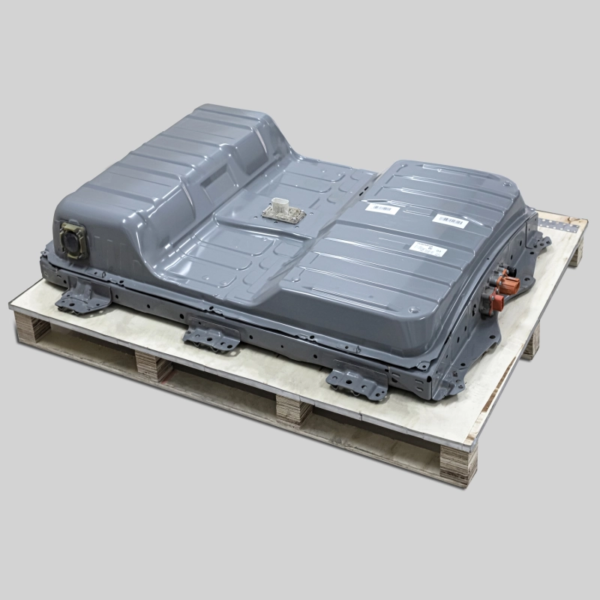
To solve these problems, we utilize brand-new, top-tier CATL (Contemporary Amperex Technology Co. Limited) battery cells in our Nissan Leaf battery packs. CATL is one of the world’s largest lithium-ion battery manufacturers, and their chemistry is renowned for thermal stability—a critical factor when navigating mountain passes.
Unlike refurbished or second-life cells that might overheat under stress, our new cells offer:
- Higher Energy Density: More range per kilogram, allowing you to carry the necessary reserve capacity without adding excessive weight.
- Superior Thermal Stability: Engineered to operate safely within a wide temperature range, preventing thermal runaway even during aggressive driving.
- Zero Voltage Sag: Capable of delivering the high C-rates (discharge rates) needed for sustained uphill climbs without dropping below the motor’s minimum voltage threshold.
The Importance of a Robust BMS for Safety
The heart of any mountain-capable battery is the Battery Management System (BMS). A standard Leaf BMS might not be programmed to handle the rapid charge/discharge cycles of mountain driving.
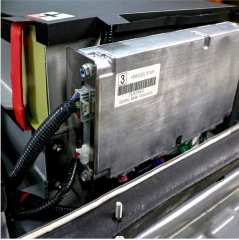
Our packs feature a reinforced, programmable BMS specifically calibrated for high-performance scenarios. This system actively monitors:
- Cell Voltage Balance: Ensuring no single cell is overworked during high-draw climbs.
- Temperature Regulation: Preventing the battery from entering limp mode when temperatures rise.
- Regen Acceptance: Maximizing the energy recaptured during descents to recharge the pack and cool the brakes.
Choosing the Right Capacity: 40kWh vs. 62kWh
When upgrading for mountain use, capacity is king. You need a buffer to handle the “range tax” of elevation.
| Capacity | Best For | Mountain Driving Suitability |
|---|---|---|
| 40kWh | Daily Commuters | Moderate: Suitable for shorter mountain trips or areas with frequent charging. |
| 62kWh | Enthusiasts/Long Range | Excellent: Highly recommended. Provides the reserve power needed for steep grades and long descents without range anxiety. |
Recommendation: If you live in or frequently traverse mountainous regions, the 62kWh upgrade is the minimum standard we recommend. It offers the “reserve headroom” that allows the battery to breathe under load, preventing it from being pushed into the red zone during a long climb.
Real-World Testimonial: Conquering the Rockies
“I live in the Colorado Rockies, and my old 30kWh Leaf was a liability. I upgraded to the CNS 62kWh pack with CATL cells. The difference is night and day. Last winter, I had to climb a 7% grade for 15 miles in freezing temperatures. My old battery would have overheated or cut power, but the CNS pack held steady. The BMS kept the temperatures in check, and I had enough reserve to handle the descent without burning out my brakes. For the price of half an OEM replacement, I got a battery that actually works in the mountains.” — Mark T., Colorado, USA
Why Choose a CNS Battery Upgrade?
For Nissan Leaf owners facing the “Mountain Range Anxiety,” we offer a solution that bridges the gap between factory reliability and aftermarket affordability.
- OEM Fitment: Our packs are engineered to fit the Nissan Leaf chassis (ZE0, ZE1, AZE0) perfectly, ensuring the battery sits securely and the connectors match the original harness.
- 50% Cost Savings: We save you over 50% compared to dealership replacement costs, putting that money back into your pocket for gear, tires, or gas for the road trip to the mountains.
- Unbeatable Warranty: We back our confidence in the quality of our new cells with a 2-year / 80,000 km warranty. This covers manufacturing defects and performance degradation, ensuring you aren’t left stranded if a component fails under the stress of mountain driving.
Frequently Asked Questions (FAQ)
Q1: Will a 62kWh battery physically fit in my older Nissan Leaf model?
Yes, absolutely. Our 62kWh battery packs are designed with OEM standards in mind. They are engineered to fit seamlessly into the chassis of Nissan Leaf models ranging from the ZE0 series to the latest ZE1 series. The dimensions and mounting points are identical to factory specifications, ensuring a plug-and-play installation without any modifications to your vehicle’s body or suspension.
Q2: How does the BMS help with regenerative braking on long downhill stretches?
The BMS is crucial for managing the energy flow during descents. On long mountain roads, your Leaf relies heavily on regenerative braking to recharge the battery and prevent brake fade. Our reinforced BMS is programmed to accept high charge currents, allowing it to absorb the energy generated during braking efficiently. This prevents the system from rejecting the regen (which would force you to use friction brakes) and keeps the battery within a safe temperature range.
Q3: Can I install this battery myself, or do I need a mechanic?
While we provide comprehensive step-by-step installation guides and video tutorials, we strongly recommend having the battery installed by a certified technician, especially if you plan to drive in challenging terrain. Mountain driving puts mechanical stress on the vehicle, and a professional installation ensures that all high-voltage connectors are torqued to the correct specification and that the Battery Management System is programmed correctly to avoid any safety hazards or warranty issues.
Q4: What is the warranty coverage for the battery in extreme temperatures?
Our standard warranty covers defects in materials and workmanship for 2 years or 80,000 km. This includes protection against performance degradation, ensuring your battery maintains at least 70% of its original capacity. The warranty is valid as long as the battery is used within the specified operating conditions (which include the temperature ranges found in mountainous regions). However, it’s important to note that exposure to temperatures beyond the cell’s specification or improper maintenance (like not charging in sub-zero temperatures) may void the warranty.
Q5: How much range can I expect when driving in the mountains?
Range in the mountains depends heavily on the elevation gain and your driving style. While flat highway driving might yield 150-200 miles on a 62kWh pack, mountain driving can reduce this by 30-50% due to the energy required for climbing. However, the 62kWh pack provides the necessary buffer to handle these losses. You should plan for the equivalent of “miles per kWh” dropping significantly—expect roughly 3-4 miles per kWh consumed on steep grades, rather than the 5+ miles per kWh you might see on flat ground.
Ready to upgrade your Nissan Leaf for the mountains? Get a Free Custom Quote today and discover how our high-performance, CATL-cell batteries can eliminate your range anxiety.