Nissan Leaf 62kWh New Battery Installation Tips: Expert Guide
Replacing the battery in your Nissan Leaf is a significant investment that can breathe new life into your vehicle, effectively doubling the range compared to the older 30kWh models. However, handling high-voltage lithium-ion systems requires strict adherence to safety protocols and technical precision.
At CNS BATTERY, we specialize in OEM-compatible replacements for Nissan and BMW models. Based on our extensive technical support experience and feedback from thousands of successful installations, we have compiled this comprehensive guide to ensure your Nissan Leaf 62kWh battery installation is safe, efficient, and problem-free.
⚡ Pre-Installation Safety: The Golden Rules
Before you even open the hood, safety must be your top priority. The Nissan Leaf operates on a high-voltage system (approximately 370V for the 62kWh pack), which can be lethal if mishandled.
- Disconnect the 12V Power: This is the most critical step. You must disconnect the negative terminal of the 12V auxiliary battery to cut power to the vehicle’s control systems. Failure to do this can result in short circuits or damage to the Battery Management System (BMS) when handling the high-voltage connectors.
- Personal Protective Equipment (PPE): Always wear insulated rubber gloves and safety glasses. Even when disconnected, capacitors within the inverter and charger can hold a charge.
- Work Area: Ensure the vehicle is on a flat, level surface with the parking brake engaged. Use wheel chocks for additional security.
🛠️ Tools and Preparation
While the CNS 62kWh battery is designed for plug-and-play compatibility with the Leaf ZE1, AZE0, and ZE0 models, having the right tools ready will save you time.
Essential Toolkit:
- Torque wrench (for precise bolt tightening)
- Socket set (10mm, 13mm, 14mm, 17mm, 19mm)
- Insulated screwdrivers
- Multimeter (for voltage checks)
- CNS Installation Kit: If you purchased from us, ensure you have the included terminal cleaner and new coolant (if required).
🔄 Step-by-Step Installation Process
1. Removing the Old Battery
Lift the car using a hydraulic jack or lift. The 62kWh pack is heavy (approx. 380kg), so a transmission jack or dedicated EV battery trolley is mandatory.
- Drain the Coolant: Locate the drain plug on the battery cooling circuit and drain the old coolant into a suitable container.
- Disconnect Wiring: Carefully disconnect the high-voltage orange cables (always pull from the connector, not the wire) and the low-voltage communication harnesses.
- Remove Mounting Bolts: There are typically 8-10 mounting bolts securing the battery to the chassis. Remove these carefully.
- Lower the Pack: Slowly lower the old battery, ensuring no one is underneath the vehicle.
2. Installing the CNS 62kWh Pack
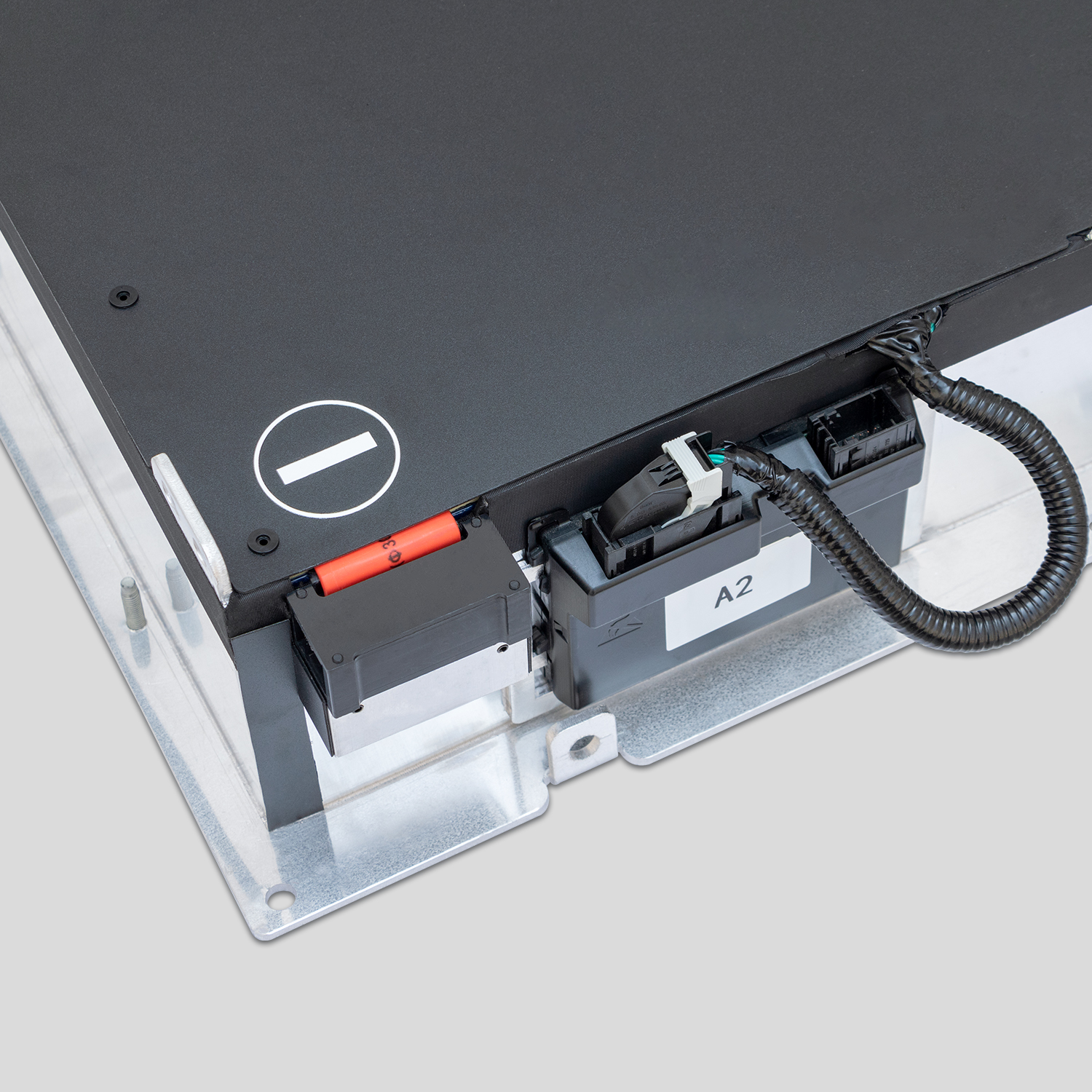
This is where our design philosophy shines. The CNS battery uses the exact same dimensions and connector layout as the OEM Nissan battery.
- Positioning: Carefully lift the new CNS battery into place. Ensure the front of the battery (where the connectors are) aligns perfectly with the vehicle’s harness routing.
- Mounting: Secure the battery using the original mounting bolts. Torque them to the manufacturer’s specifications (usually around 80-100 Nm, but refer to your specific Leaf year manual).
- Reconnect Harnesses: Connect the low-voltage communication harnesses first, followed by the high-voltage orange cables. Ensure the orange connectors are fully locked with a distinct “click.”
3. Cooling System and Fluids
- Refill Coolant: Refill the cooling system with the correct type and amount of coolant specified for your Leaf model. Bleed the system of air to prevent overheating.
- Check for Leaks: Visually inspect all connections for leaks before powering up.
💻 Post-Installation: Programming and Testing
Unlike some aftermarket parts, the Nissan Leaf 62kWh battery requires BMS (Battery Management System) programming to communicate with the car’s ECU.
- BMS Reset/Programming: You will need an OBD2 diagnostic tool capable of resetting the BMS. This step tells the car that a “new” battery has been installed.
- Initial Charge: Before driving, we recommend charging the battery to 100% using a Level 2 charger. This helps the BMS calibrate the State of Charge (SOC) accurately.
- System Check: Turn the ignition on (do not start the car yet) and check the dashboard for any warning lights. If everything is clear, start the vehicle and check for high-voltage system readiness.
📊 Why Choose a CNS 62kWh Battery?
When you choose a CNS replacement, you are opting for a solution that bridges the gap between cost and quality. Here is how we compare to the competition:
| Feature | CNS Battery | Refurbished/Used Batteries | OEM (Original) |
|---|---|---|---|
| Cell Quality | Brand New CATL Cells | Aged, Degraded Cells | Original Factory Cells |
| Warranty | 2 Years / 80,000 km | Often None or Short | 8 Years / 100,000 miles* |
| Cost | ~50% Less than OEM | Cheap upfront, high failure risk | Very Expensive |
| Range | ~440 km (Real World) | Unpredictable, Degrades Fast | ~440 km (Real World) |
*Note: OEM warranties often have strict conditions and high deductibles for replacements.
🤝 Expert Support and Troubleshooting
Even with the best preparation, you might encounter a hiccup. Our technical support team is available to assist you.
- Common Issue: BMS Communication Error. If the car doesn’t recognize the battery, it is usually a programming issue. Our team offers remote video guidance to walk you through the reset process.
- DIY vs. Professional: While the installation is rated as “Moderate” (approx. 2 hours for a DIYer, 1 hour for a pro), if you are uncomfortable with high-voltage systems, we strongly recommend using a professional mechanic. However, many of our customers save significantly by following our detailed video tutorials.
“I used to struggle for ages just to change a car light bulb, so for something as major as changing the battery, I initially wanted to find a professional mechanic… Following the video, it took me 1 hour to remove the old battery… The wiring was very simple… I encountered a small problem during programming, but I contacted customer service and they guided me remotely for 5 minutes, and the problem was solved.”
– Tom H. (Texas, USA), Nissan Leaf ZE0 Owner
❓ Frequently Asked Questions (FAQ)
Q1: Is the installation really plug-and-play?
Yes, the physical connectors and dimensions are an exact match for the Nissan Leaf (ZE0, ZE1, AZE0). However, the BMS software needs to be reset or programmed using a diagnostic tool to recognize the new battery. We provide guidance for this process.
Q2: How much does a Nissan Leaf 62kWh battery cost to replace?
Compared to the OEM price (which can exceed $16,000 USD), the CNS 62kWh battery offers a cost-effective solution, typically priced at around $7,800 USD. This represents a saving of over 50% while still using brand-new cells.
Q3: Do I need to modify my car to fit the 62kWh pack?
No modifications are needed. The CNS 62kWh pack is designed to fit seamlessly into the chassis of compatible Leaf models without any cutting or welding.
Q4: What if I get stuck during installation?
Don’t panic. Our technical experts offer remote video support. Simply contact us, and we will guide you step-by-step until the issue is resolved.
Ready to Restore Your Range?
Don’t let a degraded battery limit your driving. The CNS 62kWh Nissan Leaf battery offers a reliable, safe, and affordable way to get back on the road with a full charge range.
If you have specific questions about compatibility with your Leaf model year or need a personalized quote, our team is ready to help.