
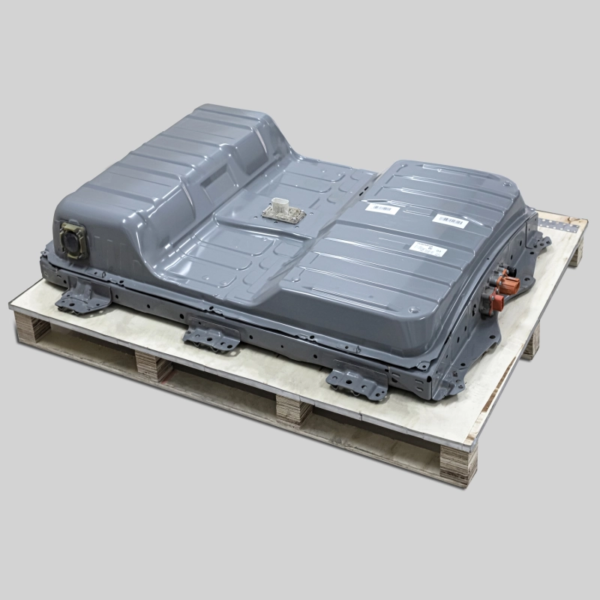
Here is the SEO-optimized article tailored for Nissan Leaf owners seeking a safe, professional, and cost-effective DIY battery replacement solution.
The Ultimate Guide to DIY Nissan Leaf Lithium Battery Installation: High Safety & OEM Standards
Are you a Nissan Leaf owner facing the dreaded “Battery Degradation Tax”? You are not alone. As the miles add up, the range of your beloved EV inevitably shrinks, leaving you with two unpalatable choices: pay an exorbitant $15,000+ to the dealership for a recycled “new” battery, or part ways with your car entirely.
There is a third, smarter path. DIY Nissan Leaf Lithium Battery Installation has evolved from a risky garage experiment into a legitimate, high-safety standard industry. With advancements in Battery Management Systems (BMS) and the availability of OEM-spec components, replacing your battery pack is now a viable solution that can restore your car to “like-new” condition for less than half the dealer price.
This guide will walk you through why a professional-grade DIY replacement is the ultimate hack for extending your Leaf’s lifespan, focusing on the critical aspects of safety, compatibility, and value.
Why Replace Your Nissan Leaf Battery? The Economics of EV Ownership
Before diving into the technicalities of installation, let’s address the elephant in the room: cost. The primary barrier to electric vehicle (EV) ownership isn’t usually the upfront price, but the fear of future battery replacement costs.
- The Dealer Dilemma: Official Nissan replacement batteries are notoriously expensive. For models like the Leaf ZE0, AZE0, or ZE1, a factory replacement often costs between $12,000 and $16,000. This price tag is frequently higher than the resale value of the car itself.
- The Refurbished Trap: Many owners turn to “refurbished” or “recycled” packs to save money. However, these are often just old batteries with swapped-out dead cells. They lack structural integrity, come with short warranties, and are prone to swelling and failure.
- The DIY Solution: A new, professionally engineered DIY lithium battery pack offers a middle ground. You get brand-new, high-quality cells (like CATL) in a brand-new casing, specifically designed for the Nissan Leaf chassis.
The result? You can upgrade from a degraded 24kWh or 40kWh pack to a robust 62kWh unit for roughly $8,000, instantly doubling your range and adding a decade of life to your vehicle.
Safety First: Engineering a “No-Compromise” Battery Pack
When you see the phrase “DIY Installation,” safety concerns are natural. After all, we are dealing with high-voltage lithium-ion systems. However, modern aftermarket packs are not the “hobbyist” boxes of the past. They are engineered to meet or exceed Original Equipment Manufacturer (OEM) safety standards.
1. Cell Quality: The Heart of the Battery
The safety and longevity of any EV battery depend entirely on the cell chemistry. Reputable manufacturers, like CNS BATTERY, utilize cells from CATL (Contemporary Amperex Technology Co. Limited), the world’s largest lithium-ion battery producer.
- Why CATL? These cells are the same quality used by premium automakers like BMW and Volvo. They offer superior thermal stability compared to older Nissan OEM cells.
- New vs. Used: A DIY pack built with brand-new CATL cells eliminates the risk of internal shorts and degradation found in used or refurbished modules.
2. Structural Integrity and Protection
A safe DIY battery isn’t just cells taped together; it is a structural component.
- Housing: The battery pack must feature a reinforced plastic or composite housing that protects against road debris, water ingress (IP67 rating), and physical impact.
- Battery Management System (BMS): This is the brain of the operation. A high-safety-rated BMS monitors every single cell’s voltage and temperature 100 times per second. It prevents overcharging, over-discharging, and overheating—critical features for a DIY scenario where the user might not be a battery engineer.
3. Plug-and-Play Compatibility
One of the biggest safety risks in DIY is incorrect wiring. Modern replacement packs are designed as drop-in replacements.
- Interface Matching: The connectors, bolts, and mounting points are engineered to match the original Nissan Leaf specifications exactly. This “Plug-and-Play” design eliminates the need to cut or splice high-voltage cables, significantly reducing the risk of short circuits during installation.
The Installation Process: Is it Right for You?
You might be wondering, “Do I need to be a mechanic to do this?” The answer is a resounding no. While professional installation is always an option, the process is designed for the capable DIYer or a local independent mechanic.
Step-by-Step Overview
- Preparation: Lift the car safely using a hydraulic jack or lift. Disconnect the 12V auxiliary battery to kill all power.
- Removal: Remove the underbody plastic shields. Disconnect the high-voltage (HV) and low-voltage (LV) connectors from the old battery. Remove the mounting bolts (typically 16-20 bolts depending on the model).
- Lift Out: The old battery pack is heavy (approximately 300-400 kg). Using a transmission jack or engine hoist, carefully lower the old pack.
- Installation: Position the new DIY lithium battery into the chassis. Bolt it in using the same OEM bolts. Reconnect the HV and LV harnesses.
- Programming (The Magic Step): This is where the “High Safety Rating” comes into play. Unlike early EVs, modern packs require BMS programming to sync with the car’s computer. This usually involves connecting a diagnostic tool (often provided or guided by the manufacturer) to reset the BMS and confirm the new battery parameters.
Time Commitment: For a professional, this takes about 50 minutes to 2 hours. For a DIYer with basic tools, expect a full afternoon, including safety checks.
Upgrading Your Range: From 40kWh to 62kWh
One of the most exciting aspects of a DIY replacement is the ability to upgrade your battery capacity. If you own an older Leaf (ZE0 or AZE0) with a 24kWh or 40kWh pack, you can often fit a 62kWh module into the same space.
- The Physics: The physical dimensions of the battery tray are often the same across generations, allowing for a higher-density cell swap.
- The Result: Imagine going from a 120km range (after degradation) to a brand-new 430km+ range. This effectively turns your old Leaf into a long-range EV competitor, capable of handling daily commutes and weekend trips without anxiety.
Why Choose a Professional DIY Kit Over a Refurbished Pack?
To help you visualize the difference, here is a comparison of the options available to Nissan Leaf owners:
| Feature | Refurbished/Old Battery | Professional DIY Lithium Kit |
|---|---|---|
| Core Cells | Used, degraded, unknown history | Brand New CATL cells |
| Housing | Original, possibly cracked or damaged | New, reinforced structural housing |
| Warranty | 6 months to 1 year | 2 Years / 80,000 km |
| Safety Rating | Low (Risk of swelling/shorts) | High (OEM-standard BMS & thermal protection) |
| Longevity | 1-2 years max | 5-8 years+ |
| Price | $6,000 – $8,000 | $7,000 – $9,000 |
As you can see, the price difference between a risky refurbished pack and a safe, new DIY kit is negligible. The value proposition for the new kit is undeniable.
Frequently Asked Questions (FAQ)
Q1: Is installing a new battery pack yourself dangerous?
A: While high-voltage systems should always be treated with respect, the actual physical installation is low-risk. The primary danger is electrostatic discharge or short circuits. By disconnecting the 12V battery first and wearing insulated gloves, you eliminate 99% of the risk. The high-safety-rated BMS handles the internal electronics, preventing thermal runaway.
Q2: Will a DIY battery void my car’s warranty?
A: If your Nissan Leaf is over 3 years old (which is the typical age when battery replacement is needed), the factory warranty has likely expired. Furthermore, a new DIY pack acts as a “component replacement.” As long as the installation is done correctly and does not damage other parts of the vehicle, it does not affect the remaining mechanical warranties.
Q3: How do I know if the battery is compatible with my specific Leaf model?
A: Compatibility depends on the chassis code (ZE0, AZE0, ZE1). Before purchasing, you should provide your Vehicle Identification Number (VIN) to the supplier. Reputable manufacturers offer a free compatibility assessment to ensure the voltage, capacity, and physical dimensions match your specific year and model.
Q4: What about the BMS Programming? Can I do it myself?
A: Yes, but it usually requires specific software and a dongle. Most professional DIY suppliers (like CNS BATTERY) provide detailed video tutorials and remote video support to guide you through the programming process. If you are uncomfortable, any local mechanic with EV diagnostic tools can usually perform this step in minutes.
Ready to Restore Your Range?
Replacing your Nissan Leaf battery doesn’t have to be a financial nightmare. With a High Safety Rating DIY Lithium Battery, you can achieve OEM-level performance and safety at half the price.
Don’t let a dead battery kill your EV dreams. Restore your car’s original glory and double your range with a professional, plug-and-play solution.
Get a Free Custom Quote for your Nissan Leaf or e-NV200 today and let our technical experts ensure a perfect fit.

