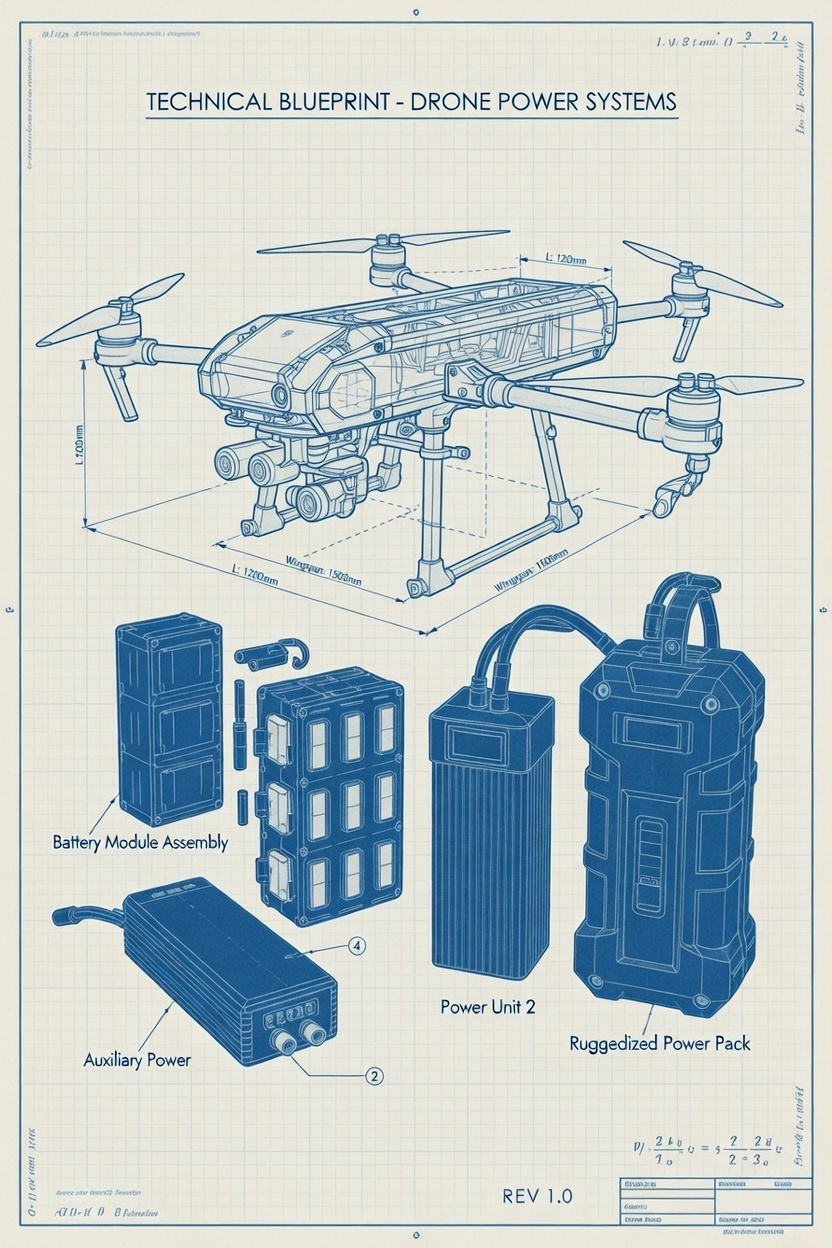
In the rapidly evolving landscape of security and surveillance operations, drone technology has become an indispensable tool for monitoring critical infrastructure, border patrol, and emergency response. However, the effectiveness of these unmanned aerial systems hinges on one crucial component: the battery. Security firms face mounting pressure to ensure uninterrupted operations while maintaining strict compliance with international regulations. This guide explores the five essential factors that define high-performance drone batteries and why supply chain traceability matters more than ever in 2026.
The Hidden Challenges Facing Security Operations
Security and surveillance firms operate in high-stakes environments where battery failure is not an option. Consider a border patrol drone that loses power mid-mission or a surveillance unit that cannot complete its scheduled flight due to unexpected capacity degradation. These scenarios represent more than operational inconveniences—they constitute critical security vulnerabilities.
The pain points are real and multifaceted. Procurement teams struggle with inconsistent battery performance across batches, making fleet management unpredictable. Compliance officers face increasing scrutiny over battery sourcing, especially with new 2025-2026 lithium battery transportation regulations requiring stricter state-of-charge limits during shipping. Operations managers deal with shortened mission windows when batteries fail to deliver promised cycle life. Meanwhile, risk managers worry about counterfeit components entering the supply chain, potentially compromising entire drone fleets.
Factor 1: Energy Density and Flight Time Optimization
Energy density remains the cornerstone of drone battery performance. For security applications, every gram counts when payloads include high-resolution cameras, thermal imaging systems, or communication relays. Modern lithium polymer batteries now achieve energy densities exceeding 250 Wh/kg, enabling flight times of 45-60 minutes under typical surveillance loads.
However, raw specifications tell only part of the story. Real-world performance depends on discharge rates, temperature tolerance, and power delivery consistency. Security drones often operate in extreme conditions—from desert heat to arctic cold—requiring batteries that maintain capacity across a wide temperature range. Leading manufacturers now integrate smart battery management systems that monitor cell balance in real-time, preventing premature failures during critical missions.
Key Performance Indicators:
- Minimum energy density: 240 Wh/kg for professional surveillance drones
- Operating temperature range: -20°C to 60°C
- Consistent power delivery at 5C discharge rates
- Voltage stability within 3% throughout discharge cycle
Factor 2: Cycle Life and Total Cost of Ownership
Security firms typically deploy drone fleets for thousands of missions annually. A battery rated for 500 cycles versus one rated for 1,500 cycles creates dramatically different operational economics. When calculating total cost of ownership, procurement teams must look beyond initial purchase price to consider replacement frequency, downtime costs, and mission disruption risks.
Industry data from 2025 shows that high-cycle batteries reduce annual operating costs by 35-40% for firms conducting daily surveillance operations. The math is straightforward: a battery lasting three times longer means one-third the replacement purchases, reduced inventory carrying costs, and fewer operational interruptions for battery swaps.
Procurement Best Practices:
- Require certified cycle life testing data from manufacturers
- Establish replacement schedules based on actual flight hours, not calendar time
- Negotiate bulk pricing tiers that reflect long-term partnership value
- Include warranty terms covering capacity retention guarantees
Factor 3: Safety Compliance and Transportation Regulations
The regulatory landscape for lithium battery transportation underwent significant changes in 2025-2026. International Air Transport Association (IATA) regulations now mandate that lithium ion batteries must be shipped at no more than 30% state of charge. These requirements affect how security firms receive battery shipments and manage inventory across multiple locations.
Compliance extends beyond transportation. Security operations often require batteries certified to military-grade standards such as MIL-STD-810 for environmental testing. Counter-drone systems and surveillance platforms operating near critical infrastructure may need additional certifications demonstrating resistance to electromagnetic interference and thermal runaway protection.
Compliance Checklist:
- UN 3480/UN 3481 transportation classification
- IATA DGR 66th Edition compliance for air shipments
- MSDS documentation readily available for all battery models
- Third-party safety certifications from recognized testing laboratories
Factor 4: Supply Chain Traceability and Authentication
Counterfeit batteries represent a growing threat to security operations. Substandard cells can fail catastrophically, endangering personnel and compromising missions. Supply chain traceability provides the verification framework necessary to authenticate every battery from raw material sourcing through final delivery.
Blockchain-enabled tracking systems now allow procurement teams to verify battery origin, manufacturing dates, test results, and shipping history. This transparency proves invaluable during audits, insurance claims, and incident investigations. Major defense contractors increasingly require full traceability documentation as part of their vendor qualification processes.
Traceability Requirements:
- Unique serial numbers linked to manufacturing batch records
- QR code or RFID tracking throughout distribution chain
- Digital certificates of authenticity accessible via manufacturer portals
- Audit trails documenting all custody transfers
Factor 5: Smart Integration and Fleet Management
Modern security operations demand more than interchangeable power sources. Intelligent batteries with integrated communication protocols enable centralized fleet management, predictive maintenance scheduling, and real-time health monitoring. These capabilities transform batteries from consumable components into data-generating assets.
Smart battery systems can communicate remaining capacity, cycle count, temperature history, and fault codes to ground control stations. This data supports predictive analytics that identify batteries approaching end-of-life before failures occur. For firms managing fleets of 50+ drones, these insights prevent mission-critical failures and optimize replacement planning.
Integration Capabilities:
- MAVLink or proprietary protocol compatibility
- Real-time telemetry transmission to command centers
- Automated health reporting and alert systems
- Firmware update support for security patches
Frequently Asked Questions
Q: How often should security drone batteries be replaced?
A: Replacement schedules depend on usage intensity and manufacturer specifications. For daily surveillance operations, plan replacements after 800-1,200 cycles or when capacity drops below 80% of original rating. Implement regular capacity testing to make data-driven replacement decisions.
Q: What certifications should we require from battery suppliers?
A: Minimum requirements include UN transportation certification, IATA compliance documentation, and ISO 9001 quality management certification. For government contracts, add MIL-STD testing reports and country-of-origin documentation. Request third-party test results from laboratories like UL or TÜV.
Q: How does supply chain traceability protect our operations?
A: Traceability verifies battery authenticity, confirms compliance with sourcing regulations, and provides documentation for insurance and liability purposes. It also enables rapid recall response if manufacturing defects are discovered and supports forensic analysis after any incident.
Q: Can we mix battery brands within our drone fleet?
A: While technically possible, mixing brands creates management complexity and potential compatibility issues. Standardizing on a single qualified supplier simplifies training, reduces spare parts inventory, and strengthens negotiation leverage for volume pricing.
Q: What storage conditions maximize battery lifespan?
A: Store batteries at 40-60% state of charge in temperature-controlled environments between 15-25°C. Avoid long-term storage at full charge or complete discharge. Implement rotation systems ensuring no battery remains in storage beyond manufacturer recommendations.
Building Strategic Partnerships for Long-Term Success
Selecting battery suppliers requires evaluation beyond product specifications. Leading security firms treat battery procurement as strategic partnerships, evaluating manufacturers on production capacity, quality control systems, technical support capabilities, and financial stability. Volume purchasers should negotiate master supply agreements that guarantee priority allocation during high-demand periods and establish clear protocols for quality issue resolution.
The investment in high-performance, traceable batteries delivers measurable returns through extended mission capabilities, reduced operational risk, and simplified compliance management. As drone technology continues advancing, battery performance will remain the limiting factor determining operational effectiveness.
Take Action Today
Security and surveillance firms cannot afford battery-related mission failures. The five factors outlined in this guide provide a framework for evaluating suppliers, negotiating contracts, and building resilient drone operations. Whether you manage a fleet of 10 drones or 500, the principles remain the same: prioritize performance, demand traceability, and build partnerships that support your mission critical requirements.
Ready to discuss your specific battery procurement needs? Our team specializes in high-volume drone battery solutions with full supply chain transparency. Contact us today to schedule a consultation and receive customized recommendations for your security operations: https://cnsbattery.com/drone-battery-home/drone-battery-contact
Don’t let battery limitations compromise your security mission. Partner with suppliers who understand the stakes and deliver the performance your operations demand.