Introduction
The agricultural drone industry is experiencing unprecedented growth, with plant protection services leading the charge in modern farming innovation. As of 2026, the global high-rate battery market is projected to reach $33.5 billion by 2031, growing at a remarkable CAGR of 25.7%. This surge reflects the critical role that high-performance drone batteries play in agricultural operations. For farm operators and service providers, understanding the essential factors that determine battery performance can mean the difference between profitable operations and costly downtime. This comprehensive guide explores the five key factors that define high-performance drone batteries specifically designed for plant protection services with fast charging capabilities.
Factor 1: High Discharge Rate and Power Density
The foundation of any agricultural drone battery lies in its discharge capability. Plant protection drones require batteries that can deliver consistent power during demanding spraying operations.
Key Specifications to Consider:
- C-Rate Performance: Look for batteries with 15C-25C continuous discharge rates
- Voltage Configuration: 12S (44.4V) or 14S (51.8V) systems offer optimal power-to-weight ratios
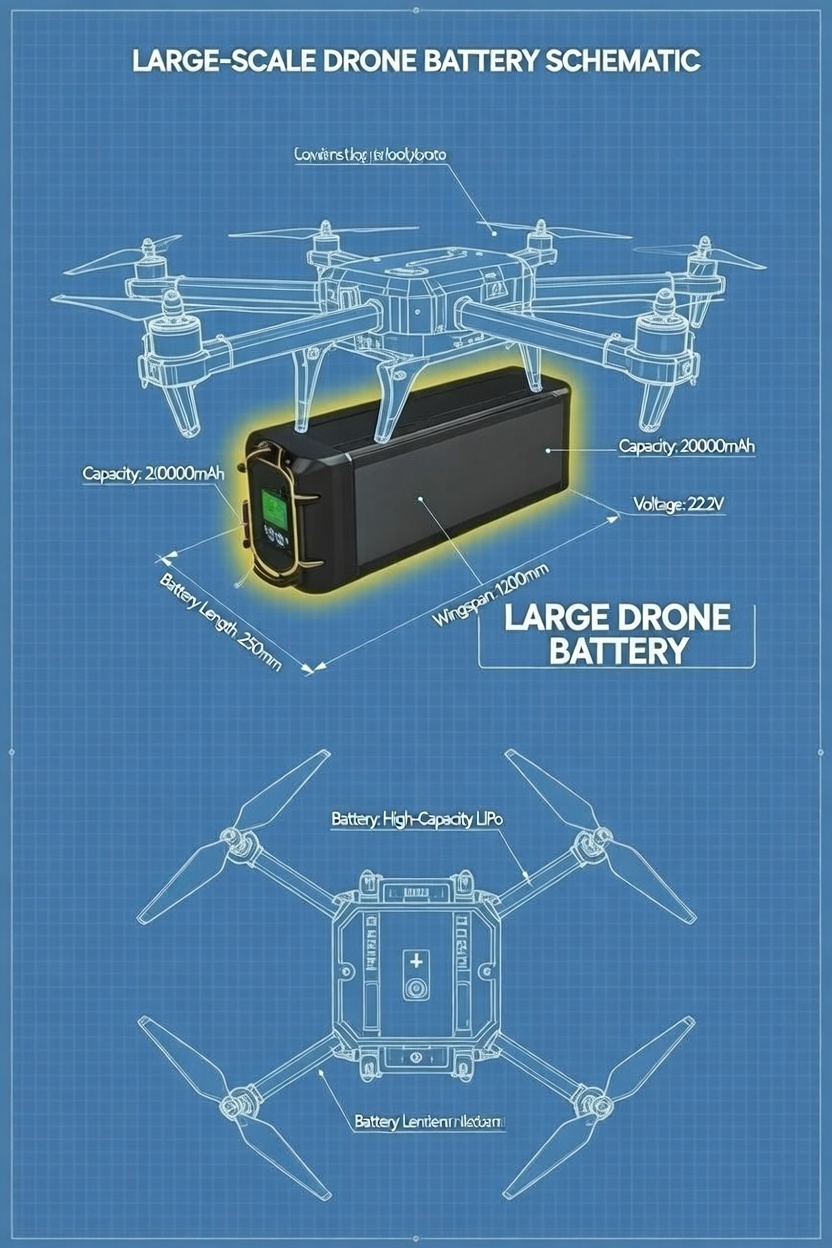
- Capacity Range: 16,000mAh to 28,000mAh provides extended flight times
Comparison Insight:
Standard consumer drone batteries typically offer 5C-10C discharge rates, while agricultural-grade batteries require 20C or higher. This difference ensures stable power delivery even when drones carry heavy payload tanks filled with pesticides or fertilizers.
Pro Tip: Always verify the battery’s discharge curve under load conditions similar to your actual operations. A battery that maintains voltage stability throughout 80% of its discharge cycle will significantly improve spraying accuracy and flight consistency.
Factor 2: Advanced Thermal Management Systems
Fast charging generates substantial heat, which can degrade battery performance and safety if not properly managed. Research from leading battery manufacturers indicates that sophisticated thermal management with multiple cooling circuits is indispensable for maintaining battery health.
Essential Thermal Features:
- Active Cooling Circuits: Distribute heat evenly across battery cells
- Temperature Monitoring: Real-time sensors prevent overheating during charging
- Heat Dissipation Materials: Specialized housings that transfer heat efficiently
Temperature Impact Analysis:
| Operating Temperature | Battery Lifespan | Charging Speed |
|---|---|---|
| 15°C – 25°C | Optimal (100%) | Maximum |
| 25°C – 35°C | Good (85%) | Reduced 15% |
| 35°C – 45°C | Fair (70%) | Reduced 30% |
| Above 45°C | Poor (50%) | Significantly Limited |
Best Practice: Implement charging stations in climate-controlled environments whenever possible. During peak summer operations, schedule charging during cooler morning or evening hours to maximize battery longevity.
Factor 3: Smart Charging Technology and Protection Systems
Modern agricultural drone batteries incorporate intelligent charging management chips that provide multiple layers of protection while enabling rapid charging capabilities.
Critical Protection Features:
- Overcharge Protection: Prevents voltage spikes that damage cells
- Short Circuit Protection: Safeguards against electrical faults
- Trickle Charging Status: Indicates optimal charging completion
- Cell Balancing: Ensures uniform charge across all battery cells
Charging Speed Comparison:
- Standard Charging: 2-3 hours for full capacity
- Fast Charging: 30-45 minutes for 80% capacity
- Ultra-Fast Charging: 15-20 minutes for 80% capacity (requires specialized equipment)
Implementation Strategy: Invest in multi-channel charging stations that can simultaneously charge 4-6 batteries. This approach minimizes downtime during intensive spraying seasons when multiple drones operate in rotation.
Factor 4: Cycle Life and Long-Term Durability
Agricultural operations demand batteries that withstand hundreds of charge-discharge cycles while maintaining performance. Quality drone batteries should deliver 500-1,000 complete cycles before significant capacity degradation occurs.
Durability Factors:
- Cell Chemistry: High-quality lithium polymer (LiPo) or lithium-ion formulations
- Construction Quality: Reinforced casings protect against field conditions
- Maintenance Requirements: Regular inspection and proper storage extend lifespan
Cost-Per-Cycle Analysis:
A premium battery costing $500 with 1,000 cycles equals $0.50 per cycle. A budget battery at $300 with 500 cycles also equals $0.60 per cycle, making the premium option more economical over time.
Maintenance Checklist:
- Store batteries at 40-60% charge when not in use
- Avoid complete discharge below 20% capacity
- Inspect connections and casings monthly
- Rotate battery usage to ensure even wear
Factor 5: Integration Compatibility and Operational Efficiency
The best battery technology means little if it doesn’t integrate seamlessly with your drone fleet and operational workflow. Compatibility considerations extend beyond physical connections to include communication protocols and monitoring systems.
Integration Requirements:
- Smart Communication: BMS (Battery Management System) data transmission
- Physical Compatibility: Secure mounting systems for vibration resistance
- Software Integration: Real-time battery status in flight control systems
Operational Efficiency Tips:
- Standardize battery types across your drone fleet
- Implement battery tracking systems for maintenance scheduling
- Train operators on proper battery handling procedures
- Establish clear protocols for battery rotation and retirement
Key Insights and Recommendations
Based on current industry research and field performance data, several critical insights emerge for plant protection service operators:
- Invest in Quality Over Price: Premium batteries with proper thermal management and smart charging capabilities deliver better long-term value despite higher initial costs.
- Plan for Redundancy: Maintain 30-50% more batteries than your immediate operational needs to account for charging cycles and unexpected failures.
- Monitor Performance Metrics: Track voltage sag, temperature profiles, and cycle counts to identify batteries requiring replacement before they fail in the field.
- Stay Updated on Technology: The battery industry evolves rapidly. New semi-solid state batteries and improved lithium formulations continue to emerge, offering better performance and safety.
Call to Action
Optimizing your plant protection drone operations starts with choosing the right battery solutions. Whether you’re scaling an existing fleet or launching new agricultural services, expert guidance can help you make informed decisions that maximize ROI and operational efficiency.
Ready to enhance your drone battery performance? Contact our specialist team for personalized recommendations on high-performance drone batteries designed specifically for plant protection services. Visit our contact page at https://cnsbattery.com/drone-battery-home/drone-battery-contact to discuss your specific requirements and discover how the right battery technology can transform your agricultural operations.
Don’t let battery limitations ground your productivity. Take action today and power your plant protection services with confidence, reliability, and the performance needed to succeed in modern agriculture.