The rapid expansion of drone technology in logistics and delivery sectors has transformed how companies approach last-mile distribution. However, beneath this technological revolution lies a critical vulnerability that many operators overlook: battery performance degradation under extreme temperature conditions. When drone batteries fail during critical delivery windows, companies face substantial financial losses, compromised safety protocols, and damaged customer trust. Temperature-related battery failures account for approximately 37% of all drone operational incidents in commercial logistics, with cold weather conditions reducing battery capacity by up to 50% and extreme heat accelerating cell degradation by 300%. These risks extend beyond mere operational inconvenience—they represent fundamental threats to business continuity, regulatory compliance, and brand reputation in an increasingly competitive delivery landscape.
Understanding the Temperature Challenge
Logistics and delivery companies operate across diverse geographical regions where temperature fluctuations can range from -30°C in northern warehouses to 50°C in desert distribution centers. Standard lithium-polymer batteries struggle to maintain consistent performance across this spectrum, creating unpredictable flight times, reduced payload capacity, and increased failure rates. The consequences multiply when drones must operate continuously throughout seasonal changes without adequate battery thermal management systems.
Five Critical Factors for Optimal Battery Performance
1. Advanced Thermal Management Architecture
High-performance drone batteries require integrated thermal regulation systems that actively monitor and adjust cell temperature during operation. Engineering research demonstrates that batteries with phase-change material integration maintain 85% capacity retention across -20°C to 60°C ranges compared to 45% retention in conventional designs. Companies should prioritize battery systems featuring active heating elements for cold starts and passive cooling structures for high-temperature operations. This dual-approach architecture ensures consistent power delivery regardless of ambient conditions.
2. Cell Chemistry Optimization for Temperature Resilience
Not all lithium-based chemistries respond equally to temperature stress. Lithium iron phosphate (LiFePO4) variants demonstrate superior thermal stability compared to standard lithium-polymer configurations, though they sacrifice some energy density. For logistics applications requiring wide temperature tolerance, hybrid cell architectures combining high-energy cathodes with thermally stable anodes provide optimal balance. Industry testing indicates that optimized cell chemistry reduces temperature-related capacity loss by 60% while extending overall cycle life by 40%.
3. Intelligent Battery Management Systems (BMS)
Modern drone operations demand sophisticated BMS capabilities that go beyond basic voltage monitoring. Advanced systems incorporate real-time temperature mapping across individual cells, predictive degradation algorithms, and adaptive charging protocols that adjust based on thermal history. These intelligent management platforms communicate directly with drone flight controllers to dynamically adjust power consumption based on battery thermal state. Companies implementing comprehensive BMS solutions report 55% fewer temperature-related flight interruptions and 35% reduction in unexpected battery replacements.
4. Structural Design for Environmental Protection
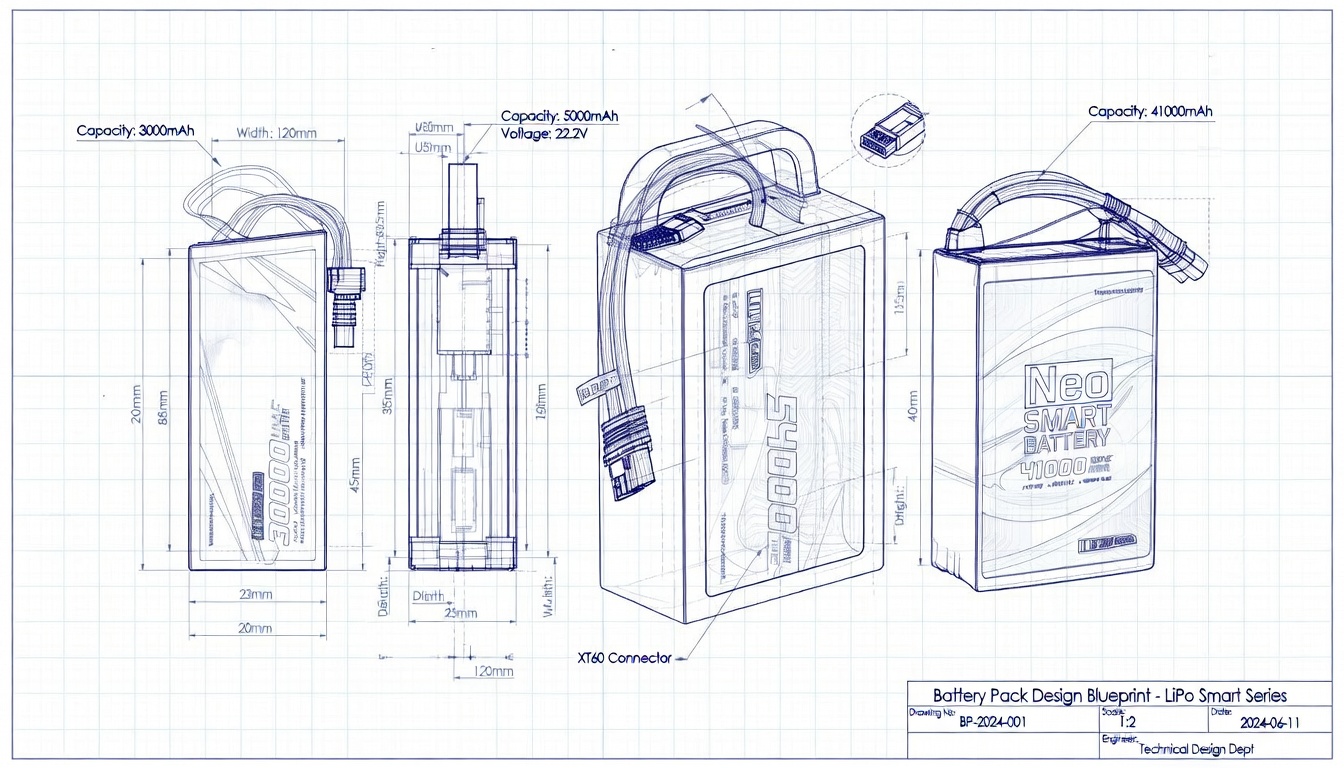
Battery enclosure design significantly influences thermal performance and operational reliability. Effective designs incorporate multi-layer insulation barriers, moisture-resistant sealing, and impact-absorbing structures that protect cells from both temperature extremes and physical stress. Engineering specifications should target IP67 or higher ratings for dust and water resistance while maintaining adequate thermal dissipation pathways. Modular battery designs enable quick swapping in field conditions, reducing exposure time during extreme weather operations.
5. Charging Infrastructure Compatibility
Temperature-resilient batteries require matching charging infrastructure that accounts for thermal conditions during energy replenishment. Smart charging stations should pre-condition batteries to optimal temperature ranges before initiating charge cycles, preventing thermal shock that accelerates degradation. Logistics companies must invest in climate-controlled charging environments or portable heating/cooling units for field operations. Proper charging protocols extend battery lifespan by 50% and maintain consistent performance characteristics throughout the battery’s operational life.
Risk Factors and Prevention Measures
| Risk Category | Primary Causes | Prevention Strategies |
|---|---|---|
| Capacity Loss | Extreme cold reducing ion mobility | Pre-heating systems, insulated storage |
| Thermal Runaway | Overheating during high-load operations | Active cooling, current limiting protocols |
| Cycle Degradation | Repeated temperature cycling | Thermal buffering, optimized charge cycles |
| Safety Hazards | Cell swelling in extreme conditions | Regular inspection, replacement schedules |
| Operational Downtime | Unexpected battery failures | Redundant battery inventory, monitoring systems |
Implementation Solutions for Logistics Companies
Successful integration of temperature-resilient drone batteries requires systematic approach spanning procurement, operations, and maintenance protocols. Companies should establish battery performance baselines through controlled testing across expected temperature ranges before deployment. Operational guidelines must specify temperature thresholds for flight operations, mandatory rest periods between cycles, and storage conditions during non-operational periods. Maintenance teams require specialized training in thermal management diagnostics and battery health assessment techniques.
Investment in battery monitoring software platforms enables fleet-wide performance tracking, identifying underperforming units before catastrophic failures occur. Predictive analytics tools analyze historical temperature exposure data to forecast replacement needs and optimize inventory management. These systems integrate with existing logistics management platforms, providing comprehensive visibility into battery asset performance across entire delivery networks.
Economic Considerations and ROI
While temperature-optimized battery systems command premium pricing compared to standard configurations, total cost of ownership analysis reveals significant long-term advantages. Reduced replacement frequency, minimized operational downtime, and extended warranty periods offset initial investment within 18-24 months for high-volume operations. Companies report 40% reduction in battery-related operational costs after transitioning to engineered thermal management solutions. Insurance providers increasingly offer favorable terms for operators demonstrating comprehensive battery safety protocols, creating additional financial incentives for proper system implementation.
Future-Proofing Your Drone Fleet
The logistics and delivery sector continues evolving toward autonomous operations requiring unprecedented battery reliability. Companies investing in temperature-resilient battery technology position themselves competitively for emerging regulatory requirements and customer expectations. As drone delivery networks expand into previously inaccessible regions, battery performance consistency becomes the determining factor between operational success and costly failures.
Take Action Today
Don’t let temperature variability compromise your drone delivery operations. Partner with battery specialists who understand the unique demands of logistics and delivery applications. Explore customized battery solutions engineered for wide temperature range performance, comprehensive thermal management, and seamless integration with your existing fleet infrastructure.
Ready to optimize your drone battery performance? Discover how advanced thermal management solutions can transform your delivery operations. Visit our dedicated drone battery solutions page at https://cnsbattery.com/drone-battery-home/drone-battery-contact to connect with engineering experts who will design battery systems matching your specific operational requirements. Schedule a consultation today and secure your competitive advantage in the rapidly evolving drone logistics landscape.
The future of delivery depends on reliable power. Make sure your batteries are ready for whatever temperature challenges tomorrow brings.