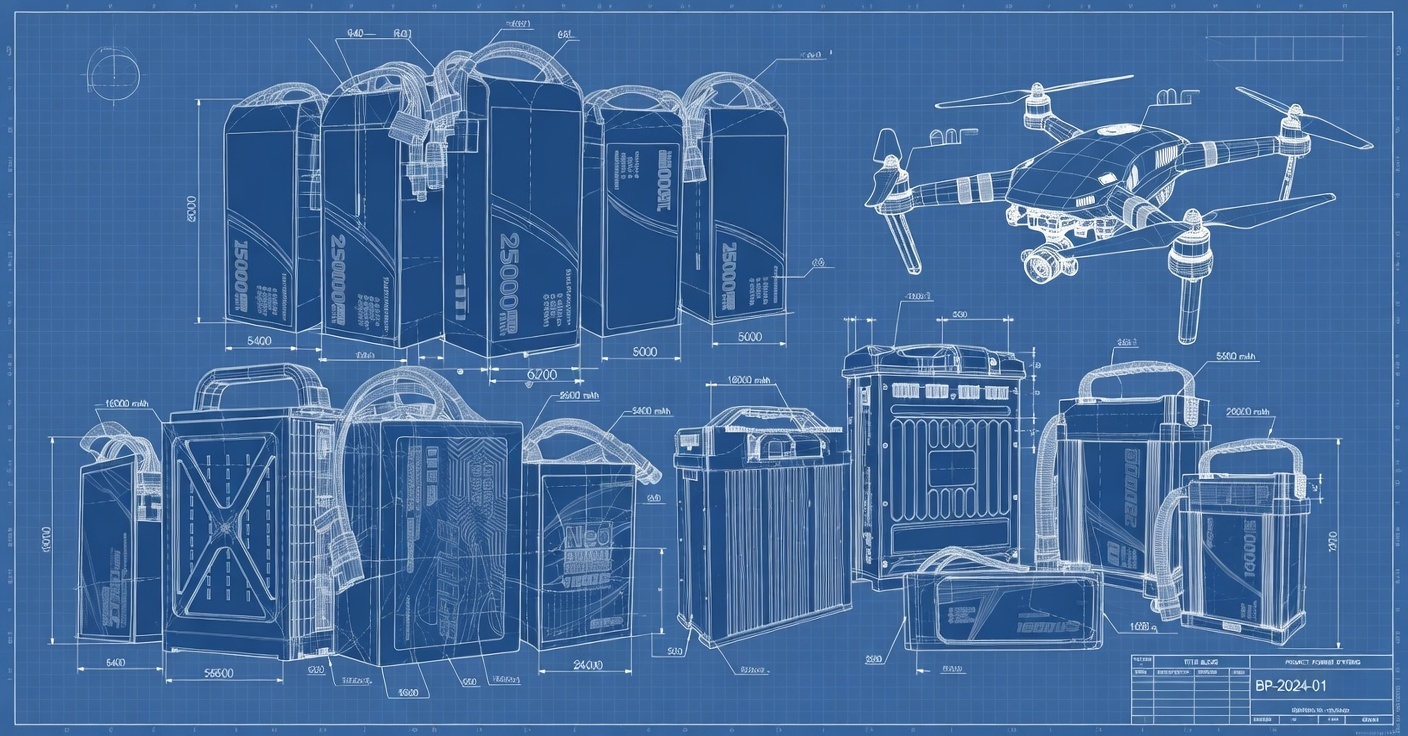
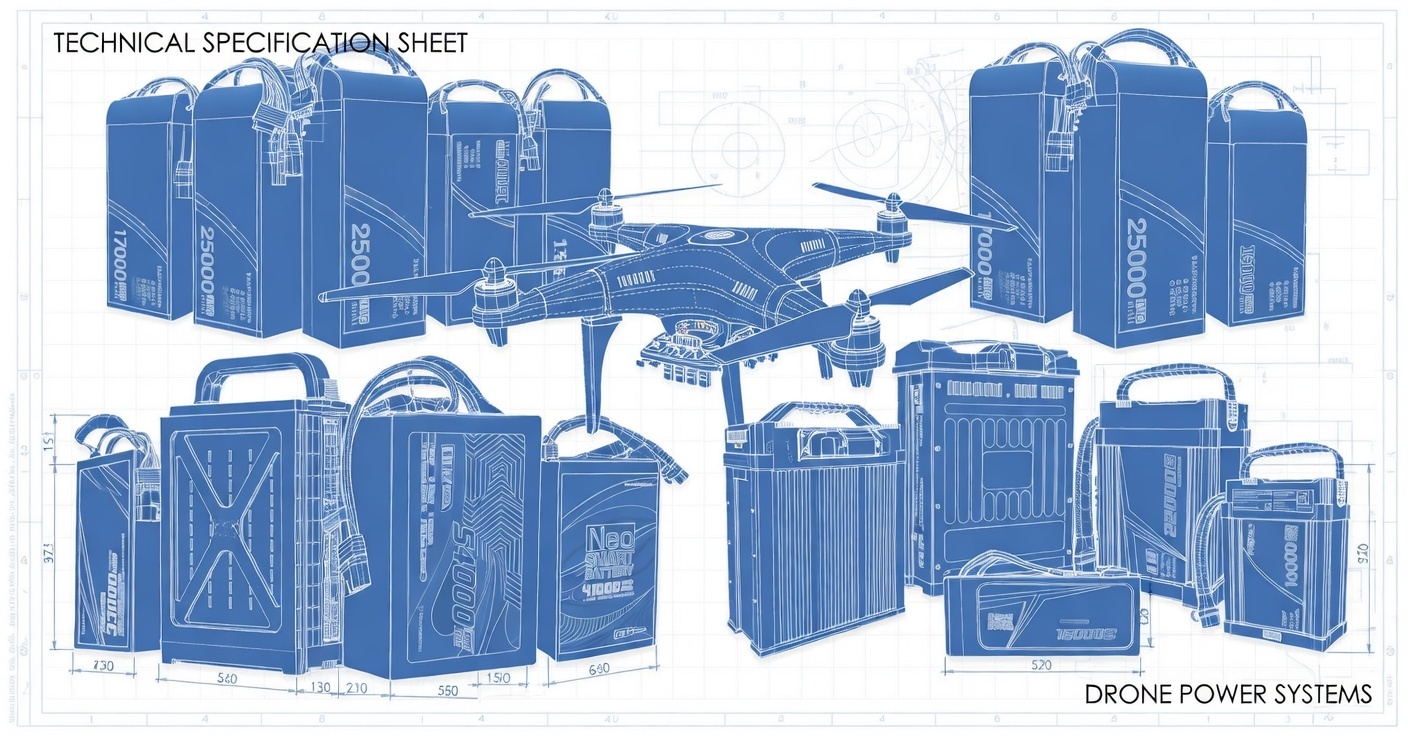
The commercial drone industry is experiencing unprecedented growth in 2026, with heavy-load transport operations leading the charge. For operators managing fleets of cargo drones, battery performance isn’t just about flight time—it’s about operational efficiency, safety compliance, and total cost of ownership. Understanding the five critical factors that determine drone battery performance can mean the difference between profitable operations and costly downtime.
1. Energy Density: The Foundation of Payload Capacity
Energy density remains the cornerstone metric for heavy-load drone operations. Modern lithium polymer (LiPo) and semi-solid-state batteries now achieve energy densities ranging from 250-310 Wh/kg, enabling drones to carry payloads exceeding 10kg while maintaining practical flight times.
Key Considerations:
- Higher energy density directly translates to extended flight duration or increased payload capacity
- Semi-solid-state battery technology offers improved safety margins without sacrificing performance
- Battery weight must be optimized against total aircraft weight for maximum efficiency
For transport operators, selecting batteries with optimal energy density ensures each flight delivers maximum value. The latest 6S to 24S battery configurations provide flexibility across different drone platforms, from agricultural sprayers to freight delivery systems.
2. Discharge Rate and Power Delivery Consistency
Heavy-load operations demand batteries that can sustain high discharge rates throughout the flight cycle. A battery’s C-rating determines how quickly it can deliver power without voltage sag or overheating.
Performance Benchmarks:
- Minimum 10C continuous discharge for standard cargo operations
- 25C+ discharge rates for demanding applications with rapid acceleration requirements
- Consistent voltage output throughout 80% of discharge cycle
Operators should verify that battery specifications match their drone’s maximum power draw. Underrated batteries not only limit performance but also degrade faster under stress, reducing overall cycle life and increasing replacement costs.
3. Thermal Management and Operating Temperature Range
Temperature management has evolved into one of the most critical factors for battery longevity and safety. In 2026, advanced battery management systems (BMS) incorporate predictive, AI-driven temperature control that enhances charging speed, efficiency, and safety.
Best Practices:
- Maintain operating temperatures between 15°C and 35°C for optimal performance
- Implement active cooling systems for high-discharge operations
- Allow batteries to reach ambient temperature before charging after intensive use
- Store batteries at 40-60% charge in climate-controlled environments
According to 2026 industry data, proper thermal management can extend battery cycle life by up to 40%. Operators investing in temperature monitoring systems report significantly lower failure rates and more predictable performance across diverse environmental conditions.
4. Cycle Life and Degradation Patterns
Understanding battery cycle life is essential for fleet planning and budget forecasting. Quality drone batteries typically deliver 500-1000 charge cycles before reaching 80% of original capacity, though actual performance varies based on usage patterns and maintenance practices.
Cycle Life Optimization:
- Avoid deep discharge below 20% capacity during regular operations
- Implement balanced charging protocols for multi-cell packs
- Schedule periodic full discharge-recharge cycles every 20-50 cycles to recalibrate BMS
- Track individual battery health metrics across your fleet
Heavy-load transport operators should establish battery rotation schedules based on cycle counts rather than calendar time. This approach maximizes usable life while ensuring no battery exceeds safe degradation thresholds. Documentation of cycle history also supports warranty claims and resale value.
5. Regulatory Compliance and Safety Certification
The regulatory landscape for drone batteries has transformed significantly in 2026. International Air Transport Association (IATA) Dangerous Goods Regulations (DGR) Edition 67 now mandates strict state-of-charge (SoC) requirements for lithium battery transport.
2026 Compliance Requirements:
- Air shipments must maintain SoC at or below 30% of rated capacity
- Battery passport documentation required for industrial batteries exceeding 2kWh (EU Battery Regulation)
- UN3480/UN3481 classification with proper packaging and labeling
- Carbon footprint disclosure increasingly required for commercial operations
Operators must ensure their battery suppliers provide complete certification documentation. Non-compliance can result in shipment delays, fines, or operational restrictions. Working with certified manufacturers who stay current with evolving regulations protects your business from unnecessary risk.
Optimizing Battery Performance: Actionable Strategies
Implementing these five factors requires systematic approach to battery management:
Fleet Management Protocol:
- Establish baseline performance metrics for each battery upon acquisition
- Implement automated tracking systems for cycle counts and health status
- Schedule preventive maintenance based on usage patterns, not failures
- Train operators on proper charging, storage, and handling procedures
- Maintain detailed records for warranty support and regulatory audits
Investment Considerations:
- Premium batteries with advanced BMS typically offer 30-50% longer service life
- Modular battery systems enable easier replacement and upgrade paths
- Bulk purchasing from certified manufacturers reduces per-unit costs by 15-25%
Frequently Asked Questions
Q: How often should heavy-load drone batteries be replaced?
A: Replace batteries when capacity drops below 80% of original specification, typically after 500-800 cycles for quality LiPo batteries. Monitor voltage sag and flight time reductions as early warning indicators.
Q: Can I mix different battery brands in my drone fleet?
A: While technically possible, mixing brands creates inconsistencies in performance and degradation patterns. Standardizing on one or two certified manufacturers simplifies maintenance and improves predictability.
Q: What’s the impact of fast charging on battery life?
A: Frequent fast charging can reduce cycle life by 20-30%. Reserve fast charging for operational necessities and use standard charging rates for routine maintenance.
Q: How do new 2026 transport regulations affect my operations?
A: Ensure all battery shipments comply with 30% SoC requirements for air transport. Work with logistics partners experienced in lithium battery handling to avoid delays.
Q: Are semi-solid-state batteries worth the premium cost?
A: For heavy-load operations, the improved safety margins and energy density often justify the 20-40% price premium. Evaluate based on your specific risk profile and operational requirements.
Building Your High-Performance Battery Strategy
Success in heavy-load drone transport requires more than selecting the right batteries—it demands a comprehensive approach to battery lifecycle management. By focusing on energy density, discharge performance, thermal management, cycle life optimization, and regulatory compliance, operators can maximize fleet efficiency while minimizing operational risks.
The drone battery market continues evolving rapidly, with solid-state technology and AI-powered battery management systems promising even greater performance gains. Staying informed about these developments while maintaining rigorous operational standards positions your business for sustained success.
Ready to optimize your drone battery performance? Our team of battery specialists helps heavy-load transport operators select, implement, and maintain high-performance battery systems tailored to their specific operational needs. From initial consultation through ongoing support, we ensure your fleet operates at peak efficiency while maintaining full regulatory compliance.
Contact us today to discuss your battery requirements and discover how optimized battery management can transform your operational economics. Visit our contact page at https://cnsbattery.com/drone-battery-home/drone-battery-contact to connect with our expert team and request a customized battery solution assessment for your drone fleet operations.
This guide reflects industry best practices and regulatory requirements as of March 2026. Always verify current regulations with relevant authorities before implementing operational changes.