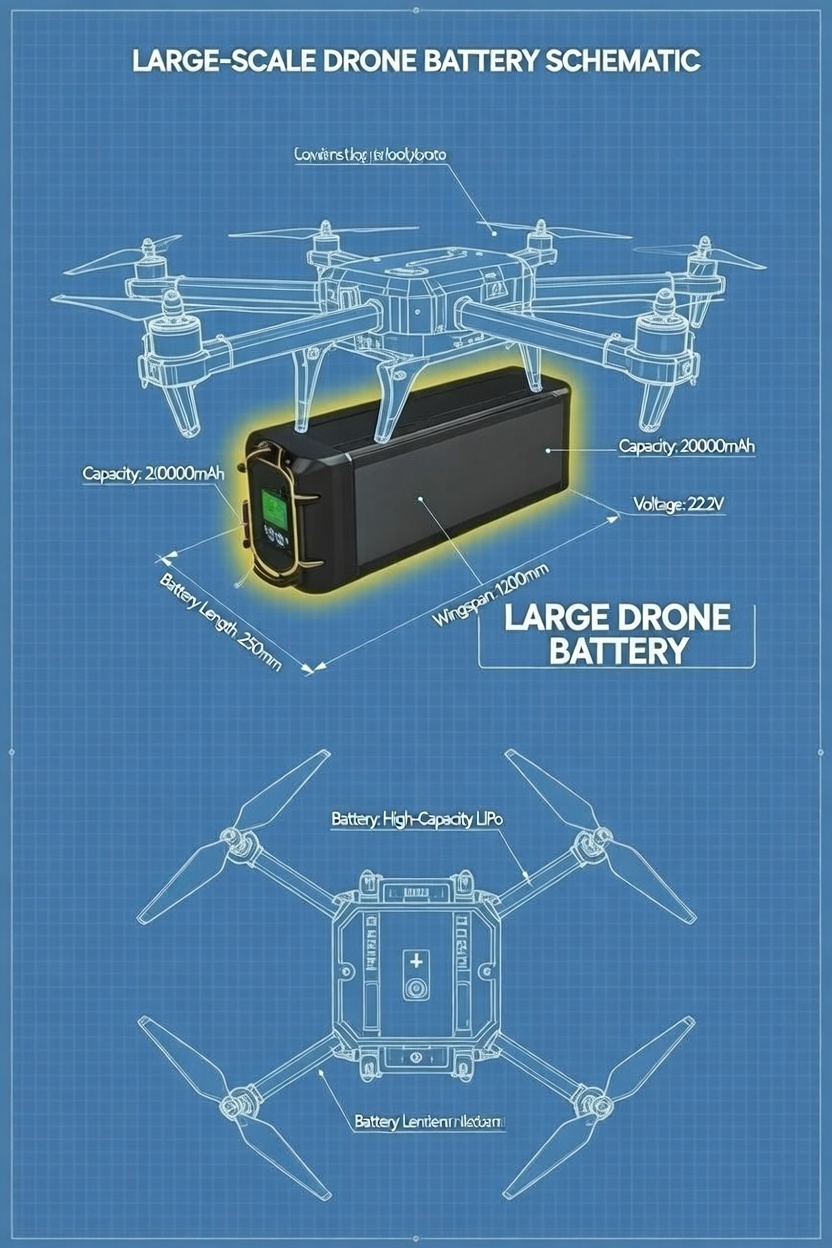
5 Key Factors for High-Performance Drone Batteries in E-commerce Drone Fleet Operators with Performance Testing
The rapid expansion of e-commerce logistics has transformed drone delivery from a futuristic concept into an operational reality. Yet behind every successful drone fleet lies a critical component that determines operational success or failure: the battery system. For e-commerce drone fleet operators managing hundreds or thousands of delivery units, battery performance isn’t just about flight time—it’s about profitability, reliability, and scalability.
The Hidden Cost of Poor Battery Selection
E-commerce logistics companies face mounting pressure to reduce delivery times while controlling operational costs. When drone batteries underperform, the consequences ripple through the entire operation. Unexpected battery failures during peak delivery windows create service disruptions that damage customer trust. Premature battery degradation forces frequent replacements, inflating total cost of ownership by 30-40% annually. Inconsistent power output leads to unpredictable flight patterns, compromising delivery accuracy and safety compliance.
Consider a mid-sized e-commerce operator running 200 delivery drones across metropolitan areas. With substandard batteries requiring replacement every 150 cycles instead of 300, annual battery costs escalate from $180,000 to over $350,000. Add unplanned downtime, emergency replacements, and compromised delivery schedules, and the true cost becomes staggering.
Factor 1: Energy Density and Flight Range Optimization
Energy density remains the cornerstone of drone battery performance. Modern lithium polymer (LiPo) batteries for commercial drones typically deliver 200-260 Wh/kg, but premium cells can exceed 280 Wh/kg. For e-commerce fleets covering 15-25 km delivery radii, every watt-hour translates directly into payload capacity and range flexibility.
Key Specifications to Evaluate:
- Minimum 240 Wh/kg energy density for commercial operations
- Voltage stability under variable load conditions (15.2V-22.8V typical range)
- Capacity retention above 85% after 200 charge cycles
- Temperature performance range from -10°C to 50°C
Leading fleet operators now mandate third-party verification of energy density claims through standardized discharge testing. Independent validation prevents specification inflation that plagues the battery supply chain.
Factor 2: Cycle Life and Long-Term Durability
Battery cycle life directly impacts fleet economics. Quality drone batteries should maintain 80% capacity after 300-500 full charge cycles under normal operating conditions. However, e-commerce operations often involve partial charging patterns that accelerate degradation if battery management systems lack sophistication.
Industry testing standards from CAAC and international aviation authorities now require cycle life documentation under realistic operating conditions. This includes variable discharge rates, temperature fluctuations, and storage conditions that mirror actual fleet usage patterns.
Durability Testing Protocol:
- 300+ cycle testing at 1C discharge rate
- Capacity measurement every 50 cycles
- Internal resistance monitoring throughout lifecycle
- Post-test safety validation including thermal stability
Fleet operators negotiating bulk procurement should request accelerated aging test results alongside standard cycle life data. This reveals how batteries perform under intensive commercial use versus laboratory conditions.
Factor 3: Safety Compliance and Transportation Regulations
The 2025-2026 lithium battery transportation regulations fundamentally changed how e-commerce companies manage battery logistics. New IATA requirements mandate that lithium batteries shipped by air must not exceed 30% state of charge (SoC) for batteries over 2.7Wh. This affects both initial procurement and replacement battery distribution across fulfillment centers.
Critical Compliance Requirements:
- UN3480/UN3481 certification for lithium battery transport
- State of Charge management below 30% for air shipment
- PI966-PI968 packaging standard compliance
- Documentation for customs and safety inspections
Non-compliance carries severe penalties including shipment seizures, fines up to $75,000 per violation, and potential suspension of dangerous goods shipping privileges. Forward-thinking operators now partner with battery suppliers who maintain in-house compliance teams and provide complete documentation packages with each shipment.
Factor 4: Performance Testing and Quality Verification
Performance testing separates marketing claims from operational reality. Comprehensive battery validation requires multi-stage testing protocols that simulate actual fleet operating conditions. This includes continuous discharge testing, pulse load simulation, thermal cycling, and vibration resistance validation.
Essential Testing Parameters:
- Continuous discharge at rated capacity with voltage monitoring
- Pulse load testing simulating takeoff and maneuvering demands
- Thermal imaging during high-load operations
- Vibration testing across 5Hz-500Hz frequency range
- Environmental chamber testing from -20°C to 60°C
Third-party testing laboratories with CMA certification provide objective validation that protects fleet operators from specification discrepancies. Test reports should include raw data files enabling independent analysis and comparison across supplier proposals.
Factor 5: Battery Management System Integration
Modern drone fleets require intelligent battery management systems (BMS) that communicate real-time status data to central operations platforms. Advanced BMS features include cell balancing, temperature monitoring, cycle counting, and predictive maintenance alerts.
BMS Capabilities for Fleet Operations:
- Individual cell voltage monitoring with 0.01V precision
- Temperature sensors at multiple battery locations
- Cycle count tracking for maintenance scheduling
- Communication protocols compatible with fleet management software
- Overcharge and over-discharge protection with automatic cutoff
Integration capabilities determine whether batteries become smart fleet assets or isolated power sources. Operators should verify API compatibility with existing fleet management platforms before committing to large-scale procurement.
Bulk Procurement Advantages for Fleet Operators
Volume purchasing transforms battery economics for e-commerce drone fleets. Orders exceeding 1,000 units typically secure 15-25% price reductions plus enhanced service terms. Leading suppliers offer dedicated account management, priority production scheduling, and customized testing protocols for enterprise clients.
Enterprise Procurement Benefits:
- Volume pricing tiers starting at 500-unit orders
- Customized capacity and form factor options
- Dedicated quality control inspection before shipment
- Extended warranty terms up to 24 months
- Replacement battery pool for minimizing downtime
Strategic partnerships with battery manufacturers enable co-development of specifications optimized for specific drone models and operating conditions. This collaborative approach yields performance improvements impossible with off-the-shelf solutions.
Industry Case Study: Regional E-commerce Fleet Optimization
A Southeast Asian e-commerce logistics provider operating 350 delivery drones implemented comprehensive battery performance testing across three supplier options. After six months of parallel testing, they selected a partner offering 265 Wh/kg energy density with verified 400-cycle life. The transition reduced battery-related downtime by 67% and extended average battery service life from 8 months to 14 months.
Annual savings totaled $420,000 through reduced replacement frequency, lower emergency procurement costs, and improved delivery reliability metrics. Customer satisfaction scores increased 12% as on-time delivery performance stabilized across all service zones.
Frequently Asked Questions
Q: How often should drone fleet batteries be replaced?
A: Quality commercial drone batteries typically require replacement after 300-500 cycles or when capacity drops below 80% of original specification. Regular testing every 50 cycles helps optimize replacement timing.
Q: What certifications should I require from battery suppliers?
A: Minimum requirements include UN38.3 transportation testing, IEC 62133 safety certification, and ISO 9001 quality management. Additional certifications like UL 1642 provide enhanced safety validation.
Q: Can I mix batteries from different suppliers in one fleet?
A: While technically possible, mixing battery sources complicates performance tracking and maintenance scheduling. Standardization across the fleet simplifies operations and improves predictive maintenance accuracy.
Q: How do temperature extremes affect battery performance?
A: Operating outside the 0°C-40°C optimal range reduces capacity and accelerates degradation. Cold weather operations may require battery heating systems, while hot climates demand enhanced cooling protocols.
Q: What warranty coverage should enterprise customers expect?
A: Bulk procurement agreements should include minimum 12-month warranties covering capacity retention above 80%. Premium suppliers offer 18-24 month terms with replacement guarantees for enterprise accounts.
Making the Right Battery Investment
The battery selection decision shapes e-commerce drone fleet performance for years. Prioritizing verified performance data over marketing claims, demanding comprehensive testing documentation, and building strategic supplier relationships creates sustainable competitive advantages.
Fleet operators ready to optimize their battery procurement strategy should engage suppliers who demonstrate transparency through third-party testing, maintain regulatory compliance expertise, and offer enterprise-level support services. The right partnership transforms batteries from consumable components into strategic assets driving operational excellence.
Ready to elevate your drone fleet performance? Connect with our battery specialists to discuss customized solutions for your e-commerce operations. Visit our contact page at https://cnsbattery.com/drone-battery-home/drone-battery-contact to schedule a consultation and receive detailed performance specifications tailored to your fleet requirements.