5 Key Factors for High-Performance Drone Batteries in Drone Manufacturers with Recycling Compliance
Introduction
The drone industry is experiencing unprecedented growth in 2026, with manufacturers facing increasingly complex challenges in balancing performance demands with environmental responsibility. As global regulations tighten around battery production, transportation, and end-of-life management, drone manufacturers must navigate a landscape where high-performance drone batteries and recycling compliance are no longer optional—they are essential for market access and brand reputation. With the EU Battery Regulation entering full enforcement this year and IATA’s updated Dangerous Goods Regulations requiring strict state-of-charge limits for lithium battery transport, understanding the critical factors that drive both performance and compliance has become paramount for industry success.
Factor 1: Energy Density and Cell Chemistry Selection
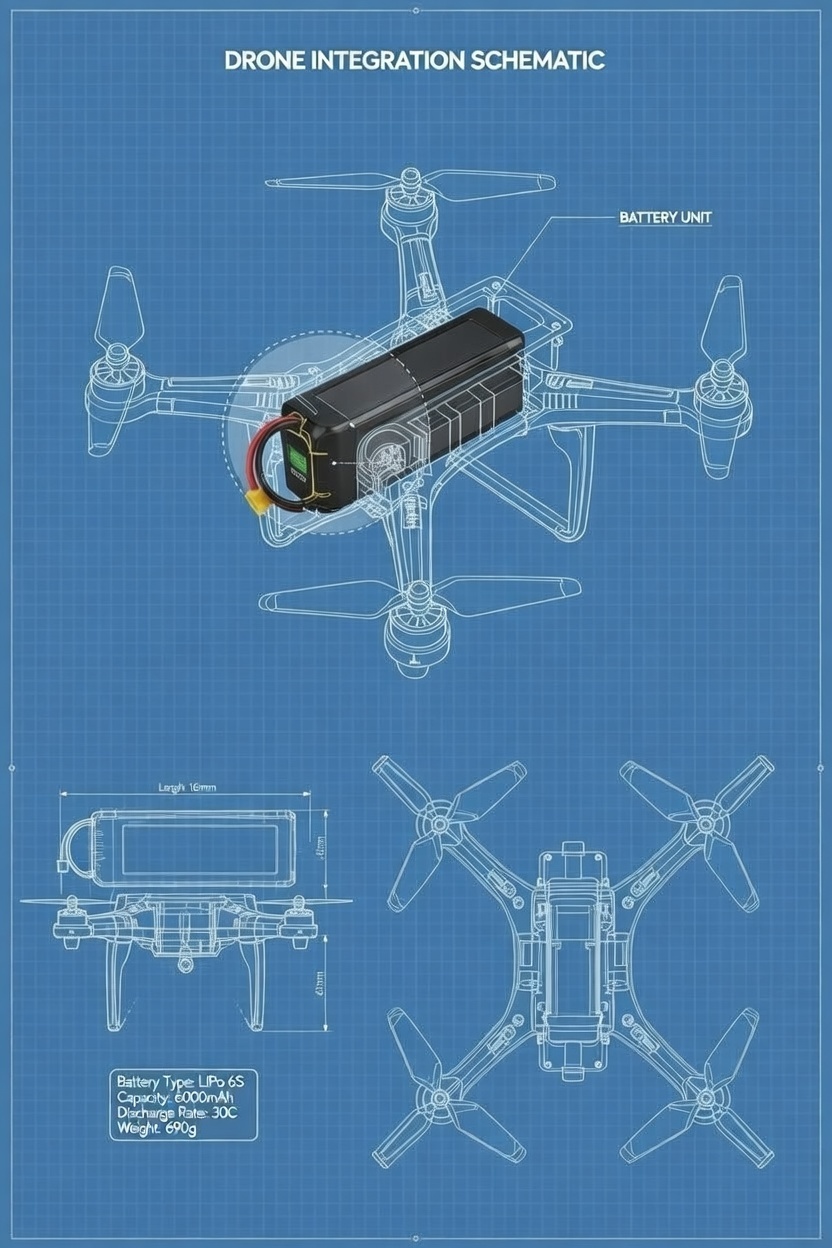
The foundation of any high-performance drone battery lies in its energy density and cell chemistry. Manufacturers must carefully evaluate lithium polymer (LiPo), lithium-ion (Li-ion), and emerging solid-state options based on specific application requirements.
Key Considerations:
- LiPo batteries offer superior discharge rates (25C-100C) ideal for racing and FPV drones, with energy densities reaching 200-260 Wh/kg
- Li-ion cells provide better cycle life (500-1000+ charges) and safety characteristics for commercial and industrial drone applications
- Solid-state technology represents the future, promising 400+ Wh/kg with enhanced thermal stability, though costs remain prohibitive for mass adoption in 2026
Pro Tip: Always request cell manufacturer documentation confirming UN 38.3 testing compliance before integration. This documentation becomes critical for both air freight certification and recycling facility acceptance.
Factor 2: Battery Management System (BMS) Intelligence
A sophisticated BMS is the brain of high-performance drone batteries, managing cell balancing, thermal protection, and communication protocols while ensuring compliance with transportation regulations.
Essential BMS Features:
- Cell balancing accuracy within ±5mV to maximize pack longevity and prevent premature failure
- State-of-Charge (SoC) management capable of maintaining 30% charge levels for transportation compliance per IATA 2026 regulations
- Temperature monitoring with automatic discharge cutoffs at 60°C and charge prevention below 0°C
- Digital communication supporting SMBus, CAN bus, or UART for integration with drone flight controllers
- Cycle counting and health reporting essential for battery passport requirements under EU regulations
Comparison Insight: Basic BMS systems cost $15-25 per pack but lack compliance features. Advanced compliant BMS units range $40-75 but include digital battery passports, transportation mode locks, and detailed cycle history—critical for manufacturers targeting European markets.
Factor 3: Thermal Management and Safety Architecture
Thermal runaway remains the primary safety concern for lithium battery packs, making thermal management a non-negotiable factor in high-performance drone battery design.
Thermal Management Strategies:
- Passive cooling using aluminum heat sinks and thermal interface materials for drones under 2kg
- Active cooling with integrated fans or liquid cooling channels for heavy-lift and long-endurance platforms
- Phase change materials absorbing heat during high-discharge operations, particularly valuable for agricultural and survey drones
- Fire-resistant enclosures meeting UL 1642 and IEC 62133 standards for commercial applications
Safety Architecture Requirements:
- Individual cell fusing with 1.5x maximum continuous current ratings
- Redundant temperature sensors (minimum 3 per pack for packs over 100Wh)
- Physical separation between cells using fire-retardant barriers
- Pressure relief vents designed to direct gases away from critical components
Critical Insight: Battery packs exceeding 100Wh face significantly stricter transportation requirements. Designing modular systems with sub-100Wh units can simplify logistics while maintaining total capacity through swappable configurations.
Factor 4: Recycling Compliance and Circular Design
The 2026 regulatory landscape demands that drone manufacturers design batteries with end-of-life recovery in mind from the initial concept phase.
EU Battery Regulation Compliance Checklist:
- Battery Passport implementation with QR codes linking to digital documentation containing chemistry composition, manufacturing date, carbon footprint, and recycling instructions
- Minimum recycled content requirements (16% cobalt, 85% lead, 85% lithium, 6% nickel by 2031)
- Collection rate targets requiring manufacturers to establish take-back programs achieving 63% collection by 2027
- Carbon footprint declaration mandatory for batteries over 2kWh, with thresholds tightening annually
Design for Recycling Principles:
- Use standardized cell formats (18650, 21700, 4680) compatible with existing recycling infrastructure
- Minimize adhesive use in pack assembly, favoring mechanical fasteners for easier disassembly
- Label all components with ISO 15270 recycling symbols and material identification codes
- Design modular packs allowing individual cell replacement rather than full pack disposal
Transportation Compliance: All lithium batteries must ship at ≤30% state of charge per IATA 2026 regulations. Implement factory discharge protocols and transportation mode switches in BMS firmware to ensure compliance.
Factor 5: Certification and Documentation Ecosystem
High-performance drone batteries require comprehensive certification portfolios to access global markets, with requirements varying significantly by region and application.
Essential Certifications by Market:
- North America: UL 1642 (cells), UL 2054 (packs), FCC Part 15 (EMI/EMC)
- European Union: CE marking, UN 38.3, IEC 62133, REACH compliance, Battery Passport
- Asia-Pacific: PSE (Japan), KC (Korea), CCC (China for domestic sales)
- Aviation Specific: RTCA DO-311A for beyond-visual-line-of-sight (BVLOS) operations
Documentation Requirements:
- Technical construction files with detailed bill of materials
- Safety data sheets (SDS) compliant with GHS standards
- Test reports from ILAC-accredited laboratories
- Declaration of Conformity for each target market
- Recycling partnership agreements demonstrating take-back capability
Strategic Advantage: Manufacturers maintaining centralized certification databases with automatic renewal tracking reduce compliance gaps by 78% compared to manual systems, according to 2025 industry benchmarks.
Implementation Roadmap for Manufacturers
Phase 1 (Months 1-3): Conduct gap analysis against target market regulations, identify certification requirements, and select compliant cell suppliers with full documentation.
Phase 2 (Months 4-6): Design battery packs with recycling compliance built-in, implement BMS with transportation mode features, and begin certification testing.
Phase 3 (Months 7-9): Establish recycling partnerships, create battery passport infrastructure, and develop customer communication materials about proper disposal.
Phase 4 (Months 10-12): Launch compliant products, monitor regulatory updates quarterly, and maintain certification renewals proactively.
Key Insights and Strategic Recommendations
The convergence of performance expectations and regulatory compliance in 2026 creates both challenges and opportunities for drone battery manufacturers. Those who treat recycling compliance as a design constraint from day one—not an afterthought—will gain significant competitive advantages in market access, brand trust, and long-term cost management.
The most successful manufacturers are investing in three critical areas: digital battery passport infrastructure, modular pack designs enabling component-level recycling, and strategic partnerships with certified recycling facilities. These investments, while requiring upfront capital, position companies favorably for the increasingly stringent regulations expected through 2030.
Call to Action
Navigating the complex landscape of high-performance drone batteries with full recycling compliance requires expert guidance and proven solutions. Whether you’re developing new battery packs, seeking certification support, or establishing recycling programs, professional consultation can accelerate your path to market while ensuring full regulatory compliance.
Ready to optimize your drone battery strategy? Contact our specialist team today for comprehensive consultation on battery design, certification pathways, and recycling compliance programs. Visit https://cnsbattery.com/drone-battery-home/drone-battery-contact to connect with experts who understand both the technical and regulatory dimensions of modern drone battery manufacturing.
The future of drone technology depends on batteries that deliver exceptional performance while respecting environmental responsibilities. Make compliance your competitive advantage—start the conversation today.