Agricultural drones have revolutionized modern farming, enabling precise crop monitoring, pesticide application, and field mapping with unprecedented efficiency. However, behind every successful agricultural drone operation lies a critical component that often determines mission success or failure: the battery system. Agricultural operators worldwide face recurring challenges with drone batteries that can significantly impact productivity, safety, and operational costs.
Common Problems Facing Agricultural Drone Operators
Farm operators relying on drone technology encounter several persistent battery-related issues that disrupt their workflows. Premature battery degradation during intensive spraying seasons leads to unexpected downtime when crops need immediate attention. Many operators report inconsistent flight times that make it difficult to plan coverage areas accurately, resulting in incomplete field surveys or pesticide applications.
Environmental exposure presents another significant challenge. Agricultural drones operate in demanding conditions—dusty fields, morning dew, occasional rain, and temperature fluctuations that test battery durability. Without proper IP rating protection, moisture and particulate matter infiltrate battery compartments, causing corrosion, short circuits, and catastrophic failures mid-operation.
Safety concerns escalate when batteries overheat during high-discharge operations typical in agricultural spraying missions. Several documented incidents show thermal runaway events causing equipment damage and potential fire hazards in dry crop fields. Additionally, the total cost of ownership increases dramatically when operators must replace batteries every 200-300 cycles instead of achieving the 1000+ cycles that quality agricultural drone batteries should deliver.
Diagnostic Section: Identifying Battery Performance Issues
Before implementing solutions, agricultural operators must accurately diagnose their battery performance problems. Understanding the root causes enables targeted improvements rather than costly trial-and-error replacements.
Flight Time Inconsistency Diagnosis: Monitor voltage sag patterns during typical missions. If voltage drops exceed 15% under standard load conditions, internal resistance has likely increased beyond acceptable thresholds. Professional battery management systems should log discharge curves for comparison against manufacturer specifications.
Environmental Damage Assessment: Inspect battery connectors and housing for corrosion signs, particularly after operations in humid conditions. IP rating verification through certified testing laboratories confirms whether claimed protection levels match actual performance. Operators should document operating conditions alongside battery failures to identify environmental patterns.
Thermal Performance Evaluation: Infrared thermal imaging during operation reveals hot spots indicating cell imbalance or inadequate thermal management. Surface temperatures exceeding 60°C during discharge signal cooling system deficiencies that accelerate degradation and create safety risks.
Cycle Life Tracking: Maintain detailed logs of charge-discharge cycles alongside capacity measurements. When usable capacity falls below 80% of original specifications before reaching rated cycle counts, manufacturing quality or operating conditions require investigation.
5 Key Factors for High-Performance Agricultural Drone Batteries
Factor 1: Energy Density and Capacity Optimization
Energy density directly determines flight duration and payload capacity—critical parameters for agricultural operations covering large fields. Modern lithium-polymer batteries designed for agricultural drones should achieve minimum energy densities of 200-250 Wh/kg while maintaining structural integrity under vibration and shock conditions typical in farm environments.
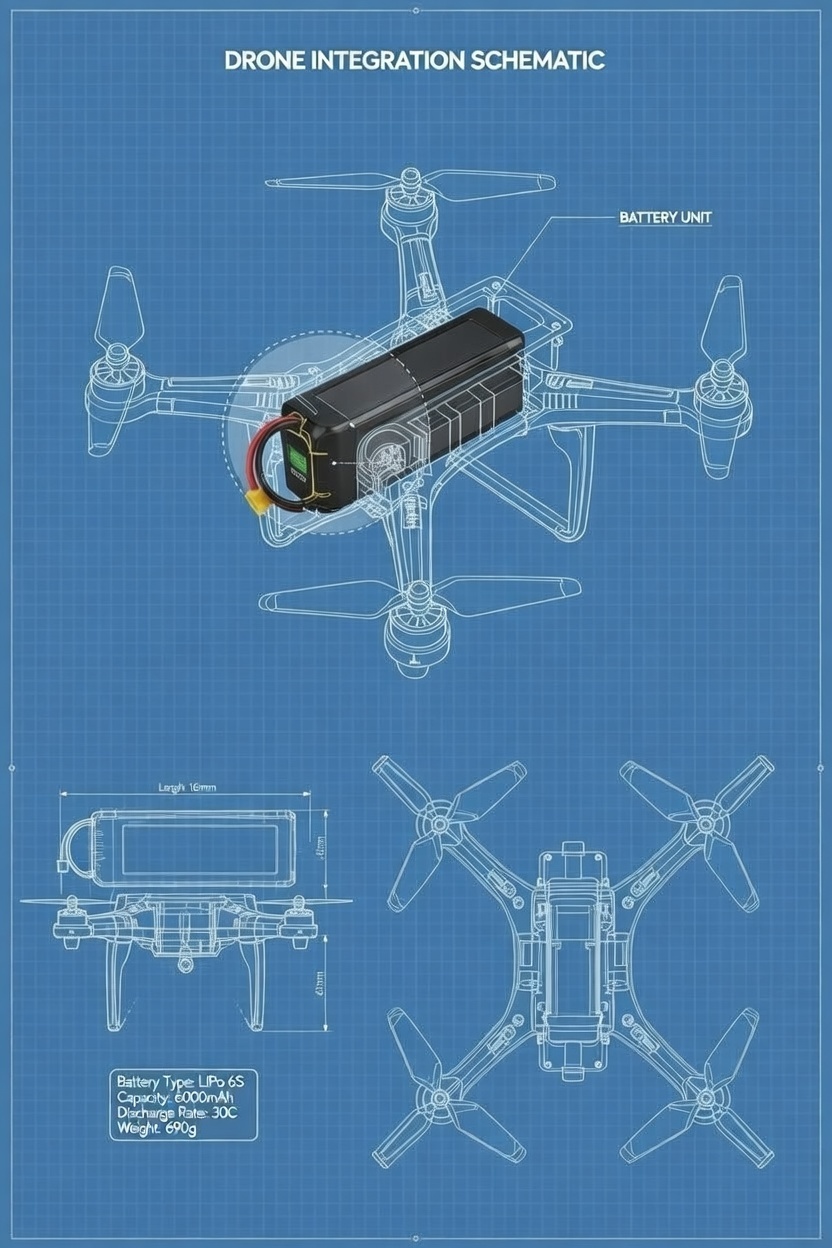
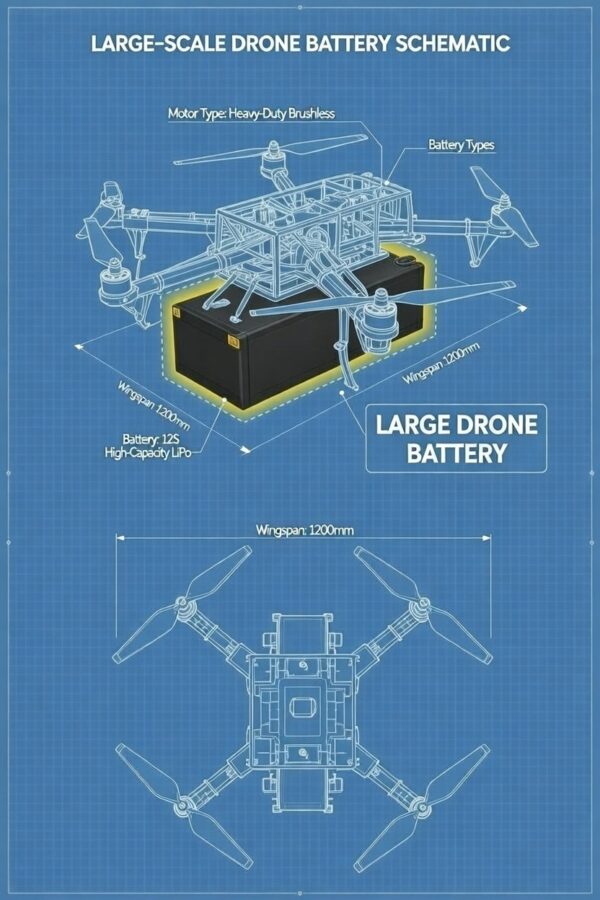
Capacity selection must balance weight constraints with mission requirements. Agricultural spraying drones typically require 20,000-30,000 mAh batteries to complete standard field sections without mid-mission battery swaps. However, oversized batteries increase aircraft weight, reducing efficiency and creating diminishing returns on flight time extensions.
Advanced cell chemistry selections, including high-nickel NMC formulations or LFP variants for enhanced safety, provide operators with options matching their specific risk tolerance and performance requirements. Battery management systems must accurately report remaining capacity with less than 3% error margins to enable precise mission planning.
Factor 2: Discharge Rate Capabilities for High-Power Operations
Agricultural drones demand exceptional discharge performance during spraying operations when pumps and multiple rotors draw simultaneous high currents. Quality agricultural drone batteries should sustain continuous discharge rates of 5C-10C without excessive voltage sag or heat generation.
Peak discharge capabilities become crucial during takeoff, landing, and emergency maneuvers when power demands spike momentarily. Batteries rated for 15C-20C peak discharge provide necessary headroom for safe operation under unexpected conditions. Internal resistance below 5 milliohms per cell ensures efficient power delivery while minimizing energy loss as heat.
Operators must verify discharge specifications through independent testing rather than relying solely on manufacturer claims. Real-world performance under agricultural operating conditions often differs from laboratory specifications due to temperature variations and aging effects.
Factor 3: Cycle Life and Long-Term Durability
Total cost of ownership for agricultural drone operations heavily depends on battery cycle life. Premium agricultural drone batteries should deliver 1000-1500 full cycles while maintaining 80% capacity retention under proper operating conditions. This translates to 2-3 growing seasons of intensive use before replacement becomes economically necessary.
Cycle life optimization requires attention to charging practices, storage conditions, and depth of discharge management. Avoiding full 100% charges and complete discharges extends usable life significantly. Smart charging systems that balance cells individually prevent capacity loss from cell imbalance accumulation over hundreds of cycles.
Temperature-controlled storage between 40-60% state of charge during off-seasons preserves battery health. Agricultural operators investing in climate-controlled storage facilities realize 30-40% longer battery life compared to those storing batteries in uncontrolled barn or shed environments.
Factor 4: IP Rating Protection for Harsh Agricultural Environments
Ingress Protection ratings determine battery survival in challenging agricultural conditions. Minimum IP54 rating provides basic protection against dust and water splashes, but serious agricultural operators should specify IP65 or IP67 rated battery systems for reliable all-weather operation.
IP65 certification ensures complete dust protection and resistance to low-pressure water jets from any direction—essential for operations involving pesticide spraying or morning dew exposure. IP67 rating adds temporary immersion protection, safeguarding batteries during unexpected rain events or accidental water exposure during field operations.
Sealing quality verification through certified testing laboratories prevents false IP rating claims. Gasket materials must withstand UV exposure, temperature cycling, and chemical contact from agricultural chemicals without degradation. Connector sealing often represents the weakest point in IP protection systems and requires special attention during design and maintenance.
Factor 5: Thermal Management and Safety Systems
Thermal management becomes critical when batteries discharge at high rates in warm agricultural environments. Integrated thermal management systems maintaining cell temperatures between 15-35°C optimize performance while preventing accelerated degradation from heat exposure.
Safety systems must include multiple protection layers: overcurrent protection, overvoltage protection, undervoltage protection, short-circuit protection, and thermal shutdown capabilities. Advanced battery management systems communicate real-time status to drone flight controllers, enabling automatic mission abortion when unsafe conditions develop.
Certification compliance with UN38.3 transportation standards, IEC 62133 safety requirements, and regional aviation authority regulations ensures legal operation and insurance coverage. Agricultural operators should maintain documentation proving battery compliance for liability protection and regulatory inspections.
Summary: Maximizing Agricultural Drone Battery Performance
Successful agricultural drone operations depend on battery systems engineered specifically for farming environment demands. The five critical factors—energy density optimization, discharge rate capabilities, cycle life durability, IP rating protection, and thermal management systems—work together to deliver reliable, cost-effective power solutions.
Operators investing in quality batteries meeting these specifications realize reduced downtime, lower replacement costs, improved safety, and more predictable mission planning. The initial premium for high-performance agricultural drone batteries pays dividends through extended service life and consistent operational availability during critical growing seasons.
Regular maintenance protocols, proper storage practices, and operator training complement quality battery selection. Monitoring battery health through integrated management systems enables proactive replacement before failures disrupt operations. Documentation of battery performance supports warranty claims and informs future purchasing decisions.
Take Action for Your Agricultural Drone Operations
Every agricultural operation has unique requirements based on crop types, field sizes, climate conditions, and regulatory environments. Generic battery solutions often fail to address specific operational challenges that impact productivity and profitability.
Our engineering team specializes in custom agricultural drone battery solutions matching your exact operational requirements. From IP rating specifications to discharge profiles and capacity optimization, we design battery systems that integrate seamlessly with your existing drone fleet while delivering measurable performance improvements.
Contact us today for a customized battery solution assessment. Visit https://cnsbattery.com/drone-battery-home/drone-battery-contact to discuss your agricultural drone power requirements with our technical specialists. Let us help you maximize flight time, minimize downtime, and optimize your total cost of ownership with batteries engineered specifically for agricultural operations.
Don’t let battery limitations constrain your agricultural drone potential. Professional consultation costs nothing but can save thousands in operational inefficiencies and premature battery replacements. Your next growing season deserves power solutions built for agricultural excellence.