
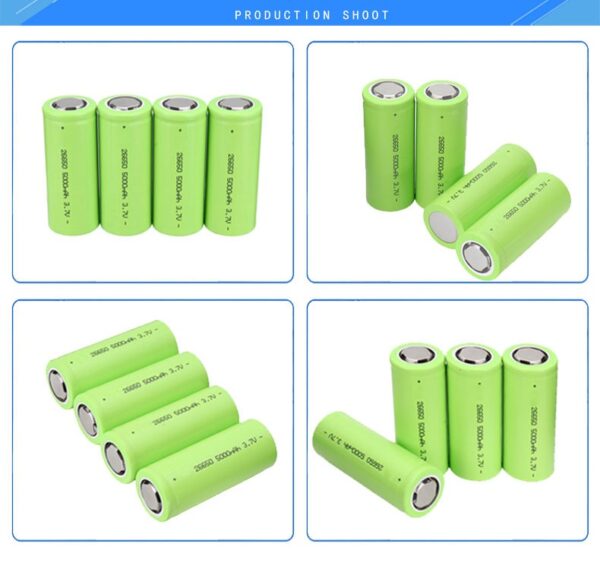
40135 vs 40150 Cylindrical Battery – Capacity Comparison
Introduction
In the rapidly evolving landscape of large-format cylindrical lithium batteries, the 40135 and 40150 cell formats have emerged as critical choices for B2B applications spanning energy storage systems, portable power stations, and electric mobility solutions. Understanding the capacity differences and technical specifications between these two formats is essential for procurement managers, system integrators, and product developers making informed sourcing decisions. This analysis provides a professional comparison focused on capacity performance, application suitability, and key technical parameters.
Dimensional Specifications and Capacity Fundamentals
The naming convention for cylindrical batteries follows a standardized format where the first two digits represent diameter in millimeters, and the remaining digits indicate height. The 40135 cylindrical battery measures 40mm in diameter and 135mm in height, while the 40150 maintains the same 40mm diameter but extends to 150mm in height.
This 15mm height difference translates directly into capacity variation. Based on current industry specifications from leading Chinese manufacturers, the 40135 LiFePO4 cylindrical cell typically delivers a nominal capacity of 20Ah (20,000mAh) at 3.2V nominal voltage, yielding approximately 64Wh of energy per cell. The 40150 format, with its increased volume, generally achieves 22-23Ah capacity, representing a 10-15% energy density improvement over the 40135 counterpart.
Technical Performance Comparison
Capacity and Energy Density
The 40135 has become an industry benchmark for large cylindrical LFP cells, with manufacturers like EVE Energy, Great Power, and Do-Fluoride establishing production lines specifically for this format. The 40150, while less common in current market offerings, provides enhanced capacity for applications where space constraints are less critical than total energy storage.
| Parameter | 40135 Cylindrical | 40150 Cylindrical |
|---|---|---|
| Diameter | 40mm | 40mm |
| Height | 135mm | 150mm |
| Nominal Capacity | 20Ah | 22-23Ah |
| Nominal Voltage | 3.2V (LFP) | 3.2V (LFP) |
| Energy per Cell | ~64Wh | ~70-74Wh |
| Cycle Life | 4,000-6,000 cycles | 4,000-6,000 cycles |
Internal Resistance and Power Performance
DC internal resistance serves as a critical performance indicator for high-power applications. Leading 40135 cells demonstrate DC internal resistance below 4.6mΩ under standardized testing conditions (20% SOC, 3C discharge, 10-second measurement). The 40150 format maintains comparable internal resistance characteristics, though the slightly larger electrode area may provide marginal improvements in thermal management during sustained high-current operations.
Thermal Management Considerations
The increased surface area of the 40150 format offers enhanced heat dissipation capabilities, particularly beneficial for applications requiring continuous high-rate discharge. However, the 40135’s more compact profile enables denser pack configurations, which may be advantageous for space-constrained installations.
Application-Specific Selection Guidelines
Energy Storage Systems (ESS)
For stationary energy storage applications, the 40135 format has achieved widespread adoption due to its proven reliability and established supply chain. Major manufacturers have optimized production lines for 40135 cells, resulting in competitive pricing and consistent quality. The 40150 becomes relevant when maximizing energy density per module takes precedence over standardization benefits.
Portable Power Stations
The outdoor power station market has embraced 40135 cells extensively. Products like the DJI POWER 1000 V2 and various 600W-1000W portable stations utilize 40135 LFP cells in 8S configurations, delivering 512Wh to 1kWh capacity ranges. The 40150 format may offer advantages for premium segments where extended runtime justifies slightly larger enclosure dimensions.
Electric Two-Wheelers and Low-Speed EVs
Both formats serve the electric mobility sector effectively. The 40135’s industry standardization makes it preferable for manufacturers seeking supply chain flexibility and component interchangeability. The 40150 provides value for applications prioritizing maximum range per charge cycle.
Manufacturing and Supply Chain Considerations
When evaluating cylindrical battery suppliers, B2B buyers should consider production capacity, quality certification, and technical support capabilities. Established battery manufacturers in China have demonstrated consistent quality in 40135 production, with daily output exceeding 60,000 cells at leading facilities. The 40150 format, while technically feasible, currently has fewer dedicated production lines, which may impact lead times and pricing stability.
For comprehensive product specifications and customization options, buyers can explore dedicated cylindrical battery cell offerings that cover both 40135 and 40150 formats with various chemistry options including LiFePO4 and NCM variants.
Procurement Recommendations
Choose 40135 when:
- Standardization and supply chain maturity are priorities
- Pack density optimization matters more than per-cell capacity
- Proven field performance data is required for project validation
- Cost competitiveness is a key decision factor
Choose 40150 when:
- Maximum energy per cell is the primary design requirement
- Enclosure dimensions allow for the additional 15mm height
- Application demands extended runtime between charge cycles
- Custom pack design can accommodate less standardized cell format
Conclusion
The 40135 vs 40150 cylindrical battery decision ultimately depends on specific application requirements, pack design constraints, and supply chain considerations. While the 40150 offers approximately 10-15% capacity advantage, the 40135’s market maturity, production scale, and proven performance make it the default choice for most commercial applications. System integrators should evaluate total cost of ownership, including pack integration complexity, thermal management requirements, and long-term supply availability when making final selections.
For technical consultation and customized battery solutions, professional contact channels provide direct access to engineering support teams capable of addressing specific project requirements and volume procurement needs.
