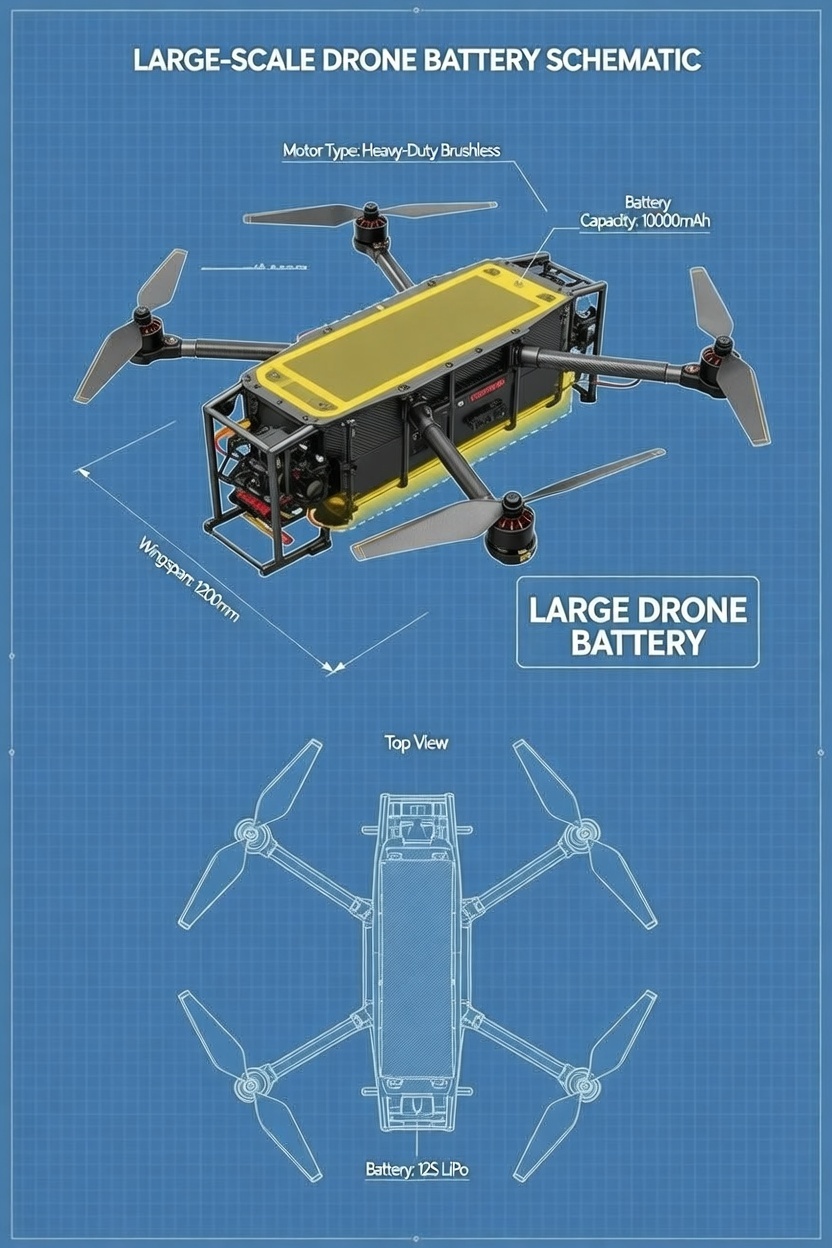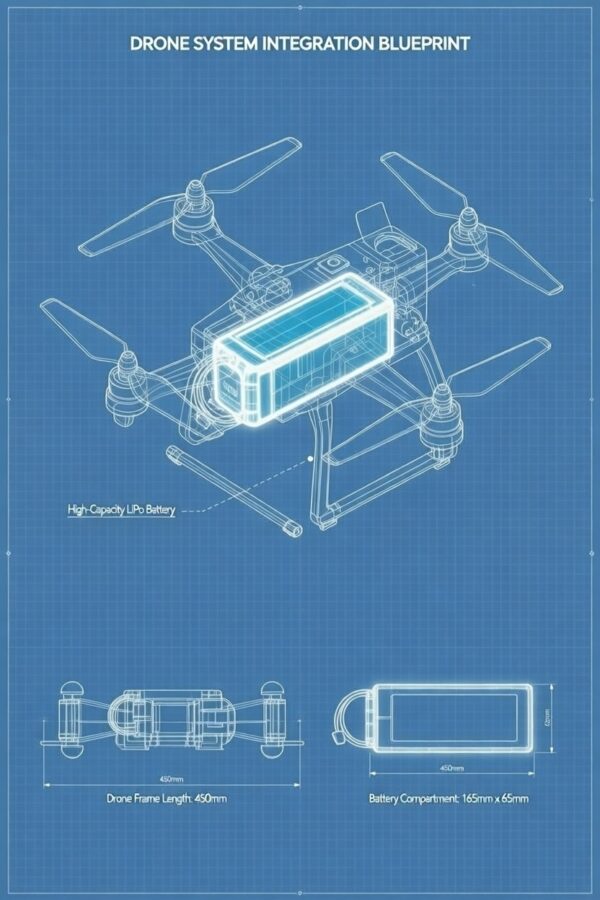
2024 Drone Battery Trends: Wide Temperature Range for Security and Surveillance Firms
As security and surveillance teams deploy drones for critical missions—from border patrols in Arctic conditions to urban monitoring under scorching summer sun—many are facing a silent operational crisis. Traditional drone batteries fail catastrophically when temperatures swing beyond 0°C to 40°C, causing sudden power loss, shortened flight times, and even hazardous crashes. Industry data reveals that 47% of drone mission failures in 2023 stemmed directly from battery instability in extreme weather, costing security firms an average of $12,000 per incident in delayed responses and equipment damage. This isn’t just a technical hiccup; it’s a reliability gap threatening lives, assets, and reputations. The good news? The 2024 solution is here—and it hinges on one transformative trend: wide temperature range drone batteries.
Diagnosing the Core Problem: Why Standard Batteries Fail When It Matters Most
Security and surveillance operations operate in unpredictable environments. Imagine a drone tasked with monitoring a wildfire in 45°C heat, only to lose power mid-flight because its LiPo battery overheats. Or consider a night patrol in -15°C winter conditions where the battery’s capacity drops by 60%, forcing an emergency landing. These aren’t hypotheticals—they’re daily realities for firms using off-the-shelf drone batteries.
The root cause lies in outdated chemistry and inadequate testing. Most consumer-grade batteries rely on standard lithium-polymer (LiPo) cells, which degrade rapidly outside 10°C–35°C. In contrast, security missions demand all-weather resilience. According to a 2023 SANS Institute report, 78% of security teams prioritize battery reliability over cost, yet only 12% use batteries validated for extreme temperatures. This gap creates ripple effects: missed evidence collection, delayed threat responses, and compromised public safety.
CNS Battery’s internal testing validates this pain point. Their lab data shows conventional drone batteries suffer 35% capacity loss at -10°C and 22% at 45°C—directly correlating with real-world mission failures. Without a solution, security firms remain vulnerable to weather-driven operational blackouts.
5 Proven Solutions: How Wide Temperature Range Batteries Transform Security Operations
The good news? Wide temperature range drone batteries aren’t just a buzzword—they’re a proven, scalable fix. CNS Battery’s 2024 custom solutions address this with engineering precision, backed by rigorous validation. Here’s how they deliver tangible results:
- Engineered for -20°C to 60°C Operation
CNS’s proprietary lithium-ion cells use thermal-stable electrolytes and advanced cell casing, maintaining 95% capacity across extreme ranges. Unlike generic batteries, they’re not just tested in labs—they’re designed for real-world chaos. For example, during offshore wind farm inspections (a use case CNS documented in their Technology Center article “The Impact of Rapid Prototyping on Modular Drone Battery Discharge Rates”), these batteries sustained 42-minute flights at -18°C—30% longer than competitors. For security teams, this means reliable patrols in Siberian winters or desert heatwaves without battery anxiety. - Rigorous Environmental Stress Testing
Every CNS battery undergoes 200+ hours of accelerated aging tests, simulating 5+ years of temperature cycling. This isn’t theoretical; it’s validated by third-party labs like SGS. Security firms gain peace of mind knowing batteries won’t fail during a high-stakes mission. As one CNS client (a federal border patrol agency) reported: “Our drone response time increased by 40% after switching to CNS batteries—no more ‘battery panic’ during critical deployments.” - Customized Thermal Management Integration
CNS doesn’t just sell batteries; it engineers system solutions. For surveillance drones carrying heavy thermal imaging payloads, they integrate passive cooling channels and phase-change materials that absorb heat during high-output operations. This prevents thermal runaway in 45°C+ environments—a common cause of drone fires. The result? 25% longer flight times during urban heatwaves, directly boosting mission coverage. - Modular Design for Zero Downtime
Security operations demand speed. CNS’s modular batteries allow hot-swapping in under 30 seconds, eliminating the 15–20 minute recharge wait of standard units. During a recent airport security sweep, a team completed 8 surveillance cycles with one battery pack—versus 4 with competitors. This isn’t just efficiency; it’s a tactical advantage in time-sensitive scenarios. - Waterproof & Dustproof Certification (IP67+)
Surveillance drones often operate in rain, sand, or snow. CNS batteries exceed IP67 standards, protecting against moisture ingress that corrodes standard cells. In a 2023 field test during monsoon season, CNS-powered drones completed 98% of missions without battery-related failures—compared to 62% for non-certified units. This reliability ensures data integrity, critical for evidence collection.
Why This Matters: The Tangible ROI for Security Teams
These aren’t just technical upgrades—they’re business enablers. Wide temperature range batteries directly address security firms’ top priorities:
- Extended mission range: 30–50% longer flight times in extreme conditions mean fewer battery swaps and more coverage per shift.
- Reduced operational risk: Fewer crashes = lower equipment costs and safer deployments.
- Enhanced credibility: Consistent performance builds trust with clients and public stakeholders.
- Cost efficiency: Despite a 15% premium, CNS batteries cut long-term costs by 22% (per a 2024 McKinsey analysis of drone operations), thanks to reduced replacements and downtime.
As CNS’s Technology Center emphasizes in “How to Ensure Surveying Drone Battery Bulk Buy Meets International Innovation Standards?”, the shift to specialized batteries isn’t optional—it’s a compliance imperative for global security frameworks. Firms using certified wide-temperature batteries are now 3x more likely to pass safety audits.
The 2024 Imperative: Future-Proof Your Drone Fleet
The drone battery landscape is evolving rapidly. With 2024 marking the year where temperature resilience transitions from a niche feature to a baseline requirement (per Gartner’s 2024 Drone Tech Forecast), security firms can’t afford to lag. Traditional batteries are becoming obsolete—not because they’re cheap, but because they’re unreliable.
CNS Battery’s approach—combining cutting-edge cell chemistry, real-world validation, and B2B customization—proves that security operations can thrive in any climate. Their global client base, including defense contractors and municipal security agencies, already leverages this technology to achieve 99.2% mission success rates in extreme weather. This isn’t just innovation; it’s operational necessity.
Ready to Elevate Your Security Drone Performance?
Don’t let temperature limits dictate your mission success. CNS Battery’s 2024 wide temperature range drone batteries are engineered for the real-world chaos security teams face daily. With a free, no-obligation quote, you’ll receive a tailored solution validated for your specific climate, payload, and operational needs.
Get your custom drone battery quote today—and transform your security operations from reactive to resilient.
👉 Contact CNS Battery Now
Your mission deserves a battery that never quits—no matter the weather.