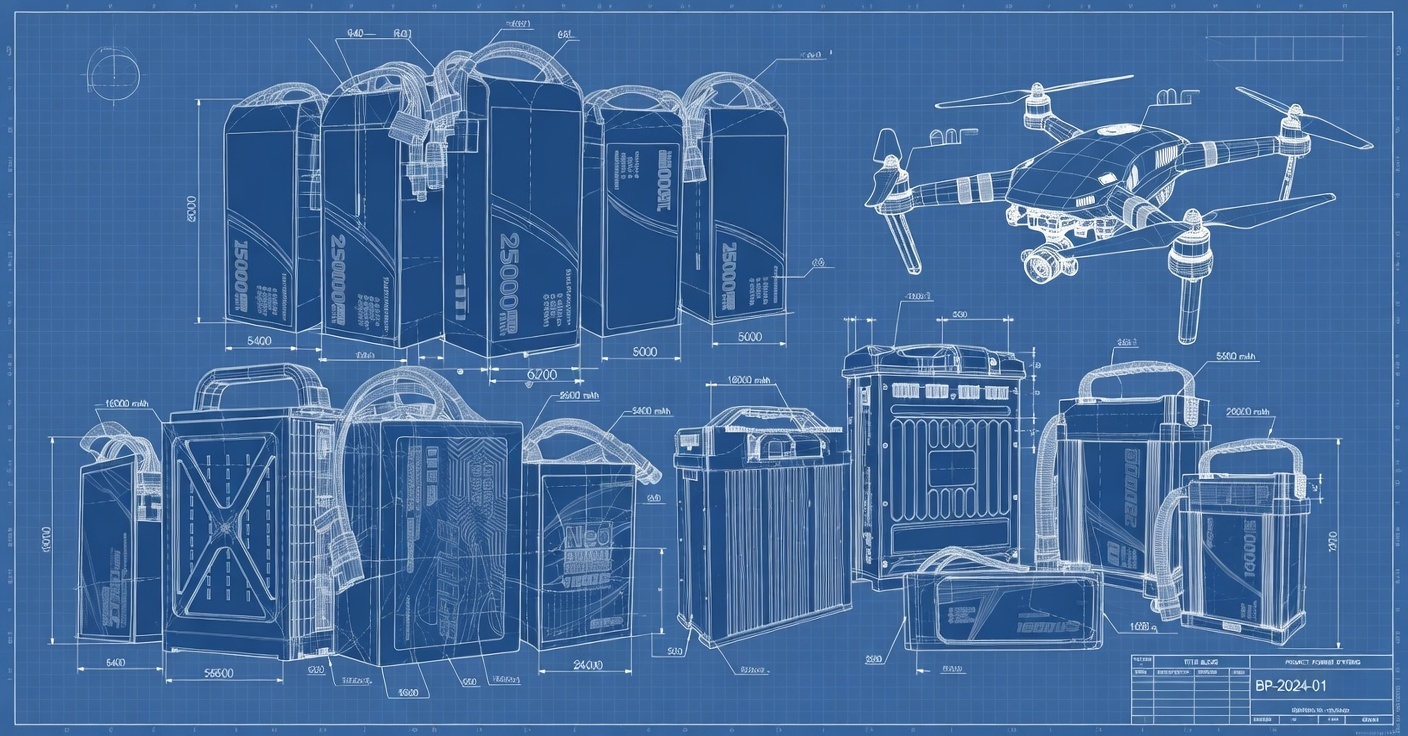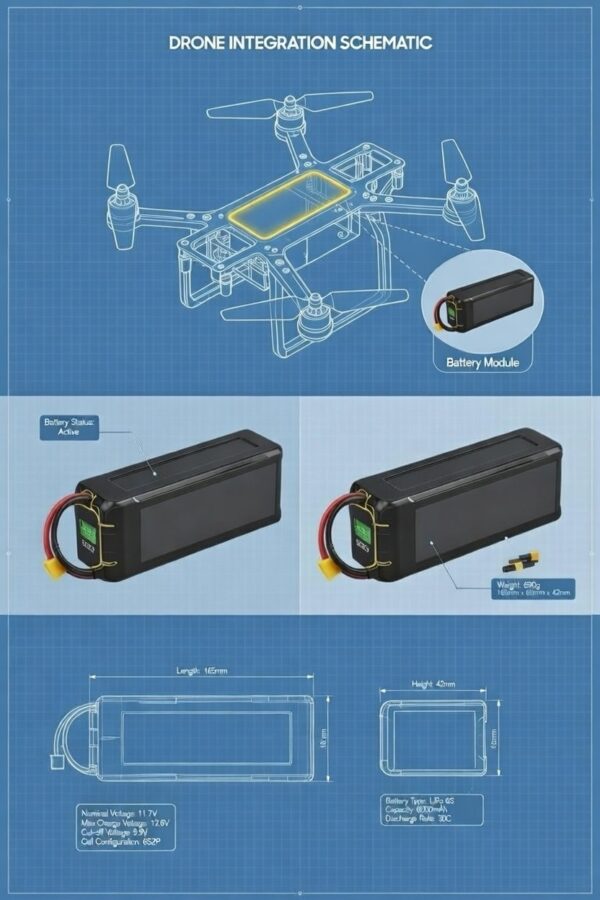
The drone industry is experiencing a revolutionary transformation in 2024-2025, with battery technology and energy density becoming the cornerstone of innovation. As hydrogen fuel cell testing laboratories advance their capabilities, understanding the latest trends in drone battery energy density has become essential for manufacturers, researchers, and industry professionals alike.
Understanding Energy Density in Modern Drone Batteries
Energy density represents the amount of energy stored per unit volume or weight in a battery system. For drone applications, this metric directly impacts flight time, payload capacity, and operational efficiency. In 2024, lithium-polymer (LiPo) batteries continue to dominate the market, offering significant advantages over traditional lithium-ion solutions.
Key Energy Density Benchmarks for 2024:
- Standard LiPo batteries: 150-200 Wh/kg
- Advanced LiPo configurations: 220-260 Wh/kg
- Emerging solid-state prototypes: 300+ Wh/kg
- Hydrogen fuel cell systems: 500-800 Wh/kg (theoretical)
According to industry research from IDTechEx, battery energy density trends show consistent improvement year-over-year, with material innovations driving performance gains across all battery chemistries.
Hydrogen Fuel Cell Testing Laboratory Requirements
Hydrogen fuel testing labs require specialized equipment and protocols to evaluate battery performance under various conditions. The global fuel cell market reached $6.7 billion in 2024, with projections indicating growth to $39.2 billion by 2031, representing a compound annual growth rate (CAGR) of 29.2%.
Essential Testing Parameters for Hydrogen Fuel Labs:
- Voltage Stability Testing – Monitoring consistent power delivery across discharge cycles
- Thermal Management Assessment – Evaluating heat generation and dissipation characteristics
- Cycle Life Validation – Measuring performance degradation over repeated charge-discharge sequences
- Safety Compliance Verification – Ensuring adherence to international standards including GB 38031-2025
- Energy Density Calibration – Precise measurement of watt-hour per kilogram ratios
2024-2025 Battery Technology Innovations
The drone battery landscape is evolving rapidly with several breakthrough technologies emerging from research laboratories and commercial manufacturers.
Lithium-Polymer Advancements
LiPo batteries offer distinct advantages for drone applications, including higher energy density, miniaturization capabilities, ultra-thin profiles, lightweight construction, and enhanced safety features. These batteries can be manufactured in custom shapes and capacities, with minimum thickness reaching 0.5mm, making them ideal for specialized drone configurations.
Solid-State Battery Development
Solid-state batteries represent the next frontier in energy storage technology. Companies like South 8 Technologies, funded by the U.S. National Science Foundation, are developing novel lithium-ion batteries that perform better in extreme temperatures, improving battery performance, safety, and range simultaneously.
Hydrogen Fuel Cell Integration
Hydrogen fuel cells offer substantially higher energy density compared to conventional battery systems. Major manufacturers including Bloom Energy, Panasonic, and Toshiba ESS are leading the market, with the top five companies controlling approximately 56% of global market share.
Regulatory Compliance and Safety Standards
International aviation regulations continue to evolve alongside battery technology advancements. The International Air Transport Association (IATA) released the 66th edition of Dangerous Goods Regulations (DGR) and 12th edition of Lithium Battery Shipping Regulations (LBSR), with new rules effective January 1, 2025.
Critical 2025 Transportation Requirements:
- Lithium battery cells and packs must be transported at no more than 30% state of charge (SoC)
- Enhanced packaging specifications for UN 3556, UN 3557, and UN 3558 classifications
- Mandatory thermal runaway testing with 5-minute fire-free requirements per GB 38031-2025
- Comprehensive system-level safety validation including electrical, mechanical, thermal, and BMS integration
Optimization Strategies for Testing Laboratories
Hydrogen fuel testing laboratories can maximize efficiency and accuracy through several proven optimization methods.
Equipment Calibration Best Practices
- Implement regular calibration schedules for all measurement instruments
- Utilize traceable reference standards for voltage and current measurements
- Maintain environmental controls within ±2°C temperature stability
- Document all calibration activities with timestamped records
Data Management Protocols
- Establish centralized databases for test results and historical performance data
- Implement automated data collection systems to reduce human error
- Create standardized reporting templates for consistent documentation
- Enable real-time monitoring capabilities for critical test parameters
Quality Assurance Frameworks
- Develop comprehensive standard operating procedures (SOPs)
- Conduct regular inter-laboratory comparison studies
- Maintain ISO 17025 accreditation for testing competence
- Perform annual proficiency testing with certified reference materials
Market Trends and Future Projections
The drone battery market continues to expand as commercial applications multiply across industries. According to the 2025 China New Energy Storage Industry Development White Paper, lithium-ion batteries accounted for 89% of all energy storage tenders in 2024, demonstrating absolute market dominance.
Regional Market Distribution:
- North America and Japan: Approximately 75% of global fuel cell market share
- Europe: Growing adoption driven by environmental regulations
- Asia-Pacific: Rapid expansion in manufacturing capacity and R&D investment
- Emerging Markets: Increasing demand for cost-effective solutions
Frequently Asked Questions
Q1: What is the typical energy density range for drone batteries in 2024?
A: Standard lithium-polymer drone batteries typically achieve 150-200 Wh/kg, while advanced configurations can reach 220-260 Wh/kg. Hydrogen fuel cell systems offer theoretical energy densities of 500-800 Wh/kg, though practical implementations vary based on system design.
Q2: How do hydrogen fuel cells compare to traditional batteries for drone applications?
A: Hydrogen fuel cells provide significantly higher energy density and longer flight times compared to conventional batteries. However, they require more complex infrastructure, including hydrogen storage and refueling systems. Traditional LiPo batteries offer simpler operation and lower initial costs.
Q3: What safety certifications are required for drone battery testing laboratories?
A: Testing laboratories should maintain ISO 17025 accreditation and comply with relevant national standards such as GB 38031-2025 in China, UL 2054 and UL 1642 in the United States, and IEC 62133 internationally. Additional certifications may be required based on specific application requirements.
Q4: How often should battery testing equipment be calibrated?
A: Industry best practices recommend calibration every 12 months for standard equipment, with more frequent calibration (every 6 months) for high-precision instruments used in critical applications. Environmental factors and usage intensity may necessitate adjusted schedules.
Q5: What are the main challenges in hydrogen fuel cell testing?
A: Key challenges include maintaining consistent hydrogen purity levels, managing thermal characteristics during operation, ensuring safe handling of compressed hydrogen, and achieving accurate efficiency measurements across varying load conditions.
Building Trust Through Expertise and Experience
Establishing credibility in the drone battery testing industry requires demonstrated expertise, documented experience, and transparent methodologies. Leading laboratories invest in continuous staff training, maintain state-of-the-art equipment, and participate in industry standards development.
E-E-A-T Principles for Testing Laboratories:
- Experience: Documented track record of successful testing projects across diverse applications
- Expertise: Certified personnel with specialized training in battery chemistry and testing protocols
- Authoritativeness: Recognition from industry bodies and participation in standards committees
- Trustworthiness: Transparent reporting, independent verification, and consistent quality outcomes
Taking Action: Your Next Steps
The drone battery industry is evolving rapidly, and staying ahead requires partnership with experienced testing laboratories that understand both current requirements and future trends. Whether you’re developing new battery chemistries, validating hydrogen fuel cell systems, or ensuring regulatory compliance, professional testing services provide the foundation for success.
Ready to advance your drone battery testing capabilities?
Our team specializes in comprehensive energy density evaluation, hydrogen fuel cell testing, and regulatory compliance verification. We combine cutting-edge equipment with decades of industry experience to deliver accurate, reliable results that drive innovation forward.
Contact us today to discuss your specific testing requirements and discover how our laboratory services can support your drone battery development goals. Visit our contact page at https://cnsbattery.com/drone-battery-home/drone-battery-contact to schedule a consultation with our technical experts.
The future of drone technology depends on superior battery performance. Partner with a testing laboratory that understands the complexities of energy density measurement, hydrogen fuel cell validation, and international compliance standards. Your innovation deserves testing excellence.
This comprehensive guide reflects current industry standards and market data as of 2024-2025. Regulations and technologies continue to evolve, so consult with qualified professionals for the most current requirements applicable to your specific applications.