Introduction: The Critical Challenges Facing Drone Delivery Today
The drone logistics industry stands at a pivotal crossroads. As global e-commerce continues its explosive growth, delivery companies face mounting pressure to reduce costs, improve speed, and minimize environmental impact. Yet, one critical bottleneck threatens to stall progress: battery technology limitations.
According to QYResearch data, the civil drone lithium battery market reached $1.439 billion in 2024, with projections soaring to $3.035 billion by 2031—an impressive 11.4% compound annual growth rate. However, logistics and delivery companies encounter persistent challenges that standard battery solutions simply cannot address:
- Limited flight range restricting delivery radius to 5-15 kilometers
- Insufficient payload capacity for heavier commercial packages
- Temperature sensitivity causing performance drops in extreme weather
- Safety concerns surrounding thermal runaway and fire risks
- High replacement costs impacting operational budgets
These obstacles demand more than off-the-shelf solutions. They require customized drone battery systems engineered specifically for logistics operations.
The Rise of Smart Battery Technology in Commercial UAVs
The year 2024 marked a turning point for drone battery innovation. Traditional lithium-polymer cells are giving way to intelligent power systems that communicate real-time data to fleet management platforms. This transformation enables delivery companies to optimize routes, predict maintenance needs, and maximize operational efficiency.
Key Features of Modern Smart Drone Batteries
Leading manufacturers now integrate advanced monitoring capabilities directly into battery packs:
- Real-time cell voltage monitoring for early fault detection
- Temperature sensors preventing overheating during intensive operations
- Cycle count tracking enabling predictive replacement scheduling
- GPS integration for theft prevention and asset recovery
- Communication protocols compatible with major drone platforms
Herewin’s Pro series exemplifies this trend, offering 53.2V 14S configurations with 22,000mAh capacity and 25C discharge rates. These specifications support extended flight times while maintaining the power delivery required for heavy payload operations.
Customization Options Tailored for Logistics Operations
One size does not fit all in drone delivery. Different operational scenarios demand different power solutions. Forward-thinking battery manufacturers now provide extensive OEM/ODM customization services, allowing logistics companies to specify exact requirements.
Voltage and Capacity Configuration
Delivery drones operate across diverse mission profiles. A medical supply drone flying short urban routes needs different specifications than a rural package delivery system covering 50-kilometer distances. Customization options include:
| Application Type | Recommended Voltage | Capacity Range | Expected Flight Time |
|---|---|---|---|
| Urban Last-Mile | 22.2V – 29.6V | 5,000-10,000mAh | 25-35 minutes |
| Suburban Delivery | 44.4V – 53.2V | 15,000-25,000mAh | 45-60 minutes |
| Long-Range Cargo | 53.2V – 74V | 25,000-50,000mAh | 60-90 minutes |
Physical Form Factor Adaptation
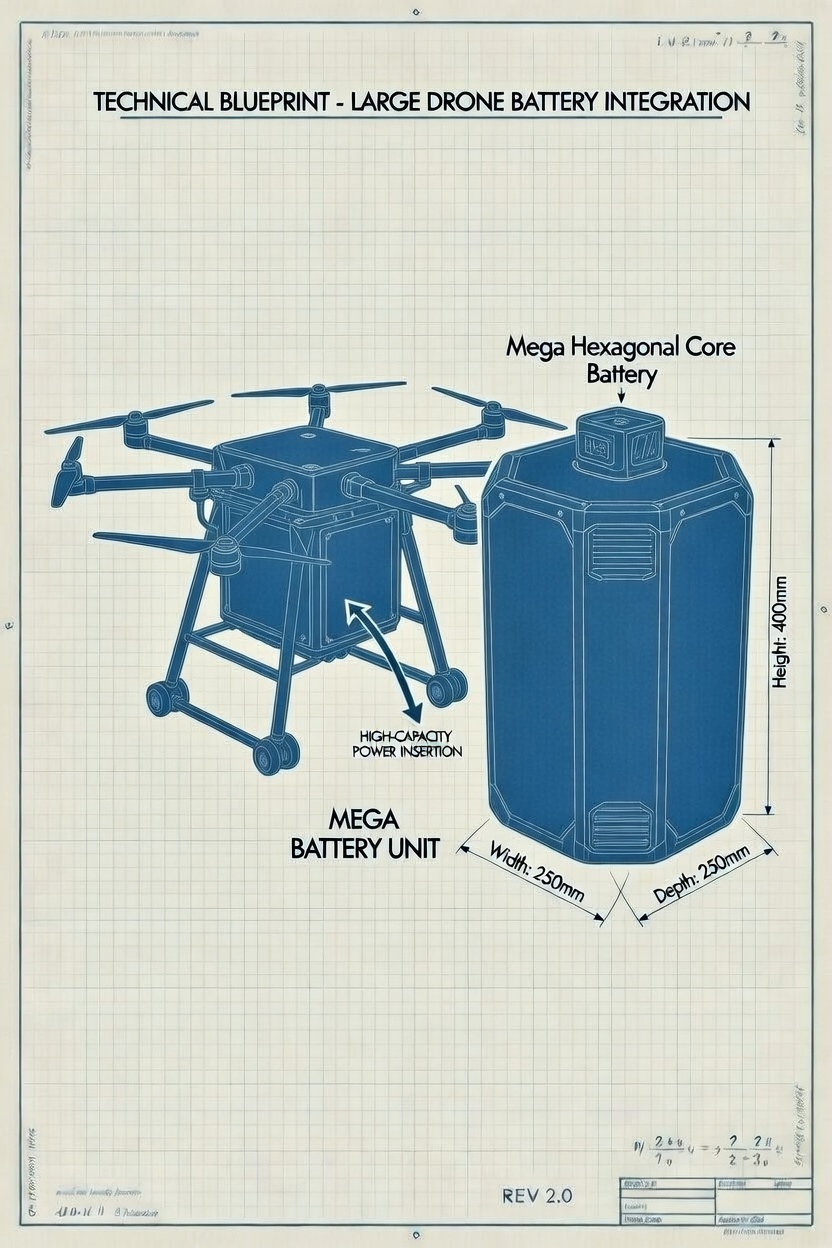
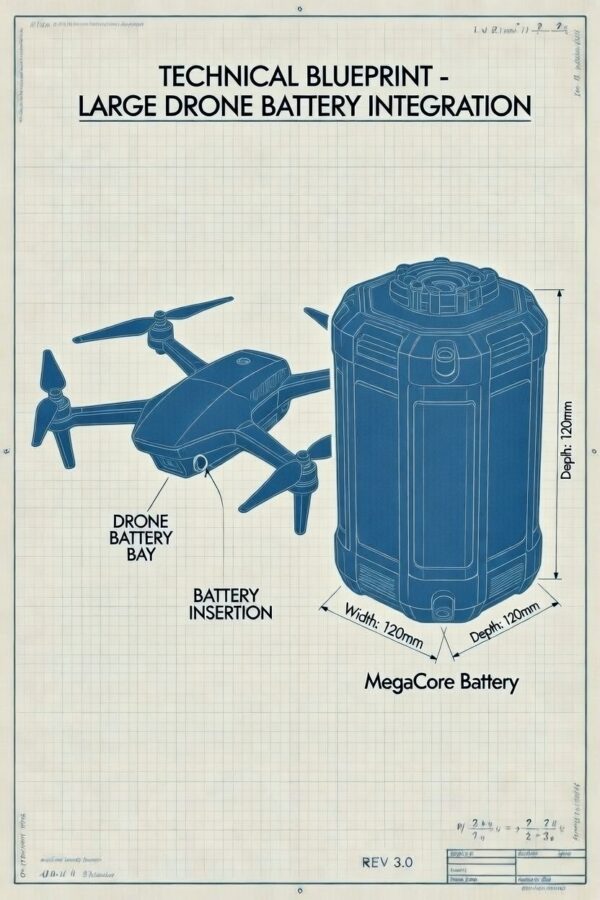
Drone airframes vary significantly across manufacturers and use cases. Custom battery packs can be engineered to fit specific compartments, optimizing weight distribution and aerodynamic performance. This includes:
- Custom connector types matching existing drone infrastructure
- Shape modifications for unique mounting requirements
- Weight optimization through selective cell arrangement
- Cooling system integration for high-performance operations
Environmental Hardening
Logistics operations rarely occur in controlled environments. Batteries must withstand:
- Temperature extremes from -20°C to 60°C operating ranges
- Vibration resistance for rough landing conditions
- Waterproof ratings IP65 or higher for all-weather operations
- Shock protection preventing damage during package drops
Emerging Battery Chemistry: Solid-State and Beyond
The battery industry is undergoing a fundamental transformation. According to Global Info Research’s 2026 analysis, solid-state and semi-solid-state technologies are transitioning from laboratory experiments to small-scale commercialization. These advancements promise to address the core limitations facing drone logistics today.
Advantages of Next-Generation Chemistry
- Higher energy density enabling 40-60% longer flight times
- Improved safety profile eliminating thermal runaway risks
- Extended cycle life reaching 1,000+ charge cycles
- Better low-temperature performance maintaining capacity in cold weather
- Faster charging capabilities reducing ground time between missions
While mainstream markets continue relying on proven lithium-polymer technology, premium industrial and specialized applications increasingly adopt these advanced solutions. Early adopters gain competitive advantages through extended operational ranges and reduced downtime.
Cost-Benefit Analysis: Investing in Custom Battery Solutions
Logistics executives must justify battery customization investments through clear ROI calculations. The numbers tell a compelling story.
Operational Cost Reductions
Custom battery systems deliver measurable savings across multiple dimensions:
- 30-50% reduction in battery replacement frequency through optimized cycle life
- 20-35% improvement in energy efficiency via precise voltage matching
- 15-25% decrease in maintenance costs through predictive monitoring
- 40-60% extension of daily operational windows with fast-charge capabilities
Case Study: Regional Delivery Provider
A mid-sized delivery company operating 50 drones across three provinces implemented customized 53.2V 22,000mAh battery packs with smart monitoring. Results after 12 months:
- Fleet availability increased from 78% to 94%
- Battery-related incidents dropped by 87%
- Average delivery radius expanded from 8km to 14km
- Total cost of ownership decreased by 31%
Regulatory Compliance and Safety Standards
The drone logistics sector operates under increasingly stringent regulatory frameworks. Battery customization must align with international safety standards to ensure legal operation and insurance coverage.
Essential Certifications
- UN 38.3 for lithium battery transportation
- CE marking for European market access
- FCC compliance for electromagnetic compatibility
- ISO 9001 quality management certification
- UL standards for battery safety testing
Reputable manufacturers provide complete documentation packages, simplifying the certification process for logistics companies expanding into new markets.
Implementation Roadmap: From Assessment to Deployment
Transitioning to customized battery solutions requires systematic planning. Follow this proven framework:
Phase 1: Operational Assessment (Weeks 1-4)
- Audit current battery performance metrics
- Identify pain points and failure patterns
- Map mission profiles and power requirements
- Calculate total cost of ownership baseline
Phase 2: Specification Development (Weeks 5-8)
- Define voltage, capacity, and discharge requirements
- Determine physical constraints and mounting needs
- Establish environmental operating parameters
- Select communication protocols and monitoring features
Phase 3: Prototype Testing (Weeks 9-16)
- Evaluate sample units under real-world conditions
- Validate performance against specifications
- Refine designs based on field feedback
- Complete safety and compliance testing
Phase 4: Fleet Deployment (Weeks 17-24)
- Phase in new batteries across operational fleet
- Train maintenance teams on new systems
- Implement monitoring and tracking infrastructure
- Establish replacement and recycling programs
Actionable Recommendations for Logistics Leaders
The drone battery landscape offers unprecedented opportunities for companies willing to invest in customization. Take these concrete steps today:
- Conduct a battery audit documenting current performance, failure rates, and replacement costs
- Engage with specialized manufacturers who understand logistics-specific requirements
- Prioritize smart battery features enabling data-driven fleet management
- Plan for technology evolution ensuring compatibility with emerging chemistry options
- Build supplier partnerships rather than transactional purchasing relationships
Conclusion: Power Your Delivery Future with Custom Solutions
The drone logistics revolution will not be powered by generic batteries. Success belongs to companies that recognize battery systems as strategic assets rather than commodity components. Customization options available in 2024 enable delivery providers to overcome range limitations, improve safety profiles, and reduce operational costs simultaneously.
The market data is clear: drone battery technology is evolving rapidly, with solid-state innovations promising even greater capabilities within the next 24-36 months. Companies that establish customization partnerships now position themselves to leverage these advances as they mature.
Ready to transform your drone delivery operations? Explore tailored battery solutions designed specifically for logistics and delivery applications. Contact our team of battery specialists to discuss your unique requirements and discover how customized power systems can unlock new operational possibilities for your fleet.
Get in Touch Today – Let’s build the battery solution that powers your competitive advantage.
Article compiled using industry data from QYResearch, Global Info Research, and leading battery manufacturers. All specifications and projections reflect current market conditions as of 2024-2025.