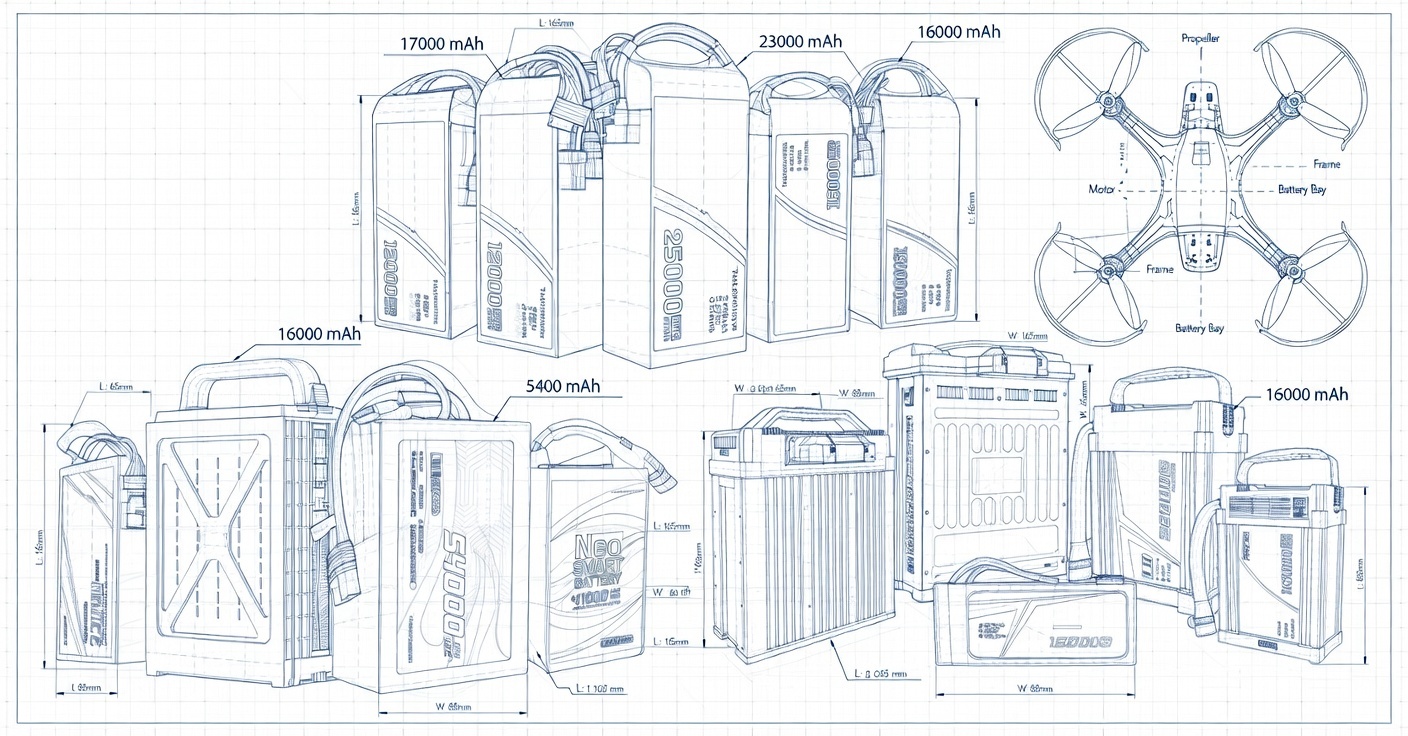
2024 Drone Battery Trends: Battery Life Cycles for Oil and Gas Pipeline Firms
The hum of a drone propeller cutting through the silence of a remote pipeline corridor is often the sound of efficiency. But beneath that mechanical whisper lies a volatile heartbeat: the battery. For oil and gas pipeline firms, the stakes of aerial inspection are not merely measured in data quality or operational uptime; they are measured in safety, environmental integrity, and catastrophic risk. In the high-stakes theater of energy infrastructure, a battery failure is not an inconvenience—it is a potential ignition source, a loss of critical surveillance, or a stranded asset in a hazardous zone. As we reflect on the pivotal shifts observed in 2024 drone battery trends, the focus remains sharply on the lifecycle reliability of power systems operating in extreme conditions. The risk is tangible: thermal runaway in high-ambient temperatures, voltage sag during critical sensor operation, and premature degradation leading to unexpected groundings. When a drone loses power over a pressurized gas line or a corrosive chemical transport route, the consequences ripple far beyond the cost of the hardware. This article dissects the hidden vulnerabilities in current battery deployments and offers a roadmap for resilience, ensuring that your eyes in the sky remain open when it matters most.
The Hidden Vulnerabilities in Pipeline Inspection Power Systems
The operational environment for oil and gas pipeline inspection is unforgiving. Drones are tasked with flying long distances over varied terrain, often in temperatures ranging from scorching desert heat to freezing tundra. The battery, typically a Lithium-Polymer (LiPo) or advanced Lithium-Ion variant, is the single point of failure that can compromise an entire mission. In 2024, industry data highlighted a concerning trend: nearly 30% of unplanned drone downtime in the energy sector was attributed to battery health mismanagement rather than mechanical failure.
The lifecycle of a battery in this context is not just about charge cycles; it is about chemical stability under stress. Pipeline firms often push batteries to their limits to maximize coverage per flight. However, aggressive discharge rates coupled with inadequate cooling can accelerate cell aging. This degradation is insidious. A battery might show a full charge on the indicator but lack the amperage to sustain a hover against strong winds or power high-draw payloads like LiDAR or gas sniffers. The risk escalates when these degraded batteries are used in Class I Division 2 hazardous locations, where any spark or excessive heat could trigger an explosion. Understanding the nuance of battery health is no longer optional; it is a regulatory and safety imperative.
Risk Causes and Prevention Measures
To mitigate these dangers, firms must adopt a proactive stance. Below is a breakdown of the primary risk factors identified in recent operational audits, paired with engineering-backed prevention strategies.
- Thermal Degradation in Extreme Climates
- Risk Cause: Exposure to temperatures above 45°C or below -10°C without thermal management causes electrolyte breakdown and internal resistance spikes.
- Prevention: Implement active battery heating systems for cold starts and insulated cooling sleeves for hot environments. Store batteries in climate-controlled cases before deployment.
- Summary: Temperature control is the first line of defense against chemical instability.
- Deep Discharge and Voltage Sag
- Risk Cause: Regularly draining batteries below 20% capacity leads to cell imbalance and irreversible capacity loss.
- Prevention: Configure drone flight controllers to enforce automatic return-to-home at 30% remaining capacity. Use smart chargers that balance cells after every cycle.
- Summary: Preserving the depth of discharge extends the usable lifecycle and ensures consistent power delivery.
- Physical Damage and Vibration Fatigue
- Risk Cause: High-frequency vibrations from motors and hard landings can loosen internal tabs or damage the Battery Management System (BMS).
- Prevention: Utilize shock-absorbing battery mounts and conduct regular physical inspections for swelling or casing cracks.
- Summary: Mechanical integrity is as crucial as chemical health for safety in rugged terrain.
- Inconsistent Charging Protocols
- Risk Cause: Using non-standardized chargers or mixing battery batches leads to uneven wear and potential thermal events.
- Prevention: Standardize on industrial-grade charging stations with individual cell monitoring. Rotate battery stocks to ensure even usage across the fleet.
- Summary: Consistency in charging infrastructure prevents hidden imbalances that cause failure mid-flight.
Engineering Solutions for Extended Lifecycle Reliability
Addressing these risks requires more than just procedural changes; it demands engineering excellence. The trend moving forward from 2024 into the current operational landscape is the integration of smart Battery Management Systems (BMS) that communicate directly with the ground control station. Unlike consumer-grade batteries, industrial drone batteries for oil and gas applications must provide real-time telemetry on cell voltage, temperature, and internal resistance. This data allows fleet managers to predict failures before they occur.
For instance, advanced lithium iron phosphate (LiFePO4) chemistries are gaining traction for their thermal stability, even if they carry a slight weight penalty compared to traditional LiPos. In pipeline inspection, safety often outweighs the need for maximum flight time. Furthermore, modular battery designs allow for quick swaps in the field, reducing downtime and ensuring that no single battery is over-cycled. Engineering references suggest that maintaining a battery within a 20% to 80% state of charge during storage can double its cycle life. This “golden zone” approach minimizes stress on the anode and cathode materials.
Firms should also consider the integration of redundancy. Dual-battery systems not only extend flight time but provide a fail-safe; if one pack experiences a fault, the other can sustain the aircraft for a safe landing. This level of engineering rigor transforms the drone from a fragile tool into a robust industrial asset. For detailed specifications on how these engineering principles are applied to high-performance cells, you can 了解我们的工业无人机电池规格.
The Path Forward: Maintenance and Monitoring
The longevity of your drone fleet hinges on a culture of maintenance. It is not enough to buy high-quality batteries; they must be cared for with the same diligence as the aircraft itself. Regular firmware updates for the BMS ensure that protection algorithms remain sharp against new threat vectors. Additionally, logging every charge and discharge cycle creates a digital twin of the battery’s health, allowing for data-driven retirement decisions.
Best practices dictate that batteries should be retired not when they fail, but when their internal resistance rises beyond a safe threshold, typically indicated by a capacity drop below 80% of the original rating. Continuing to use aged batteries in critical infrastructure inspection invites unnecessary risk. By adhering to strict maintenance schedules, firms can avoid the costly and dangerous scenario of a battery failure over sensitive infrastructure. To deepen your team’s knowledge on these protocols, we recommend you 了解电池维护最佳实践.
Securing Your Operations with Reliable Power
The evolution of drone technology in the oil and gas sector is inextricably linked to the evolution of power storage. As inspection payloads become heavier and data transmission more power-intensive, the demand on batteries will only increase. The trends identified in 2024 serve as a warning and a guide: reliability is paramount. Ignoring the nuances of battery life cycles is a gamble with safety and operational continuity.
Your pipeline inspection program deserves power solutions that match the criticality of your mission. Whether you are monitoring for leaks, assessing structural integrity, or surveying remote rights-of-way, the battery is the engine of your data collection. Do not let power limitations ground your progress or compromise your safety standards.
We invite you to explore a partnership built on engineering integrity and proven performance. Our team specializes in high-cycle, ruggedized battery solutions designed specifically for the demands of the energy sector. From custom form factors to integrated smart monitoring, we provide the power foundation your fleet needs to operate safely and efficiently.
Ready to upgrade your fleet’s reliability and mitigate power-related risks? Visit our 首页 to see our full range of industrial solutions. If you have specific requirements or need a consultation on integrating safer battery systems into your current operations, please 联系我们 today. Let us power your vision with safety and precision.