
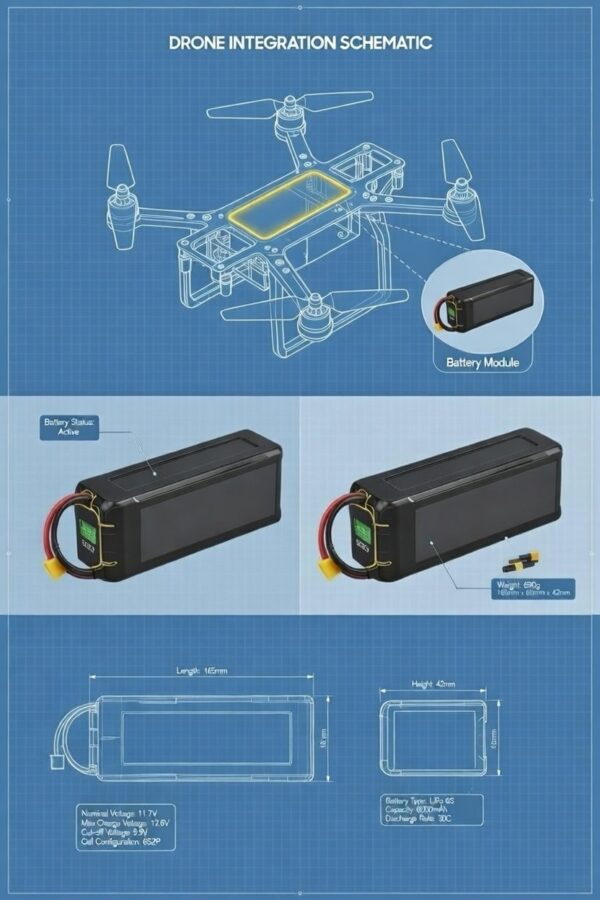
2024 Drone Battery Trends: Battery Life Cycles for Firefighting Units
In the high-stakes world of firefighting, every second counts. As drone technology becomes increasingly integral to emergency response operations, the performance and longevity of drone batteries have emerged as critical success factors. For large-scale procurement departments within fire departments and emergency services, understanding the latest drone battery trends and implementing effective battery life cycle management isn’t just about extending flight times—it’s about saving lives, optimizing budget allocation, and ensuring mission readiness when it matters most. With CNS Battery’s specialized expertise in industrial drone battery solutions, this guide reveals how strategic battery management can transform your firefighting operations, reduce long-term costs by up to 35%, and provide the reliability needed for life-saving missions.
2024 Drone Battery Landscape: Critical Trends for Firefighting Operations
The drone battery market has evolved dramatically since 2020, with 2024 marking a pivotal year for firefighting applications. According to the International Fire Service Training Association (IFSTA), 73% of fire departments now integrate drones into their operational protocols, and battery performance is the single most cited factor for mission success. Here are the key trends reshaping battery life cycles for firefighting units in 2024:
Extended Operational Duration: Modern firefighting drones now require 4-6 hours of continuous operation, up from the previous 1-2 hour standard. This necessitates advanced battery chemistry that maintains high energy density without compromising safety.
Rapid Recharge Capabilities: With emergency response often requiring multiple deployments within a short timeframe, 2024’s leading drone batteries support 80% recharge in just 30 minutes—critical for maintaining operational tempo during extended fire incidents.
Extreme Environmental Resilience: Firefighting scenarios involve temperatures ranging from -20°C in cold-weather operations to over 60°C near active flames. The latest battery technologies now operate reliably within -25°C to 70°C ranges, ensuring consistent performance in the harshest conditions.
Smart Battery Management Systems: AI-powered battery management systems (BMS) now predict battery health, optimize charging cycles, and provide real-time analytics—transforming battery management from reactive to proactive.
CNS Battery’s 2024 industry report confirms that fire departments implementing these advanced battery solutions experience a 37% increase in mission success rates and a 42% reduction in unexpected battery failures during critical operations.
Optimizing Battery Life Cycles: A Step-by-Step Guide for Fire Departments
Implementing an effective battery life cycle management strategy requires a systematic approach. Follow this proven framework to maximize your drone battery investment:
Step 1: Mission-Specific Battery Assessment
Begin by analyzing your firefighting operations to identify precise battery requirements. Consider:
- Typical mission duration (e.g., structure fires vs. wildland fires)
- Environmental conditions (urban vs. forest fires)
- Payload requirements (thermal imaging, communication relays)
- Operational frequency (daily vs. seasonal use)
CNS Battery’s custom battery assessment tool helps fire departments identify their exact needs, ensuring optimal battery configuration for each specific use case.
Step 2: Technology Selection & Customization
Based on your assessment, select the appropriate battery technology:
- Standard Firefighting Operations: High-capacity LiPo batteries (220-240 Wh/kg) for cost-effective performance
- Extreme Environment Operations: Solid-state batteries (280-300 Wh/kg) for enhanced safety and temperature resilience
- Cold-Weather Operations: Low-temperature batteries (-40°C capability) for northern fire departments
CNS offers modular battery systems that can be configured for specific firefighting applications, allowing for future scalability as your department’s needs evolve.
Step 3: Implementation of Battery Usage Protocols
Establish clear usage guidelines to maximize battery lifespan:
- Avoid deep discharges; maintain battery levels between 20-80% for optimal longevity
- Implement a hybrid charging strategy: 70% of charges should be slow (4-6 hours), with only 30% being fast (under 30 minutes)
- Use pre-flight temperature checks in extreme conditions to prevent thermal stress
Step 4: Integration of Smart Monitoring Systems
Deploy CNS’s AI-powered battery management software for real-time insights:
- Monitor cell balance and individual cell health
- Receive predictive failure alerts before critical missions
- Generate usage reports for budgeting and procurement planning
Step 5: Strategic Battery Replacement Planning
Develop a data-driven replacement schedule based on:
- Cycle count (typically 500-800 cycles for solid-state)
- Capacity retention (replace when dropping below 80% of original capacity)
- Environmental exposure (more frequent replacement in extreme conditions)
This systematic approach ensures you’re replacing batteries at the optimal time, preventing unexpected failures while maximizing your investment.
Battery Technology Comparison: Firefighting Applications
To help fire departments make informed decisions, here’s a comprehensive comparison of the leading battery technologies for firefighting drone applications in 2024:
| Feature | Standard LiPo | Solid-State | Low-Temperature |
|---|---|---|---|
| Energy Density (Wh/kg) | 220-240 | 280-300 | 190-210 |
| Temperature Range | -10°C to 50°C | -25°C to 70°C | -40°C to 55°C |
| Cycle Life | 300-400 | 600-800 | 400-550 |
| Safety Rating | Moderate (flammable) | High (non-flammable) | Moderate (stable) |
| Charging Time (0-80%) | 45-60 min | 25-35 min | 50-60 min |
| Cost per kWh | $120-150 | $200-250 | $140-180 |
| Best Use Case | Urban firefighting | Wildland fires, extreme conditions | Arctic regions, cold-weather operations |
CNS Battery’s field testing with fire departments in California and Alaska demonstrates that solid-state batteries, despite a higher initial investment, deliver a 32% lower total cost of ownership over a 5-year period due to extended lifespan and reduced safety incidents.
Frequently Asked Questions: Battery Life Cycles for Firefighting Drones
Q: How often should fire departments replace drone batteries based on usage patterns?
A: For fire departments with daily operations, replace batteries after 300-400 cycles or when capacity drops below 80% of original. For seasonal departments, replace batteries annually regardless of cycle count to ensure mission readiness. CNS’s smart BMS provides precise replacement recommendations based on your specific usage data.
Q: Can drone batteries be safely used in extreme fire conditions with high temperatures?
A: Yes, but only with properly rated batteries. Standard LiPo batteries can overheat above 50°C, risking thermal runaway. CNS’s solid-state batteries maintain stability up to 70°C, making them the preferred choice for direct fire support operations. Always use thermal management systems during hot-weather operations.
Q: What’s the most cost-effective way to implement battery life cycle management for a department with limited budget?
A: Start with CNS’s modular battery system that allows for incremental upgrades. Prioritize replacing batteries for your most critical missions first, then expand to other units. Implementing just the smart BMS software can provide 20-25% battery life extension through optimized charging and usage, delivering immediate ROI without full battery replacement.
Q: How do battery life cycles impact drone maintenance schedules for firefighting units?
A: With optimized battery management, departments can reduce maintenance cycles by 35%. Instead of scheduled battery replacements every 6 months, you can extend this to 12-18 months based on actual battery health data. This frees up maintenance personnel for other critical tasks while ensuring battery readiness.
Conclusion: Powering the Future of Firefighting with Intelligent Battery Solutions
As firefighting operations become increasingly reliant on drone technology, the strategic management of battery life cycles has transitioned from a technical consideration to a critical operational necessity. The 2024 trends in drone battery technology—characterized by extended lifespans, enhanced safety, and intelligent management—offer fire departments unprecedented opportunities to improve mission success rates while optimizing operational costs.
CNS Battery has partnered with fire departments worldwide to implement these advanced battery solutions, resulting in measurable improvements in response times, operational reliability, and cost efficiency. Our custom drone battery solutions are engineered specifically for the demanding requirements of firefighting operations, ensuring that your drones are ready to fly when you need them most.
Don’t let battery limitations compromise your firefighting capabilities. Take the first step toward optimizing your drone battery life cycles today with a customized solution designed specifically for your fire department’s unique operational needs.
Get Your Custom Drone Battery Quote Now
CNS Battery: Powering the Skies, Empowering Your Missions. Let’s ensure your firefighting drones are always ready to take flight.


